Unknown's avatar

The Little Book of Kabul on Fair Observer

kiccovich's avatarThe Little Book of Kabul

Fair Observer featured our book:

The Little Book of Kabul is a book project that depicts a portrait of Kabul through the daily activities of a number of artists who live in the city. With an evocative tone, it focuses on the tiny details that escape grand narratives. Colors and gestures, smells and accents. In 20 short stories and 47 black and white photographs, The Little Book of Kabul dives into the lives of the three main characters exploring what it means to be an artist in Kabul and hence unveiling the beauty and brutality of the city.

Read more here.

View original post

Unknown's avatar

Mountains, Mines and Memories: The Idea of Kurdistan

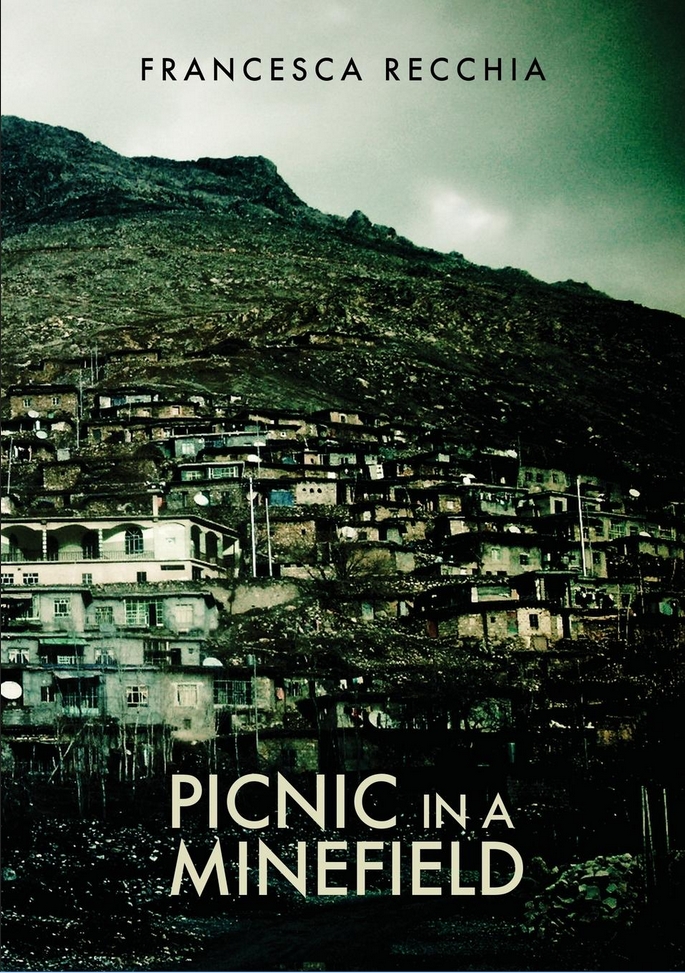
Ty Mayfield reviewed Picnic in a Minefield for War on the Rocks.picnic-cover

Here is a teaser:

Recchia is an Italian academic who left Europe for a position at the University of Kurdistan Hawler (UKH) in Erbil, Iraq in the hopes of expanding her professional horizons as an educator. In the course of two years, Recchia experiences life in many different circles. She transitions between guest, traveler, teacher, and mentor with an ease that disarms those who might stand in her way. It is from the unique perspectives of both her professional work at the UKH and her personal interactions with locals that Kurdistan is made real for the reader. Through Recchia’s travels, the soldiers, diplomats, journalists and humanitarian aid workers that usually narrate our collective Iraq experience, are illuminated for the reader from a new perspective. She reports their actions, thoughts and intentions in the insightful and articulate observations of a self-aware and humble narrator.

Recchia set out for Iraqi Kurdistan in search of herself. Along the way it is fair to say she found an entire group of people in search of themselves, their own identities, and perhaps, their own nation. These two arcs, one individual and one collective, intersect in Picnic in a Minefield and provide a compelling narrative that gives insight into the permanence of resistance, the pace of change, and the promise of a Kurdistan.
***
You can read the full review here.
Unknown's avatar

The Little Book of Kabul – Launch in Kabul

kiccovich's avatarThe Little Book of Kabul

The Little Book of Kabul is now out in the world.It has reached many houses and hopefully offered a glimpse of unexpected beauty.

In the next few weeks, Lorenzo and I will be travelling to present the book and tell the story of its making.

This last phase of our journey – obviously – began in Kabul.

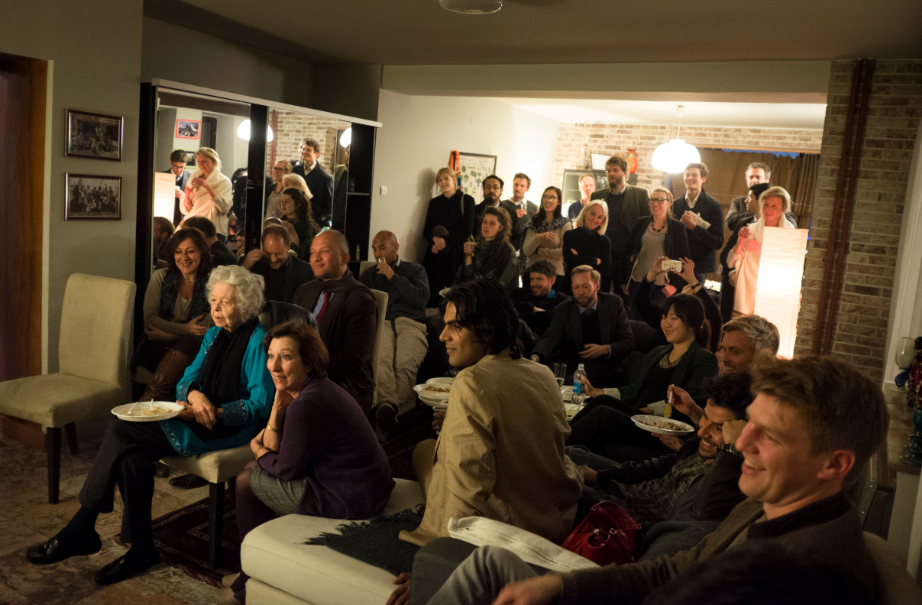
We had the great privilege of being hosted by Margherita Stancati and Nathan Hodge at the Wall Street Journal for an evening of discussion and celebration.

Screen Shot 2014-11-07 at 2.35.09 PM

*Photo Credit: Joel van Houdt *

It was beautiful to share some of the backstage stories with old friends who have followed our adventure since its inception and new friends who now walk the same streets we recount in the book.

The incredible amount of affection that surrounds The Little Book of Kabul never ceases to surprise us and we are deeply grateful for that.

View original post

Unknown's avatar

A journey to the Other Iraq

This article was initially published in Domus 958 in May 2012.

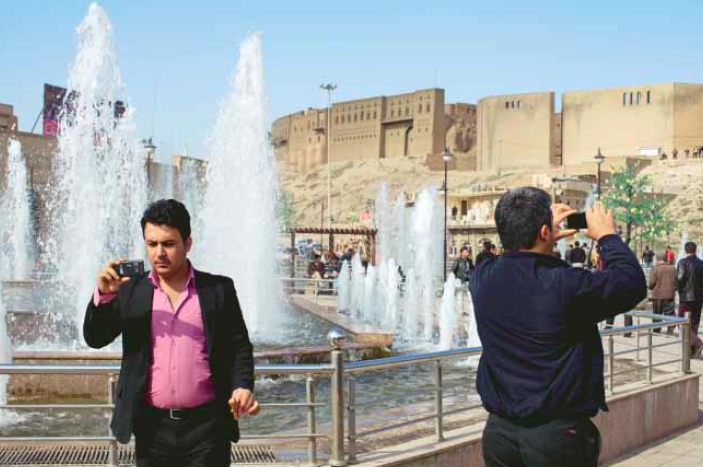
Screen Shot 2014-11-03 at 9.11.40 AM

Photo Credit: Sebastian Meyer

The Autonomous Region of Kurdistan has in recent years been in the news as the “Other Iraq”. In 2011, National Geographic described it as an oasis of peace and development, and The New York Times placed it 34th out of 41 best travel destinations— beating Miami, which finished up in last place. In reality, the region is not so much a tourist attraction as it is land prized by multinational and private investors. After Saddam Hussein’s bloody ethnic persecution, a decade of armed conflict between Iraq and Iran, two wars to export democracy, and one civil war, Iraqi Kurdistan today is striding towards a new state of political and economic stability. Its long history of war and violence has left indelible marks and scars. At the same time, however, it has created a unique situation characterised by openness and opportunity. The future is all there to be invented, there is plenty of scope for experimentation, and the direction to be followed can still be chosen. Erbil, the regional government capital and one of the world’s most ancient cities, inhabited without interruption for thousands of years, is an extraordinary example of that condition. One of the principal artifices of this growth is Nawzad Hadi, governor of Erbil since 2004. In a recent interview, with the clarity of a visionary he illustrated to me the steps required to fulfil what he calls a great dream: the building of a city worthy of being an international capital, “a new Dubai”. That is no mean statement, considering that Kurdistan is not even an officially recognised state. “I am doing it for my people, who deserve it after years of oppression.” The magnitude of Nawzad Hadi’s challenge is quite incredible. It began with the asphalting of roads and the guarantee of standard access to water and electricity, continued with the completion and implementation of a master plan and the prospect of a green belt around the city, and is now on its way to transforming Erbil into an economic and commercial hub. In an explosive mixture of individual profit and common good, the governor has embraced the city’s historic and cultural profile as the symbol of this rebirth. He has started a restoration of the Citadel, Erbil’s ancient heart, by working with UNESCO to have it included in the list of World Heritage Sites. At the same time, with an eye to the international trends of the architecture star system, he appointed Daniel Libeskind to design a museum of Kurdish memory, an audio-visual project for the historical and narrative reconstruction of the Kurdish genocide. Work on the museum is scheduled to commence this year.

The Autonomous Region of Kurdistan chose Erbil as the emblematic image of its capacity for self-government, and in this case investment in its urban growth has been notably political. Through the concession of land-tax benefits and structural support, the regional government is encouraging the circulation of private capital. This has made a significant impact on the city’s development and building prospects. In the past five years the world’s biggest corporations have staked claims in the city, luxury hotels have multiplied, and new residential complexes have sprung up suggesting the possibility of exclusive lifestyles and their desirability. Dream City, Empire City, English Village, Royal City, Vital City and Italian Village are gated communities now occupying a large slice of Erbil’s outer ring road, not far from the construction site of the Marriot Hotel and from the 23-storey Hotel Divan tower. Erbil’s economic prosperity is just one of the multiple sides of this transition to a mature state of democracy. Traces of years of conflict—and the fact that virtually all investment has been confined to the growth of this capital city—are on the other hand dramatically evident in the rest of the region. Contrasting the enthusiasm of this new prosperity are the mountain villages and refugee camps where resilience and the art of making ends meet are means of ensuring survival. Wlaxlw is a village of about 50 mud-and-stone houses, on the border between Iraq and Iran. Its geographical position made it a constant target of bombardment during the war between the two countries. To this day it is surrounded by the aftermath of that conflict in the shape of missiles, bullets and bombshells, ammunition boxes and helmets. Over the past 20 years the inhabitants of Wlaxlw have made a virtue of necessity, by utilising the debris and rubble as building material for their postwar reconstruction. Thus Katyusha rockets have become support beams for ceilings or pillars for pergolas, missile casings are converted into drainpipes, and helmets (those without bullet holes at forehead level) are used as flowerpots or to collect rainwater, while landmine warning signs serve as firewood props, and ammunition boxes sunk into the ground provide steps to the higher part of the village. Wlaxlw is a cross-section of an amazing world, a bizarre combination of a post-apocalyptic landscape and an oil painting by an 18th-century orientalist. But it is not the only example of the contradictoriness of these coexistences. Stories of this kind are illustrated by the various army buildings once occupied by Saddam Hussein’s troops stationed in Kurdistan. From the end of 1996, at the height of the civil war, these structures began to be converted into “villages”, complete with mosques, small shops and elementary schools. Ma’asker Salam, Top Khane and Raparin are three such villages, located a few kilometres from Sulaymaniyah, the second largest city in the Automous Region of Kurdistan. Ma’asker Salam is where Saddam’s army stables were situated. Today, some 300 families have found accommodation there. Not far away is Top Khane, a group of 12 buildings formerly used as an arms depot and now occupied by another 300 families. Raparin, located closer to the city centre, was in Sadam’s day a large industrial complex used to produce and repair weapons. Today it hosts a maze of self-built huts, inhabited by some 70 families. By a curious twist of fate, what were once the building-symbols of the Ba’athist regime’s military oppression have been transformed into a safe haven for hundreds of families, the place of refuge they call home, while waiting (with ever diminishing faith) for the politicians to keep their promises of compensation and assignment of public housing. During this long wait of more than 15 years, the old army buildings have changed their appearance as a result of spontaneous actions by inhabitants. Using improvised materials and traditional construction techniques, they have gradually turned this political aberration into something more like a familiar and hospitable landscape. Haji Mahmoud and Nadja, two residents of Ma’asker Salam, recount that local and international NGOs helped refugees to settle into the abandoned military structures. At Ma’asker Salam, the stables were initially divided by makeshift walls into rooms to accommodate one or more families each. In the course of time and with a growing awareness that the situation would take years and not months to be resolved, the inhabitants of these permanently temporary villages began to expand. They partitioned the rooms assigned to them in order to meet the needs of their families and to create more comfortable living conditions.

Nadja lives in a corner house and changes the colour of its interior three times a year. With her husband she has laid out a garden, its flowerbeds bordered with stones and broken bricks. There are also three trees, grown from the kernels of fruit and each planted to mark the birth of her three daughters. “All I’d like is a nice house,” she says, “nothing more”. With snow-capped mountains on the horizon, the landscape of Ma’asker Salam and Top Khane has a surreal look. The picturesque impression of mountain villages clashes with memories of a cruel and dramatic past which the inhabitants have not yet managed to cast off. The old stable buildings at Ma’asker Salam are today barely visible. Covered with satellite dishes, they are now a mass of irregular dwellings built from cement blocks, stone and rough earth bricks, and wrapped in coloured striped plastic sheets for winter insulation. In a surprising combination of improvisation, recycling and vernacular architecture, remnants of plastic and metal mark out Haji Mahmoud’s garden, where birds are kept off by scarecrows made of snipped plastic bags. In the courtyard next door, his son and daughter-in-law have built a pergola with the wooden poles of building sites, while their neighbour has used the door of a derelict car as the gate to a courtyard surrounded by a dry wall. Between the sushi bar on the 21st floor of a 5-star hotel in downtown Erbil and the Katyusha rockets used as construction material in Wlaxlw, observing the anthropised landscape can be an outstanding means of interpreting what is often, abstractly, defined as a postwar dimension. The iniquitous distribution of wealth derived from the postwar reconstruction efforts has left indisputable signs of the temporality of a twisting and frequently obstacle-strewn path. In Iraqi Kurdistan, improvisation and resilience are the other side of the coin to massive urban development and the dream of becoming the next Dubai. Torn between far-sightedness, forgetfulness and selective memory, territory is revealed as neither a neutral nor an innocent platform, on which political debate and intervention are staged and the future takes shape.

Unknown's avatar

The Little Book of Kabul is on TIME Lightbox

Photo credit Lorenzo Tugnoli

Photo credit Lorenzo Tugnoli

Lorenzo and I met Mikko Takkunen at Visa pour l’Image in Perpignan.

It was a beautiful encounter, Mikko gave us and our book time and attention. We were happy to have met someone with a genuine passion for photography and an unbiased curiosity.

We are grateful that from that meeting TIME Lightbox decided to feature The Little Book of Kabul.

You can read the review: Follow the Everyday Lives of Artists in Kabul here.

Unknown's avatar

Blogging the War

 John Little is a manager of large databases with a technology background. He is the heart and soul behind Blogs of War, one of the most thorough and well respected information platforms in the field of conflict studies and reporting.

Last year I interviewed him about war-blogging, his approach to information reliability, and the fine balance between timeliness and accuracy when writing and thinking about conflicts. The conversation was first published on Muftah.


Francesca Recchia (FR): Let’s start from the beginning. Intelligence and national security are not immediately part of your professional expertise, yet for more than ten years Blogs of War has been an invaluable source of information and insight into conflicts across the world. How did the idea come about? And, why is it blogs in plural?

John Little (JL): I have been involved in online communities since around 1980. My first computer was a Commodore VIC-20. While many were into games I was more fascinated by the modem and the potential to connect to other computers and people. In my mind that’s what made the early computers fundamentally more exciting than game consoles.

I spent a massive amount of time exploring bulletin boards. I even ran a couple, before more robust services and the web came along and rendered the model obsolete. It was such a great time to be a hacker. The culture was different, much less destructive overall, and there were few if any hacker-specific laws to worry about.

My friends and I were “war dialing” (writing and running programs that would call sequential phone numbers until a modem answered) to find the rare receiving modem, social engineering companies that had zero concept of security, and dumpster diving for old floppy disks or discarded dot-matrix print outs. We accessed systems just to access them. We got in, looked around, and got out.

Our activity in that arena faded out around the mid-1980s when security awareness and the legal system started changing. We wisely retired well before we could get into trouble (or drive a car).

Early Internet Relay Chat (IRC) was another place that I spent a lot of time. It was a great place to study how people connect with technology and it was also something of a hacker’s playground. I ran channels, messed around with bots, and fought a few channel wars back then. It was part of the fun, but got increasingly tedious as the number of people flooding IRC kept growing.

Eventually the web came along and it slowly eclipsed all of these communities. I jumped in right away and started building web pages and web applications. I was updating my home page on a regular basis in the late 90s with completely random content when I started playing with different free content management suites. This eventually allowed me to be more productive and that lead to more frequent updates.

However, it wasn’t until 9/11 that I looked at all this and decided that it was time to bring more focus to my efforts.

The events of 9/11 aggravated two areas of frustration for me. The first was technological. Updates on news sites were infrequent. Media, with very few exceptions, was not fully invested in the web or the larger Internet at the time. Having lived with the Internet and these communities for a long time I knew how to go to multiple locations and piece together a story.

When news broke, I could go to chat rooms, forums and relevant web sites to generate a much more complete story than the media was giving me. A motivated individual could really run circles around traditional media at the time.

My other source of frustration was related to the lack of understanding in the general public about terrorism and some of the forces at work that were making the world a much more dangerous place.  International relations, intelligence and conflict had always interested me so I was surprised by how completely off the radar these issues were for most people.

My online activity very quickly became more and more focused around addressing this problem (or ranting about it). As the site became more focused, I shifted its design and changed the name to Blogs of War, which is a take on Shakespeare’s “dogs of war”. Later, in November 2002, I made it official and registered the domain name.

FR: A seemingly unrelated question. We share a love for the mountains. For me a good deal of this love has to do with the perspective and observation points they provide, with their panorama and the all encompassing views from above. It is also about a passion for challenges and the openness to reflect and learn from humbling experiences. What is the influence that being a mountaineer has in the approach to the intellectual and professional tasks that you are confronted with?

JL: The past two years have not been kind to my mountaineering ambitions. When I was training for climbs it was my singular focus. Life has been far too complicated lately.

That being said, I haven’t give up hope. I have more summits in my future. Climbing is like Zen. It is experiential. It is just not possible to share the depth of that experience with someone else. You just can’t describe the intense physical effort, the depth of satisfaction, and clarity of experience to someone who hasn’t attempted it. And I really hate to distill the whole thing down to a bunch of motivational mumbo jumbo. Those analogies just cheapen the experience for me.

Climbing has a purity to it that will never be found in the workplace or self-help class. It is real life. Before my last climb a Zen Master friend of mind sent me a koan. “Who Walks? Never give up until you get the answer….then follow that.”

At the risk of sounding a bit metaphysical the answer to that koan is the greatest gift climbing offers.

FR: One of the most interesting things about Blogs of War is that it works on multiple different levels, juggling a remarkable amount of complexity and sophistication. It is real time news and a social media monitor; it is a repository of information and points of view; and it is a cultural platform that provides readers with critical perspectives on issues of global security, intelligence, technology, and all the possible interconnections of the three. This is something that seems both conceptually and practically very complicated to manage. Can you give us a bit of a background on how the Blogs of War machine works?

JL: There is no stable process and that can be alternatively exciting and maddening. Blogs of War is, and always will be, an experiment. That means that anything, from the front end that users see to the back end processes that feed it, can change at any time.

Many people do not realize that Blogs of War is simply a personal blog. I do not have a staff. I do not have a budget. However, I do have a demanding career and a full life away from the blog.

This attempt to monitor, curate, and comment intelligently on so many topics within a framework that has so many constraints creates constant tension. It’s really a silly thing for one person to undertake and managing it all well is not something that I’ve ever really mastered. Honestly, I don’t think mastery is possible. So what you see, in the end, is just my best attempt at the impossible.

In terms of content I’m constantly seeking and evaluating RSS and Twitter sources and the software that makes managing those easier. I have also been known to resort to crudely hacking together my own tools to manage this. That is how the live Twitter streams that I rolled out during the Egyptian revolution (and later as CovertContact.com) came to be.

Over the years I’ve tried many automation schemes to help carry the load. I have moved away from the concept on the blog as people have generally stopped looking to blogs for real time news. That activity has largely shifted to Twitter and that is where much of my focus lies.

As it stands now, some of what readers see on Blogs of War’s primary Twitter feed is fed automatically from carefully selected sources or queries that I developed and some of it comes directly from me. This arrangement allows me to feed readers solid real-time news while also giving me a little breathing room to think and contribute more complex thoughts or content. It is far from perfect but it works.

As for me, I spend many hours throughout the day watching the many private Twitter lists that I’ve created and constantly edit. I do most of this through my iPhone. These lists focus on specific regions, conflicts and key subject such as intelligence or information security.

The quality of subject matter experts on Twitter is just unbelievable, so identifying and tracking them occupies a large amount of my time and energy. When important new breaks, I’ll try to get to my Linux workstation as soon as possible. I have two 24″ monitors hooked up to it and with virtual desktops it is essentially like having eight different widescreens running at once.

I can very quickly fill those up with live video and Twitter streams as I monitor both professional media sources and eyewitnesses who may be tweeting, streaming video, or uploading photos from the scene.

FR: In the domain of knowledge production, I am fascinated by the idea of speed and slowness and the achievement of a fine balance between the two – this is something I feel you have managed quite successfully. In the past, such as during the 2003 war in Iraq, you have been able to break news faster than mainstream media outlets. At the same time, Blogs of War is a slow-paced space for reflection, in depth inquiry and deconstruction – if you allow me the term – of very convoluted and multi-faceted topics. What is your magic formula?

JL: Blogs used to be the speedier mechanism for news updates, but Twitter really owns that space now and there is no sign of that changing anytime soon. It actually took me a surprising amount of time to find what seems to be a workable balance.

I think the emergence of Twitter left the old school news bloggers with very few alternatives. Twitter upended news bloggers in very much the same way that we upended traditional media. I really struggled with the divergence initially. The only reason I held onto the blog was my unwillingness to pour all my effort and content into someone else’s (Twitter’s) platform.

Eventually, and somewhat reluctantly, I dropped the notion of the blog as a real-time news platform and shifted that effort to Twitter. Now, the blog is for long form writing and a more robust exploration of important topics. Not only does it work, but it makes managing it all much less stressful.

FR: You represent a precursor of what is now defined war-blogging. Online access to information has broadened the scope of interest and debate on conflicts that would otherwise risk being forgotten or overlooked. At the same time, this has created a plethora of self-appointed pundits, experts, analysts, and strategists. This is an issue that you partly discuss on your blogpost Thoughts on Identity and Credibility in relation to how you choose guest contributors. Can you tell us a bit more about your discerning criteria? This, I think, could be a great help to many disoriented readers.

JL: The model, if you can call it that, is fluid. It changes with the culture and the landscape. If the criteria are too rigid you miss out on amazing content. We see this with organizations that refuse to treat bloggers as credible journalists. On the other hand, if it is too flexible you will find yourself falling prey to sensationalists, conspiracy theorists, and frauds.

A key factor in all of this is my desire to be accurate above all else – even at the expense of my own political agenda. When accuracy is the overriding priority it shows. When a political agenda is the overriding priority it really shows and the quality of the content takes a nose dive.

Although, it should be said that there are increasing numbers demanding their news through a rigid partisan filter. I find this troubling. It would be nice if people were both secure and flexible in their worldviews, but I guess the temptation to shut out challenging viewpoints has always been there.

I will often present view from both sides of an issue. I don’t always tell people where I stand or where I think they should stand. Most of my readers seem to value this, but it confuses others terribly.

I am a big believer in networks when it comes to identifying and validating sources. One thing that Twitter allows me to do is quickly pick apart someone’s network and get a feel for what they do and where their influence lies.

I am always looking for new subject matter experts. When I find them, I pick through their social media networks for even more experts and influences. I am constantly building Twitter lists of these experts. Once I have put them into their little boxes I can monitor their activity closely and evaluate their content and positions on key issues.

Some of these people go into my primary A-list rotation right away and others stay in my secondary tier with similar subject matter experts where they are still monitored, but with somewhat less frequency.

Of course, I am not beyond hitting the search engines to research someone. In some cases I’ll sift through LinkedIn resumes or academic publications. Only a small percentage of people get this sort of attention, but it does happen.

FR: Following up on this point, a similar question may arise in relation to the news that you report. How do you screen and monitor the reliability and accuracy of your sources? How do you decide what gets published and what does not?

JL: In terms of Blogs of War interviews or guest posts it is very simple. Those are by invitation only. I turn down almost daily requests from volunteer contributors. In eleven or twelve years, I have probably only taken up one or two authors on their pitches for guest posts. I have to have a personal interest in your story or voice for that invitation to be extended.

Twitter accounts are verified in the manner described earlier. Other content comes from a constantly maintained, and quite large, list of RSS feeds from traditional media and extremely well established individual bloggers.

FR: At the convergence between the tech and social sciences worlds, there has recently been a growing buzz around the use, potentials, and short-comings of big data. What do you think the relevance of this debate is in the field of conflict studies? Can tools like Covert Contact be considered as a context-specific response?

JL: Look data is useful. There’s no question about that. The problem, at least when it comes to conflict, is that data will only rarely alter the human condition. Even when data does offer that advance warning needed to avert disaster, the decision making process happens in what is usually a deeply political and otherwise flawed human layer.

We have a million problems on this planet that could be solved with no data whatsoever, but they persist because human beings are very difficult animals.

I don’t want to appear to be overly negative about big data and its usefulness. It is having an impact and that impact will grow. It just won’t be a magic bullet when it comes to human conflict. There are no magic bullets.

Covert Contact was extremely useful even if it was a bit crude. The initial social media monitoring tools that I developed helped me stay far ahead of the media, and apparently even governments, during the early days of the Arab Spring. Having massive amounts of data at your disposal is always a good thing providing you know how to parse through it all.

FR: Warfare has dramatically changed in the last decades and with it the way we think, talk, and write about it. Since 2002, when you started blogging, we have developed a new vocabulary, new forms of military and strategic approaches, and a whole lot of new (whether real or fictitious) enemies. How have you managed to navigate this situation and adjust to the changes?

JL: Constant hard work. Researching, reading, analyzing and engaging experts day in and day out is the only way to do it. I am constantly aware of my own shortcomings and gaps in my knowledge and I work every day to fill them. But let’s be honest it’s a losing battle. One person cannot monitor, and understand, the entire world. For this reason, Blogs of War has never lived up to my vision and it never will. I don’t have the resources to get there. What people get is best attempt at the impossible.

FR: Strategic communication through social media is a fundamental element in the landscape of new warfare. It is a powerful tool that so-called “enemies” and official players use in molding public opinion and asserting their presence in the virtual domain. In this respect, if we use Afghanistan as an example, we can think of Taliban Twitter accounts such as Abdulqahar Balkhi (@Abalkhi), as well as the increased social media outreach efforts undertaken by the International Security Assistance Force (ISAF). What are your thoughts on this?

JL: They all bore me, but for different reasons. Taliban, Shabaab, and their ilk do a better job of speaking with an authentic voice, but they are only speaking to the true believers. You’ll never see them effectively engage outside of their narrow world-view. I think we did see that with @abumamerican, but that didn’t go over well (for him) and he is now dead, at least in part, because of it.

On the other side, there are public affairs officers and layers of bureaucracy that are just absolute death to compelling content in the social media space. A million of them have contacted me over the years. They write up their stories about NFL cheerleaders visiting forward bases or Marines rescuing a puppy and beg me to repost it. I did that a couple of times, but won’t ever do it again.

I sympathize with these people on the front-lines of the information war, but I am not here to bore people senseless with meaningless content. I use to reply and attempt to explain to them what my audience expected. My blog was theirs for the taking if they could supply intelligent and informative content, but it never happened. Not once. Maybe they sent it elsewhere.

I believe that governments would benefit from far fewer overt accounts and many more covert ones. Every military unit and bureaucratic department has its own neglected Twitter account now. They do nothing to advance the strategic or tactical goals of their government.

If the goal is to advance a message in a battle space, then agents unrestrained by bureaucratic oversight have to be trusted to get out there and mix it up. Governments should be taking cues from hacker culture in this arena. You can legitimately criticize much of what LulzSec [a group of hacktivists who took responsibility for a number of high profile attacks, including taking the CIA website offline] did during their short time in the spotlight but at least their messaging was extremely compelling.

The same can be said about Anonymous and even the Occupy movement. The groups are all largely composed of digital natives and this stuff is just instinctive to them. You will never achieve that impact when you run your messaging through a bureaucratic filter.

FR: Kashmir is not on the list of hotspots that Blogs of War directly monitors. Is there a reason for this?

JL: Covert Contact, which grew out of the Blogs of War monitors, has been put on hold due to changes in the Twitter API that I am not currently able to accommodate. So to be clear there are no monitors at the moment. But getting to your point I can only say that it was a one-man effort and was a work in progress. Kashmir would have made the list eventually. It just wasn’t a priority in the initial rollout.

FR: One last question. When the NSA is listening to you, what does it hear?

JL: There are occasionally moments when running Blogs of War can get a little surreal. Different agencies and mysterious individuals have reached out to me from time to time and I’d be sort of naive to think that the government hasn’t taken a peek at my email over the years.

Still, personal contacts with government types have been respectful and the monitoring, if it happens, could only bore an analyst senseless. 95% of my phone calls are to my girlfriend. 3% are to my family. 1% are to close friends. I suppose the remaining 1% is composed of former spies and similar types from the Blogs of War network, but even that isn’t surveillance worthy.

I have a real life. It is tedious and mostly boring. I am not trading nuclear launch codes with drop-dead gorgeous foreign agents via Gmail – or though any other medium for that matter. Throughout my blogging career I’ve made it clear that I am not here to attack the state. I am not going to publish classified U.S. government information in search of a scoop. I am just not wired that way. I look at journalists consumed with hatred for the U.S. government and I wonder why they aren’t interested in devoting that energy to exposing government abuses in Iran or North Korea or any number of places where government power has truly horrific consequences. I know that we are not perfect but I question their sense of perspective.

So with all these years and untold hours online I am sure NSA has heard plenty. Terrorists, spies, and hackers routinely engage me online (and usually publicly). I suspect many of those conversations are archived somewhere. I would be sort of disappointed in the intelligence community if they weren’t. That being said, the value of those conversations, in terms of their mission, is minimal at best. That is why I don’t worry about it.

The world is a very scary place and the intelligence community is not going to waste its time on me.

Unknown's avatar

A conversation with Trevor Paglen

Francesca Recchia: We share a passion for geography and maps. A great part of your artistic and conceptual work has been concentrated on what may be summarised as mapping the invisible. How do you inhabit such an oxymoron?

Trevor Paglen: Most of the work I do is self-contradictory: I make images that tend to be quite abstract and at the same time, I do a huge amount of empirical work to arrive at those abstractions. I’m not so much interesting in ‘mapping’ the invisible so much as trying to understand what invisibility itself looks like.

FR: Photography is an important element in both your research process and its final outcomes. Whether buildings, documents, satellites, or airplanes, most of the subjects of your photographs are classified, but you always make a point in shooting them from public land. In this historical phase of hyper-control, is this a way of reclaiming our right to the common, our right to a free public domain?

TP: I’ve long thought of photography as a performance. To take a picture or to make an image is to also insist on one’s right to make an image. From the earliest photos I took of classified military installations, I almost thought of them as documentation-of-performances.

FR: Your work seems to reside on the fine line between the absurd and the sublime. Is that a deliberate quest for a new kind of poetic space of artistic creation?

TP: What I want out of art is things that help us see who we are now. To me the world looks like a combination of the absurd and the sublime.

FR: The Last Pictures Project is an extremely fascinating, visionary endeavour. Almost a sci-fi version of the romantic explorers who would go and discover new worlds, connecting cultures and perceptions of the world. Have you ever felt like an inter-galactic Indiana Johns?

TP: The Last Pictures is very much about the conjunction of the absurd and the sublime. The project started when I realized that certain kinds of satellites (geostationary) are in orbits so far from earth that when they power-down and die, their inert hulls remain in space, essentially forever. Billions of years – they are probably by far the longest-lasting things humans have ever made, transcending even the deep-time of geology and encroaching on the time of the cosmos. The Last Pictures is a project that’s trying to think through the contradictory moment in time we find ourselves living in. We live in a time where we can make things that last as long as the solar system, but can’t seem to develop even short-term policies to avert the economic and environmental crises that we collectively face.

FR: What is the sort of human kind that emerges from the selection of photos that you have chosen to send travelling in the outer space with The Last Pictures Project?

TP: The Last Pictures is decidedly not meant to be something as ludicrous as a ‘portrait of humanity’ or some crap like that. It’s a montage of deliberately obtuse images that, at least for me and my collaborators, speak to deep anxieties about the idea of “progress” and the direction that the world is going.

FR: American forester and environmentalist Aldo Leopold said: “Conservation is a state of harmony between men and land.” Can your interest in space junk or projects like The Other Night Sky be interpreted as a way to explore new forms of cosmic harmony? Or new frontiers for the semantics of eternity?

TP: I’m suspicious of the idea of harmony, which to me implies a kind of stasis that I don’t think you actually can ever find in nature or history. When I’m looking at spy satellites or space junk, I’m perhaps invoking traditions of looking at the sky and seeking deeper truths about the origins of the universe and its ultimate fate. But where someone with a background in observational cosmology finds clues to the early universe in the images of a Hubble Space Telescope, I look at the night sky and tend to see all of the secret machines that are spying on the earth below. Not incidentally, the Hubble Space Telescope is itself essentially a re-purposed spy satellite.

FR: From a non-practicing academic to a non-practicing academic: your work seems to address the issue of knowledge production from a perspective that questions the prominence of the logos. You create and unpack complex notions, using languages that go beyond the verbal. You seem to make a pretty strong statement about the potentials of the visual as an independent form of knowledge production.

TP: Thanks.

FR: Your artistic work is the result of extensive and meticulous investigative research. Do you think that the fact that after all it is only just art allows for a protected space of enquiry and a greater freedom to expose sensitive geopolitical issues?

TP: Not really. I think that it’s very difficult to be a good artist, especially in dealing with politically charged issues. Making art just doesn’t work the same way as journalism or scholarship. A lot of scholarship is pretty formulaic. With art you have to invent your own forms themselves, which is really hard.

FR: Can you tell me a secret?

TP: The government is spying on you. (Like many secrets, this one is well-known but is still officially a secret).

Unknown's avatar

Khaakbaad

L’autunno a Kabul è una stagione preziosa. Mentre scrivo, vedo nel giardino le ultime rose: quelle ancora fiorite sono rosa e rosse; i tre alberi di mele cotogne carichi di frutti che stanno pian piano maturando; la pergola con i pochi grappoli d’uva che hanno resistito alla grandinata dell’altro giorno; e le macchie rosso sangue dei frutti del melograno, piccoli quest’anno, ma pieni di succo.

La percezione del cambiamento è quotidiana, annunciata in modo teatrale da mezzora di grandine. Chissà perché solo una all’anno, la terza da quando sono qui, veloce e violenta segna il passaggio da una stagione all’altra.

La temperatura si abbassa, le giornate si accorciano, mi ostino a dormire ancora con la finestra aperta e ad uscire senza calzini – anche perché mi sono dimenticata le scarpe in Italia, ma questa è un’altra storia.

Con l’autunno arrivano anche le tempeste di sabbia, che qui hanno anche un nome tutto loro, khaakbaad, che letteralmente significa vento di polvere. Anche queste improvvise e passeggere – coprono tutto di una coltre marroncina, una tosse, uno starnuto e vanno via. Poi tornano, ma il passaggio è sempre breve e mai annunciato.

Mi domando perché finisco sempre per andare a vivere in paesi in cui le tempeste di sabbia sono una parte integrante del paesaggio e della conversazione.

Sono passati esattamente sei anni dal primo bollettino che ho spedito, era il 14 ottobre del 2008, e allora come adesso scrivo di tempeste di sabbia. Buffo.

Sei anni fa, raccontavo così le mie prime impressioni di Erbil:

Montagne e deserto… una combinazione incredibile e mozzafiato che non smette mai di sorprendere: le montagne si alzano all’improvviso sempre un po’ inafferrabili attraverso la foschia. L’aria infatti non è mai limpida; una sabbia del colore e della finezza della cipria copre ogni cosa e rende l’aria quasi palpabile (e i miei capelli della consistenza della paglia…)”

Montagne, deserto e tempeste di sabbia: strani elementi ricorrenti che danno forma e colore a tutti questi anni di viaggi, simboli inaspettati delle mie nomadi geografie dell’affetto.

Unknown's avatar

Khaakbaad

Autumn in Kabul feels very special.

As I write I see in the garden the last blooming roses, the ones that are left are red and pink. The three quince trees are full of ripening fruits; the grapes that survived the hailstorm are waiting to be picked; and the blood-red pomegranates, which are smaller this year, are full of juice.

In this time of the year you can feel the changes day after day. The season begins quite theatrically announced by a hailstorm that lasts just about half an hour. I wonder why hailstorms only happen once a year – it is the third since I arrived, they are quick and violent and they visibly mark the passage between the seasons.

After the storm, in fact, temperature drops, days become shorter, yet I still insist in sleeping with an open window and wear no socks – well, also because I forgot my shoes in Italy, but that’s a different story…

Autumn brings with dust storms, which here have their own name: khaakbaad that literally means wind of dust. Even these storms are sudden and transient – they cover everything in a brownish coat, trigger a cough, a sneeze and then go. But they come back, once again sudden, and always unannounced.

I wonder why I always end up living in places where dust storms are an integral part of the landscape and the conversation.

It is exactly six years since I sent out my first bulletin, it was the 14th of October 2008, then like now I wrote about sand storms. Funny.

Six years ago, in that first bulletin, I wrote about my first impressions of Erbil:

Here is all mountains and desert: an incredible and breathtaking combination that keeps surprising me. Mountains rise all of a sudden, a bit blurred in the murky air. The sky is never clear: there is always a fine and powdery sand that covers everything, making air almost palpable – and my hair feeling like straw.”

Mountains, deserts and dust storms: strange recurring elements that give shape and colour to all these years of travels, unexpected symbols of my nomadic geographies of affection.

Unknown's avatar

Eyes, roads and barbed wire

This piece was first published in Kashmir Reader on June 14th, 2012.

kashmir

The first glimpse from afar confirms that Kashmir lives up to its expectations: a picturesque land of pristine natural beauty.
But then, the plane begins its descent and the runway gets closer. And dozens of military barracks start taking shape. With their apparent temporariness, they embody the ineluctability of permanence and with their blue and grey camouflage they occupy the landscape with a sense of intrusive heaviness.
The first encounter with Kashmir at the ground level is almost the opposite of its aerial view: it is armed, muscular, and grim. The nervous presence of the Indian army, with their self-assured attitude of righteousness, generates an edgy atmosphere. The army carry with them a sense of tragedy, they intimidate rather than conveying the feeling of safety and security that is supposedly at the core of their mission.
Once, while talking about Kashmir I was asked: “Tell me about this war.”
It is not easy to explain that in Kashmir there is no war as such, especially when the next sentence in your answer may perhaps refer to the fact that this is one of the most militarised areas of the world. But how does one tell this story without resorting to graphic descriptions of brutalities, without falling into the trap of a hyper-visual domain where the conflict is interesting in as much as it is spectacular? How does one account for the subtleties and the invisible consequences that a military occupation inevitably provokes?
Streets, walls, architecture are powerful entry points to a different way of narrating conflict. It is rarely the case that the built environment is considered as a possible tool to interpret this kind of situations. Many of the scholars who study this field, discuss it in terms of urbicide – the killing of the urban space, its violation by bombs, tanks and coils of razor wire. This theoretical approach treats the built environment as a victim, as one of the many casualties of war, but it fails to address it as a witness and a repository of memories and testimonies. This omission may lead to a limiting intellectual position that does not consider that the built environment does not lie, but maintains in its fabric the evidence of facts and stories that ideological discourses may try to erase.
When roaming in the streets of Srinagar, a city of poetic beauty, this undercurrent of tension never leaves you. Legitimised by the global argument of security, which is locally translated in terms of keeping subversive individuals at bay while protecting the cultural minorities and their heritage, the Indian army has appropriated temples and cultural centres across Kashmir, wrapped them in razor wire and practically transformed them into military bases. The military presence is so capillary that it is almost impossible to avoid it. In a recent article (10 April 2012), Kashmir Watch – a branch of the Europe-based Kashmir International Research Centre – reported that in the past eight years the army vacated about 1300 private and public buildings, but 1800 are still under their control – including eight cinemas and seventy nine hotels.
The visual impact of this presence is both evident at first glance and hidden in the details that may not be striking in their appearance, but are devastating in their recurrence. What sign does it leave on a child’s psyche the memory of walking every day past a checkpoint, the ordinariness of bunkers and weapons on the street, a broken kite entangled in a coil of barbed wire?
It is not always necessary to use gory images to understand the depth of pain and the blindness of cruelty.
To this sort of considerations, the Indian army and official governmental sources respond by claiming that since the 2010 summer of unrest things have improved. Lt Gen SA Hasnain, the General Officer Commanding (since transferred out of Kashmir) has recently taken pride in the army’s newly discovered “people friendly methods” (Hindustan Times, ‘Winning hearts’ in Kashmir to continue: Army, June 8th, 2012), which include playing cricket with boys on the street and changing the timing of convoys.
The state government boasts statistics about the renewed presence of tourists: the number of visitors is used against detractors and malignant activists to demonstrate the achievement of a new phase of peace and stability: honeymooning couples coming from all over India taking boat rides on the Dal Lake provide evidence for that.
Agha Shahid Ali, the poet who more than anyone else gave voice to the unique mixture of beauty and brutality that seems to be the essence of the Valley, has been my guide during my last visit to Srinagar. I have looked at the city through the lens of his words. While wandering around the lanes of the old city, my steps seemed to echo each one of his verses. In the apparent quiet that shrouded the city, the stones of ancient buildings mixed with those that came to symbolise the 2010 uprising.
“[W]hen you left even the stones were buried: / the defenceless would have no weapons” – Agha Shahid Ali says in his poem titled Farewell (1998). The authorities may claim the taming of stone pelters while the lack of visible daily violence can come to signify peace. And yet, the poet is there to remind us what the Latin author Tacitus noted almost two thousand years ago: solitudinem faciunt, pacem appellant – they make a desolation and call it peace.