Unknown's avatar

Quanto / How much?

Quanto ci vuole per arrivare dove dobbiamo andare?
Quanta pena riusciamo a sopportare e quanta ne dobbiamo ignorare?
 
Da 460 giorni il senso di umanità si è frantumato e c’è ancora chi continua a guardare dall’altra parte.
 
Stamattina ho visto il video di un maestro di musica di Gaza che accordava la chitarra col ronzio dei droni israeliani che volavano minacciosi sulla scuola. Quanto sono profondi la capacità di resistenza, la forza di ridere, il potere di sperare, l’abilità di immaginare?
 
Il ronzio dei droni è terrorizzante, è pericolo in potenza, un pericolo possibile e imminente che non serve si materializzi per fare paura. Le braccia si contraggono e le orecchie restano allerta. Quanto tempo ci vuole per risanare le crepe che il terrore genera nell’anima? Quante generazioni ci vogliono per smettere di immaginare la paura?
 
Col genocidio ridotto a statistica, di quanto abbiamo bisogno per svegliarci e realizzare? Quante vite congelate sono necessarie per smettere di far finta di niente?
 
E quanto amore e quanta solidarietà per rimanere umani?
 
***

How much does it take to go where we have to go?

How much grief can we bare and how much should we ignore?

In the past 460 days the sense of humanity has shattered and there is still someone who continues to look away.

This morning I watched a video of a music teacher from Gaza who was tuning his guitar to the buzzing of the Israeli drones that were menacingly hovering over the school. How deep are the capacity to resist, the strength to laugh, the power to hope, the ability to imagine?

The buzzing of drones is terrifying, it is looming danger, a kind of danger that is potential and imminent and does not have to materialise to be scary. Arms get contracted and ears stay alert. How much time does it take to mend the cracks that terror etches in the soul? How many generations are needed to stop living in fear?

With the genocide reduced to mere statistics, how much do we need to wake up and realise? How many frozen lives are necessary to stop going about life as if nothing?

And how much love and solidarity do we need to remain human?

Unknown's avatar

We passed through the Earth lightly

These days, the title of a book by Sergio Atzeni keeps coming back to mind. The book talks about something else, but the title resonates in my head as an invitation: We passed through the Earth lightly.

It is almost a year that we have been living through a genocide and the Museum of Palestine has an ongoing campaign titled Gaza Remains the Story. One of its poetic provocations interpellates each one of us directly by asking: How do you lighten your steps as you walk over the rubble, so that those buried under do not have to carry the burden of your weight?

These two exhortations resonate in my head as a unison, as a unique invite – personal and political, individual and collective – to rethink about the weight of my steps and consequently the direction of my choices.

The egotistical dimension of the concept of impact is connected to a weighty passage and presence that are meant to leave a mark. For good or bad, as an invite or as a threat, weight and impact are terms that are frequently used in pedagogical paths as well as in the rhetoric of civilisational, “development” or humanitarian interventions.

What if this is all wrong? What if the violence of the mark we are meant to leave would not be the necessary root for change?

What if stepping lightly – respectfully and delicately, sensibly and kindly, slowly and tenderly – would be the way to be in the world for ourselves and for others? A way that respects the Earth we walk on, that gives precedence to care rooted in the present and not aimed at a future outcome, that values reciprocity over profit.

A light step that respects those who are physically and symbolically buried under the rubbles, that teaches children kindness; a light step that helps us be in the world in a moment of inexplicable pain and violence.

Unknown's avatar

Before and after

A few weeks ago, a person I have known for many years wrote me to say that reading my bulletins they felt that I was quite disturbed by the situation in Gaza. The message caught me by surprise and my first response was to react piquedly – of course I am disturbed and so are many of the people who are close to my heart; how can one possibly not be disturbed and go about life as if nothing in a moment like this?

The message stayed in my mind and kept me thinking.

It has been 28 weeks since 7 October and this period marks for me a clear before and after. A line I heard from a recently released film buzzes in my head: “What has Gaza changed for me? My entire being.”

There is an easy risk of sounding rhetorical here, yet I think that this is true for me as well: more in the sense of an unveiling than in terms of actual change, Gaza has changed my entire being. The struggle for Palestinian self-determination has been an integral part of my political formation and has been a fundamental element of my being in the world for over thirty years. In this respect, therefore, there is little change.

So then, what has Gaza changed in me?

Gaza confronted me with myself in unexpected ways.

Not to take a stance is a privilege I have no right to. Not running risks to stand for my ideas is a privilege I have no right to. I have no right to look away and pretend I don’t see what’s happening.

As someone who writes for a living, I have the ethical duty to use clear and precise words. An assassin is an assassin; a genocide is a genocide; a massacre of innocents is a massacre and not an incident; a child does not starve to death randomly, it is killed by a precise strategic machination.  

Silence and indifference are forms of complicity that I no longer want to endorse. They are choices I have no respect for, so I no longer intend to pretend that we are all friends as before.

In a moment of such blinding grief, however, there is a community that is taking shape. A community that is both tight and wide, made of people who are nearby and far away, of people known and unknown, who now perceive a clear demarcation of before and after, who identify with this irrevocable change and support each other in light of such chasm.

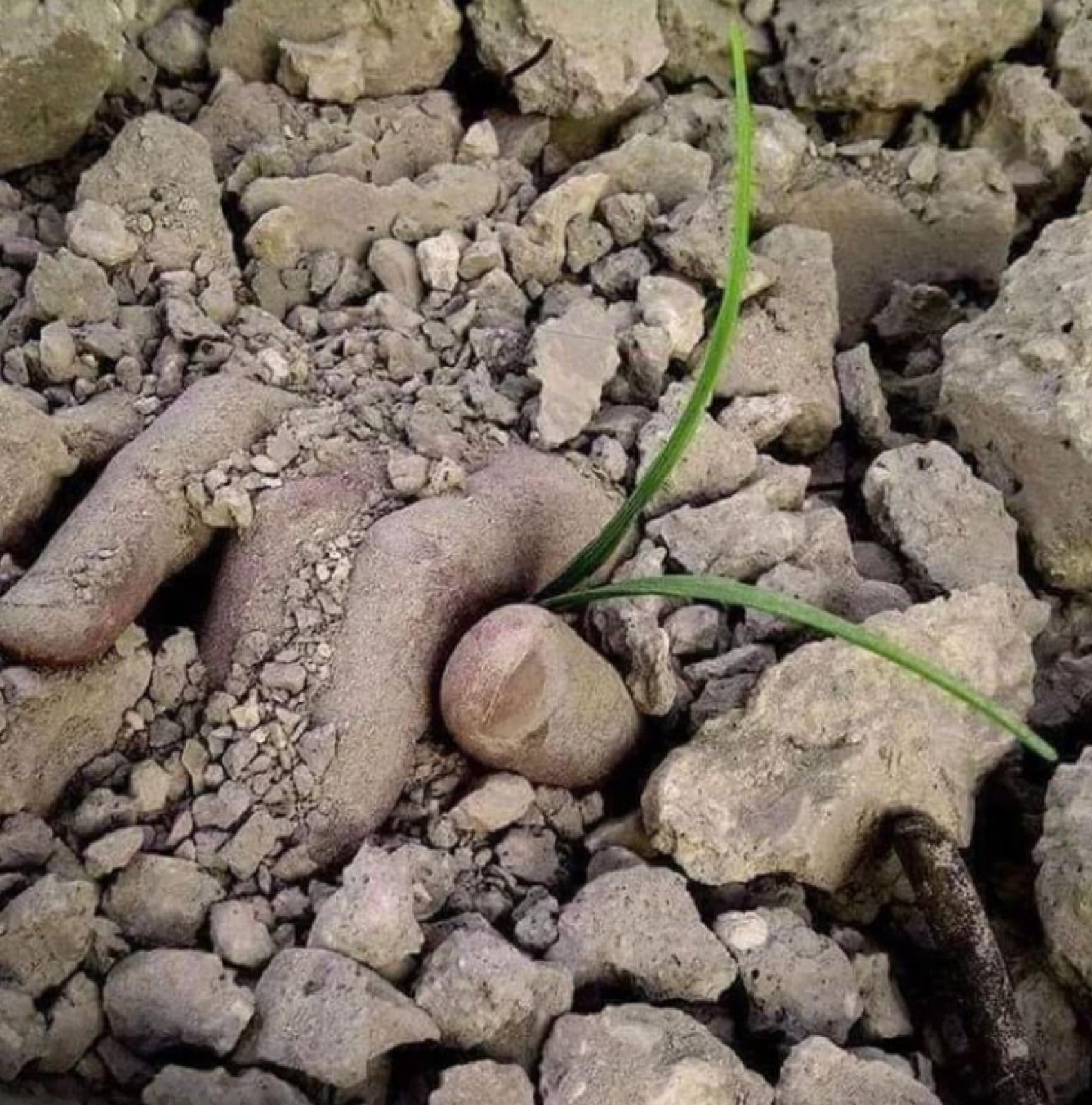
One for the most shattering images I have seen in these past 28 weeks – I believe it will stay with me forever – is that of a date seed that is sprouting between the fingers of a person who is buried under the rubbles. It is both a horror and a miracle, a devastating metaphor that needs no explanation. It is a glimmer and an omen of the indomitable strength of resistance and solidarity.

Unknown's avatar

Flour and blood

To look at Gaza from Kabul amplifies everything, including the sense of powerlessness.

It is since 7 October that every day I think we have seen the worst and yet every new day brings a new measure of horror that shreds whatever is left of our broken hearts.

When Israeli soldiers posted their selfies with female lingerie looted from the drawers of the Palestinian homes that they just destroyed, I thought we had hit the rock bottom. And then there were photos of Israeli soldiers posing all smiles cradled in the cribs of the Palestinian children they just killed. And then rave parties to block the trucks carrying humanitarian aid. And then drones shot at children flying kites on the border with Egypt. And then the daily updates on the number of babies and children killed by starvation.

I thought we couldn’t do any worse. I thought we now had the taste of the apocalypse in our mouths.  

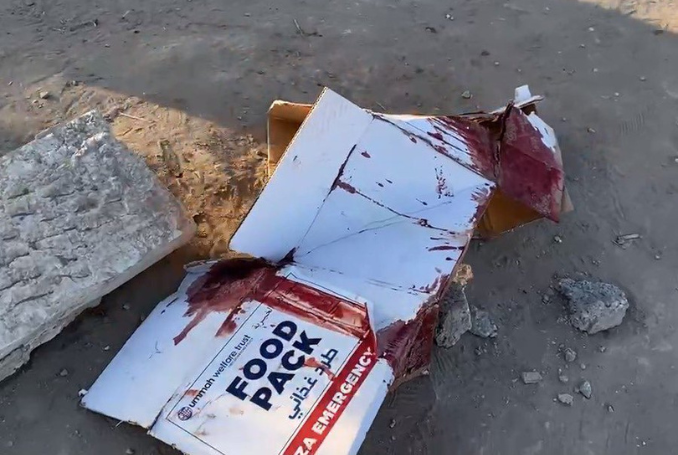
And then what will go down in history as the “flour massacre” happened. The Israeli government defined an unfortunate incident what is in fact a deliberate massacre where the Israeli Army shot at people rushing to gather the little humanitarian aid the Israelis are allowing to trickle into the Gaza Strip. So far there are 104 Palestinians killed and 700 wounded. The balance is likely to increase.

I struggle to come to terms with this and I struggle to breathe fully, a sense of failure chokes me. A few days ago, in an interview to Humza Yousaf, the Scottish First Minister, they asked him what his message to the people of Gaza would be. His answer, with a broken voice, was: I am sorry, humanity has failed you.

And so, I am sorry Gaza for all that we haven’t done and for all that we continue not to do. Maybe we can’t do worse than this, so we are probably only left with facing the pain of such failure and to do a little better: to continue feeling indignation and to continue denouncing these horrors so as they won’t become the norm.

Because it is not true that we have to be resigned to live in a world that we don’t like.