Unknown's avatar

Quanto / How much?

Quanto ci vuole per arrivare dove dobbiamo andare?
Quanta pena riusciamo a sopportare e quanta ne dobbiamo ignorare?
 
Da 460 giorni il senso di umanità si è frantumato e c’è ancora chi continua a guardare dall’altra parte.
 
Stamattina ho visto il video di un maestro di musica di Gaza che accordava la chitarra col ronzio dei droni israeliani che volavano minacciosi sulla scuola. Quanto sono profondi la capacità di resistenza, la forza di ridere, il potere di sperare, l’abilità di immaginare?
 
Il ronzio dei droni è terrorizzante, è pericolo in potenza, un pericolo possibile e imminente che non serve si materializzi per fare paura. Le braccia si contraggono e le orecchie restano allerta. Quanto tempo ci vuole per risanare le crepe che il terrore genera nell’anima? Quante generazioni ci vogliono per smettere di immaginare la paura?
 
Col genocidio ridotto a statistica, di quanto abbiamo bisogno per svegliarci e realizzare? Quante vite congelate sono necessarie per smettere di far finta di niente?
 
E quanto amore e quanta solidarietà per rimanere umani?
 
***

How much does it take to go where we have to go?

How much grief can we bare and how much should we ignore?

In the past 460 days the sense of humanity has shattered and there is still someone who continues to look away.

This morning I watched a video of a music teacher from Gaza who was tuning his guitar to the buzzing of the Israeli drones that were menacingly hovering over the school. How deep are the capacity to resist, the strength to laugh, the power to hope, the ability to imagine?

The buzzing of drones is terrifying, it is looming danger, a kind of danger that is potential and imminent and does not have to materialise to be scary. Arms get contracted and ears stay alert. How much time does it take to mend the cracks that terror etches in the soul? How many generations are needed to stop living in fear?

With the genocide reduced to mere statistics, how much do we need to wake up and realise? How many frozen lives are necessary to stop going about life as if nothing?

And how much love and solidarity do we need to remain human?
Unknown's avatar

If I didn’t hate the word resilience…

The other evening, over dinner, a journalist who was visiting Kabul for the first time asked me if it were possible to imagine that in this particular historical and political conjuncture creative and artistic expressions would be able to survive in Afghanistan. From the way he phased the question it was clear that he thought that the answer would be negative.

If I didn’t hate the word resilience, I would have probably started to answer from there.

Imagining that spaces of creativity wouldn’t resit or even exist is like thinking that one could survive without breathing or making love. There is nothing heroic or voluntaristic, it is just a necessary part of life. And this is the reason why I don’t like the word resilience because it romanticises suffering in exchange for the redemption of a sense of humanity.

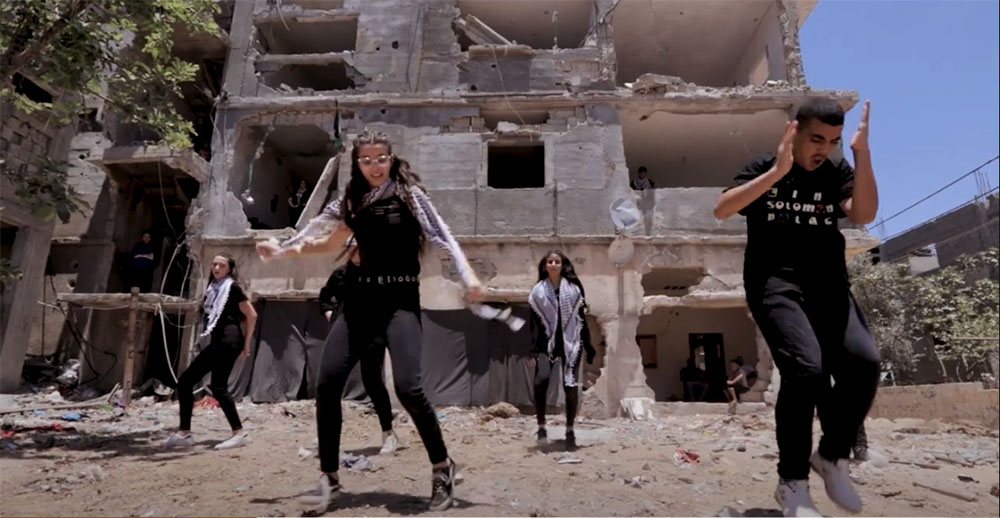
A few days ago, I saw on social media the video of two kids from Gaza who built a swing with ropes and a piece of sponge and played among the debris of a destroyed house.

However small and desperate, that glimpse of humanity resists and survives: it dances, recites poems, invents new games, depicts scenarios for possible futures.

It is hardly ever the case that war wins over that spark of humanity. Costs are high, tremendous, but war is always the one that loses in the end.

Unknown's avatar

Before and after

A few weeks ago, a person I have known for many years wrote me to say that reading my bulletins they felt that I was quite disturbed by the situation in Gaza. The message caught me by surprise and my first response was to react piquedly – of course I am disturbed and so are many of the people who are close to my heart; how can one possibly not be disturbed and go about life as if nothing in a moment like this?

The message stayed in my mind and kept me thinking.

It has been 28 weeks since 7 October and this period marks for me a clear before and after. A line I heard from a recently released film buzzes in my head: “What has Gaza changed for me? My entire being.”

There is an easy risk of sounding rhetorical here, yet I think that this is true for me as well: more in the sense of an unveiling than in terms of actual change, Gaza has changed my entire being. The struggle for Palestinian self-determination has been an integral part of my political formation and has been a fundamental element of my being in the world for over thirty years. In this respect, therefore, there is little change.

So then, what has Gaza changed in me?

Gaza confronted me with myself in unexpected ways.

Not to take a stance is a privilege I have no right to. Not running risks to stand for my ideas is a privilege I have no right to. I have no right to look away and pretend I don’t see what’s happening.

As someone who writes for a living, I have the ethical duty to use clear and precise words. An assassin is an assassin; a genocide is a genocide; a massacre of innocents is a massacre and not an incident; a child does not starve to death randomly, it is killed by a precise strategic machination.  

Silence and indifference are forms of complicity that I no longer want to endorse. They are choices I have no respect for, so I no longer intend to pretend that we are all friends as before.

In a moment of such blinding grief, however, there is a community that is taking shape. A community that is both tight and wide, made of people who are nearby and far away, of people known and unknown, who now perceive a clear demarcation of before and after, who identify with this irrevocable change and support each other in light of such chasm.

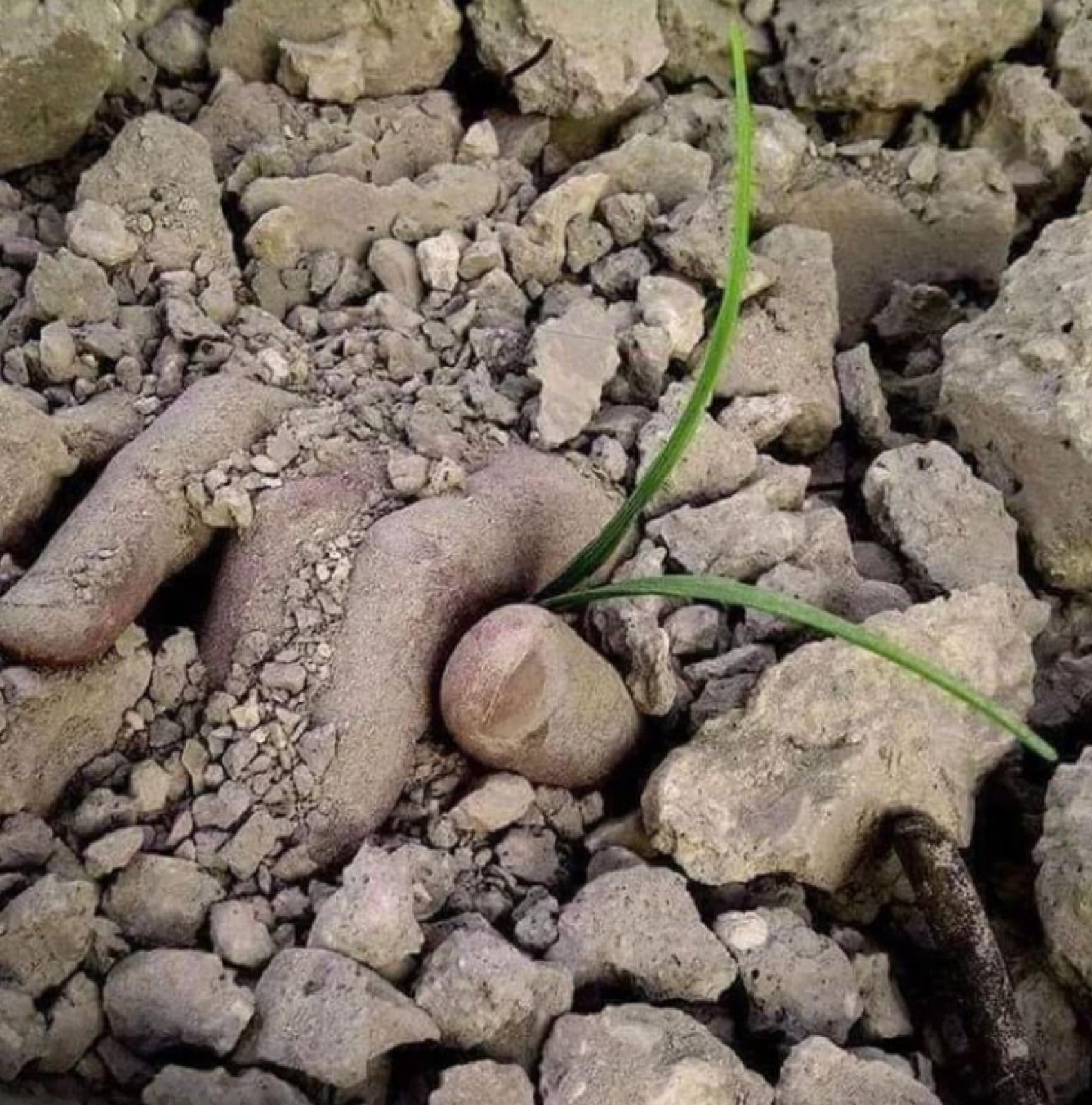
One for the most shattering images I have seen in these past 28 weeks – I believe it will stay with me forever – is that of a date seed that is sprouting between the fingers of a person who is buried under the rubbles. It is both a horror and a miracle, a devastating metaphor that needs no explanation. It is a glimmer and an omen of the indomitable strength of resistance and solidarity.

Unknown's avatar

Flour and blood

To look at Gaza from Kabul amplifies everything, including the sense of powerlessness.

It is since 7 October that every day I think we have seen the worst and yet every new day brings a new measure of horror that shreds whatever is left of our broken hearts.

When Israeli soldiers posted their selfies with female lingerie looted from the drawers of the Palestinian homes that they just destroyed, I thought we had hit the rock bottom. And then there were photos of Israeli soldiers posing all smiles cradled in the cribs of the Palestinian children they just killed. And then rave parties to block the trucks carrying humanitarian aid. And then drones shot at children flying kites on the border with Egypt. And then the daily updates on the number of babies and children killed by starvation.

I thought we couldn’t do any worse. I thought we now had the taste of the apocalypse in our mouths.  

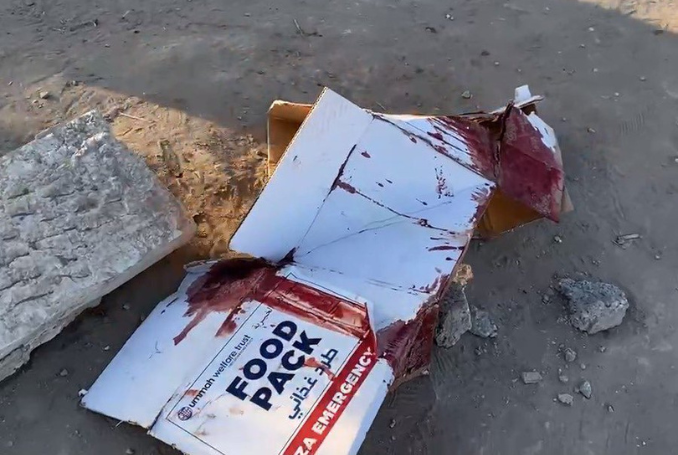
And then what will go down in history as the “flour massacre” happened. The Israeli government defined an unfortunate incident what is in fact a deliberate massacre where the Israeli Army shot at people rushing to gather the little humanitarian aid the Israelis are allowing to trickle into the Gaza Strip. So far there are 104 Palestinians killed and 700 wounded. The balance is likely to increase.

I struggle to come to terms with this and I struggle to breathe fully, a sense of failure chokes me. A few days ago, in an interview to Humza Yousaf, the Scottish First Minister, they asked him what his message to the people of Gaza would be. His answer, with a broken voice, was: I am sorry, humanity has failed you.

And so, I am sorry Gaza for all that we haven’t done and for all that we continue not to do. Maybe we can’t do worse than this, so we are probably only left with facing the pain of such failure and to do a little better: to continue feeling indignation and to continue denouncing these horrors so as they won’t become the norm.

Because it is not true that we have to be resigned to live in a world that we don’t like.

Unknown's avatar

315 mines

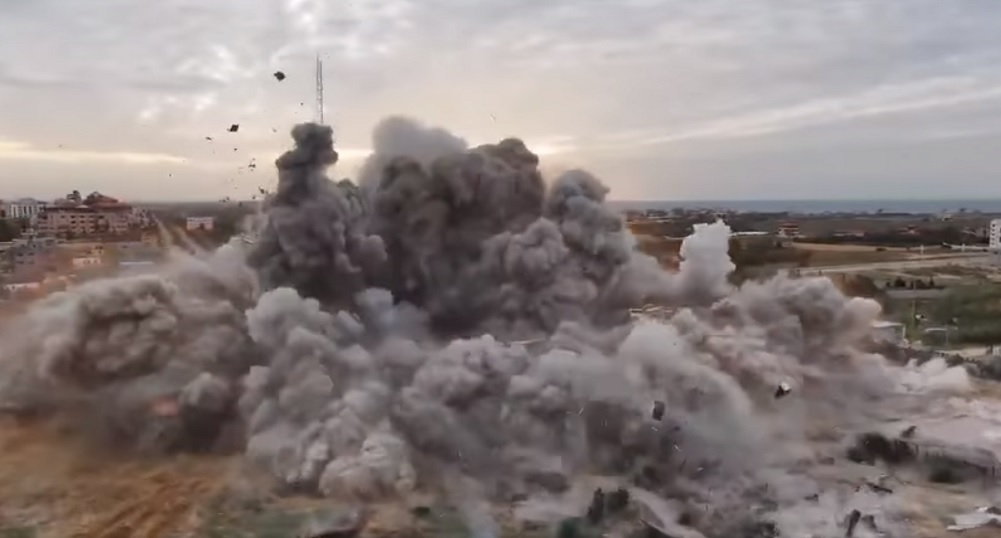
Yesterday the Israeli Army detonated 315 mines to destroy Al-Israa University in Gaza – it was the last standing university in the Gaza Strip. In the campus there was also a museum that preserved 3,000 rare artifacts.

Till October there used to be seven universities in Gaza. Now there is not a single one left.

Al-Israa was occupied by the Israeli Forces seventy days ago and turned into a detention centre where they kept in isolation the Palestinian civilians they arrested before interrogating them. The Israeli Army published a video of the detonation: it only took a bunch of seconds to turn into dust and eliminate any physical presence of a cultural institution.

As I write, there’s also the news of the complete destruction of the last functioning hospital in Gaza.

Till October there used to be thirty-six hospitals. Now there is not a single one left.

It is a list of horrors that does not seem to have an end.

News of war come to our homes as fait accompli. What we witness every day are the end results, the outcomes: a certain number of casualties; the toll of displaced people; the success or failure of a military operation; the raids and round-ups; the arrests; the number of destroyed homes, villages, schools, hospitals.

What is usually not completely visible in the journalistic narration we receive is the extreme complexity of the logistics behind such operations.

I keep thinking about those 315 mines that destroyed Al-Israa – it’s a huge number. Huge.

It takes a perfect coordination of forces, means and resources, but most of all of wills and intentions to be able to destroy a building complex with 315 mines.

To observe the logistics of war with its apparent banality made of chains of command, mechanisations and gestures in themselves “innocent,” is a tremendous way to look at cruelty in the eye.

Besides the political decision, there is a lot of people who spend a lot of time understanding and deciding how to destroy a university, how many bulldozers it takes to raze a village to the ground, how many soldiers are needed for a night raid.

For me, the biggest horror of war is here. In the minds, daily activities and routines of all those who create the conditions to destroy and inflict death and desolation.

The devastating outcomes we witness in the news are the product of a million little gestures, of infinite micro-complicities. It’s for this reason that it makes no sense to speak about collateral damages or involuntary errors – this is a benefit of the doubt that perpetrators of such horrors do not deserve.

War is never necessary; it is instead always deliberately cruel.

Unknown's avatar

The day of reckoning

I have been looking for words for over a month.

Audre Lorde’s exhortation on the tyranny of silence continued to resonate in my ears as, for all these days, I tried to come to terms with my inability to articulate rage and tribulation, with incredulity and with the feeling of being lost, with the impression that humanity has reached a point of no return.

Nothing will ever be the same.

I hope that the horror of the past few weeks will stay with us as a fire mark of shame that will forever prevent us to forget and will force us to decide who we want to be, where we want to stand, what we want to teach to our children, where shall we find the courage to look at ourselves in the mirror every morning.

Nothing can ever be the same. Certain images – their meaning, their pain, their consequences – should never be deleted from the individual and ancestral memory that humanity transmits across generations.

A father who collects the remains of his children killed by bombs in garbage bags.

Premature babies who die because the hospitals infrastructures have been destroyed and there’s no electricity to power incubators. The survivors who scream under the rubbles. The stench of mass graves.

What does it mean for a mother to write the name on the body of her child, so it won’t be an unidentified corpse or an nameless orphan or an anonymous digit in mass statistics? Where did that hand find the strength to write that name?

I write and I feel sick to my stomach.

We are at a point of no return. We are at a day of reckoning with ourselves and with those around us. Those who chose not take a stance are accomplices.

There are no innocent observers.

Let us then gather around those who find the courage to resist. Let us regroup. Let us support each other as a community. Let us listen to the discomfort, the fear, the anguish of those who are close to us and struggle to find the words for it. In this moment of no return, it is clear who stays in our life and who doesn’t – you are either on one side or on the other. Indifference is a choice – and it is a criminal one.

Solidarity is costly, it is tiring and requires running risks. Let us celebrate the courage of those who chose to run these risks – let us not miss an opportunity to offer a word of support: in the midst of so much horror, kindness can still help building little bridges, can help us feel a little less lonely and less lost in the face of the decay of humanity.

I read somewhere that resistance is the highest form of love. Let us then resist together, as a final act of redemption. Let us support each other in reclaiming the right to self-determination.

The objective is not a ceasefire. The objective is the end of occupation, the end of abuses, the end of the monopoly of victimhood that allows Israel to commit abominable atrocities.

The objective is that with the liberation of Palestine we shall collectively achieve the liberation of a sense of humanity that is now buried under the rubbles of the hospitals in Gaza.

Unknown's avatar

The architecture of conflicts

I will be part of a round table discussion on the 15th of June at The Triennale in Milan during the Milano Arch Week 2017.

Here are the details:

 15th June 2017 La Triennale – Giardino delle Sculture
16.30 / 17.30 TALK
THE ARCHITECTURE OF CONFLICTS:A DIALOGUE AROUND LANGUAGES,  TERRITORIES AND REPRESENTATION
moderato da Camillo Boano con:
* Eyal Weizman,
* A
mos Gitai,
* Francesca Recchia,
* Arcò,
* Vento di Terra

Hope to see you there

Unknown's avatar

To Resist is to Exist

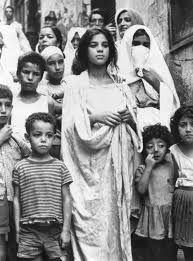
images50 years ago, the revolutionary masterpiece The Battle of Algiers by Gillo Pontecorvo won the Golden Lion at the Venice Film Festival. To mark the anniversary, the film has been restaured and CG Entertainment launched a campaign to published this new edition (in Italian). To support the initiative, they asked me to engage in a conversation with this great work of art. My thougths are below and this is the link to support the campaign.


We live in dark times, in a precarious equilibrium between fear and inurement. The big engine of the empire huffs and puffs, hit at its core by lone wolves and organised terrorists. The chasm between us and them grows wider, defined by shortcuts and superficial understandings that seem convincing because are worded in the incontestable language of reassuring populism. We live in dark times that are nurtured by historical courses and recourses: History does not teach, human kind does not learn from past mistakes, the thirst for revenge is more satisfying than the desire for transformation. The dystopia of the present builds isolating and fragmentary geographies, designed in the negative and founded on divisions. In this grim picture, instead of the possibility of encounters, the only thing that seems to multiply are separating devices and mechanisms of exclusion: concrete walls, thousand-eyed drones, coils of barbed wire.  

Read the full article on With Kashmir