Unknown's avatar

Dove trovi la luce / Where you find light

Gli ultimi giorni sono stati pieni di pensieri sulla politica, sulla speranza, sulle contraddizioni che vivono all’interno di ogni essere umano. E sulla bellezza che si nasconde sotto queste contraddizioni se mi dò la possibilità di cercarla.

Sono pensieri nati da incontri e ritrovamenti.

Il ritrovamento dei vecchi amici d’infanzia con cui ci confrontiamo sulla politica bella e quella brutta mentre ricordiamo antiche scorribande.

E l’incontro con una persona ed un gruppo di persone piene di luce, che hanno una storia di vita diversa dalla mia e che sembrano impossibili da accostare a meno che non si lasci aperto uno spiraglio di possibilità.

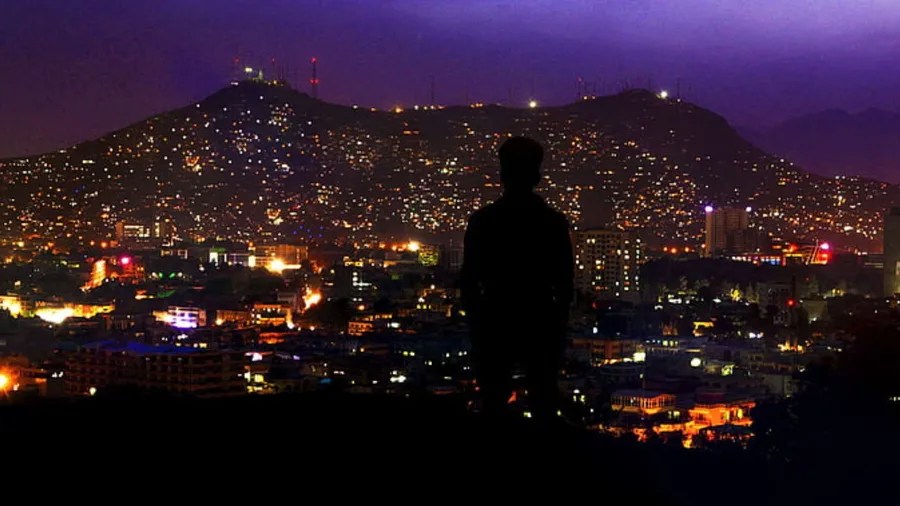
Kabul, quando sai ascoltare, insegna.

Mi insegna che la luce si trova dove non me l’aspetto, a volte dove per principio non la vorrei vedere. È una realizzazione che brucia e che segna, ma che non si lascia dimenticare.

Che la luce c’è, e bisogna riconoscerla ed abbracciarla, e lasciarsi accompagnare in giorni come questi di desolata umanità.

Che la luce c’è. È questo che ho imparato negli ultimi giorni da questa persona e da questo gruppo di persone e ho intenzione di dedicarmi a questo insegnamento.

Accogliere la luce dove la trovo. La luce che mi prende di sorpresa e che può essere coltivata insieme anche se questo insieme è un conglomerato improbabile di storie diverse.

La luce che mi disorienta ma che richiede attenzione e una risposta di adesione e cura.

Una luce che mi scalda e che, per quanto chieda di essere coltivata, finisce per essere nutrimento per i semi del cambiamento e per la possibilità di una speranza rivoluzionaria.

***

The last few days have been full of thoughts about politics, hope and the contradictions that live within every human being.

And about the beauty that can be found hidden behind these contradictions if I allow myself the chance to look for it.

These thoughts came from new encounters and a rekindling.

The rekindling with old childhood friends with whom we discuss good and ugly politics while reminiscing of old mischiefs.

And the encounter with a person and a group of people full of light. They come from a very different life journey and would have been difficult to meet unless a crack of possibility is allowed to stay open.

Kabul teaches a lot to those who can listen.

She teaches that I can find light where I don’t expect it, sometimes where, out of principle, I would prefer not to see it. It is a burning realisation, one that I will not forget.

She teaches that there is light. And that I need to recognise it and embrace it and let it guide me in these days of desolate humanity.

She teaches that there is light – this is what I learned in the last few days from this person and this group of people, and I am now committed to cultivate this lesson.

To welcome the light where I find it. The light that takes me by surprise and can be nurtured together even if this together is an improbable conglomerate of different life stories.

A disorientating light that demands attention and requests commitment and care.

A light that warms me up and that, even though it requires nurturing, ends up in turn nourishing the seeds of change and the possibility of a revolutionary hope.

Unknown's avatar

Quanto / How much?

Quanto ci vuole per arrivare dove dobbiamo andare?
Quanta pena riusciamo a sopportare e quanta ne dobbiamo ignorare?
 
Da 460 giorni il senso di umanità si è frantumato e c’è ancora chi continua a guardare dall’altra parte.
 
Stamattina ho visto il video di un maestro di musica di Gaza che accordava la chitarra col ronzio dei droni israeliani che volavano minacciosi sulla scuola. Quanto sono profondi la capacità di resistenza, la forza di ridere, il potere di sperare, l’abilità di immaginare?
 
Il ronzio dei droni è terrorizzante, è pericolo in potenza, un pericolo possibile e imminente che non serve si materializzi per fare paura. Le braccia si contraggono e le orecchie restano allerta. Quanto tempo ci vuole per risanare le crepe che il terrore genera nell’anima? Quante generazioni ci vogliono per smettere di immaginare la paura?
 
Col genocidio ridotto a statistica, di quanto abbiamo bisogno per svegliarci e realizzare? Quante vite congelate sono necessarie per smettere di far finta di niente?
 
E quanto amore e quanta solidarietà per rimanere umani?
 
***

How much does it take to go where we have to go?

How much grief can we bare and how much should we ignore?

In the past 460 days the sense of humanity has shattered and there is still someone who continues to look away.

This morning I watched a video of a music teacher from Gaza who was tuning his guitar to the buzzing of the Israeli drones that were menacingly hovering over the school. How deep are the capacity to resist, the strength to laugh, the power to hope, the ability to imagine?

The buzzing of drones is terrifying, it is looming danger, a kind of danger that is potential and imminent and does not have to materialise to be scary. Arms get contracted and ears stay alert. How much time does it take to mend the cracks that terror etches in the soul? How many generations are needed to stop living in fear?

With the genocide reduced to mere statistics, how much do we need to wake up and realise? How many frozen lives are necessary to stop going about life as if nothing?

And how much love and solidarity do we need to remain human?

Unknown's avatar

Sotto lo stesso cielo / Under the same sky

Photo credit : Lorenzo Tugnoli

Il cielo è grigio e si fa fatica a tenere gli occhi del tutto aperti; da quello spiraglio oggi si vedono nuvole nere e si sente il peso degli anniversari incombenti.

Da quello spiraglio, la polvere e il fumo per le strade di Beirut appannano la vista.

Da quello spiraglio si intravedono le macerie di Gaza e si respirano odori inimmaginabili.

Da quello spiraglio filtra la puzza della cupidigia e l’avidità di chi semina morte.

Da quello spiraglio abbaglia la forza di chi si rifiuta di soccombere, della gente di Gaza che raccoglie il poco che non ha per aiutare il Libano.

Da quello spiraglio entra un barlume di speranza sempre più flebile e sempre più affaticato.

Un barlume che vacilla ma non demorde.

Un barlume che ci chiede di credere ancora in lui.

***

The sky is grey and it is difficult to keep the eyes fully open; from the tiny open crack today one can see black clouds and feel the weight of impending anniversaries.  

From that crack, the dust and the smoke over the streets of Beirut mist up the sight.

From that crack, one catches a glimpse of the rubbles in Gaza and breathes unimaginable smells.  

From that crack filters the stench of greed and the rapacity of those who sow death.

From that crack, the strength of those who refuse to succumb is bedazzling and so are the people of Gaza who share what they don’t have to help Lebanon.

From that crack, enters a glimmer of hope – ever so feeble and ever more tired.

A glimmer that falters but does not give up.

A glimmer that demands to be believed no matter what.

Unknown's avatar

We passed through the Earth lightly

These days, the title of a book by Sergio Atzeni keeps coming back to mind. The book talks about something else, but the title resonates in my head as an invitation: We passed through the Earth lightly.

It is almost a year that we have been living through a genocide and the Museum of Palestine has an ongoing campaign titled Gaza Remains the Story. One of its poetic provocations interpellates each one of us directly by asking: How do you lighten your steps as you walk over the rubble, so that those buried under do not have to carry the burden of your weight?

These two exhortations resonate in my head as a unison, as a unique invite – personal and political, individual and collective – to rethink about the weight of my steps and consequently the direction of my choices.

The egotistical dimension of the concept of impact is connected to a weighty passage and presence that are meant to leave a mark. For good or bad, as an invite or as a threat, weight and impact are terms that are frequently used in pedagogical paths as well as in the rhetoric of civilisational, “development” or humanitarian interventions.

What if this is all wrong? What if the violence of the mark we are meant to leave would not be the necessary root for change?

What if stepping lightly – respectfully and delicately, sensibly and kindly, slowly and tenderly – would be the way to be in the world for ourselves and for others? A way that respects the Earth we walk on, that gives precedence to care rooted in the present and not aimed at a future outcome, that values reciprocity over profit.

A light step that respects those who are physically and symbolically buried under the rubbles, that teaches children kindness; a light step that helps us be in the world in a moment of inexplicable pain and violence.

Unknown's avatar

Before and after

A few weeks ago, a person I have known for many years wrote me to say that reading my bulletins they felt that I was quite disturbed by the situation in Gaza. The message caught me by surprise and my first response was to react piquedly – of course I am disturbed and so are many of the people who are close to my heart; how can one possibly not be disturbed and go about life as if nothing in a moment like this?

The message stayed in my mind and kept me thinking.

It has been 28 weeks since 7 October and this period marks for me a clear before and after. A line I heard from a recently released film buzzes in my head: “What has Gaza changed for me? My entire being.”

There is an easy risk of sounding rhetorical here, yet I think that this is true for me as well: more in the sense of an unveiling than in terms of actual change, Gaza has changed my entire being. The struggle for Palestinian self-determination has been an integral part of my political formation and has been a fundamental element of my being in the world for over thirty years. In this respect, therefore, there is little change.

So then, what has Gaza changed in me?

Gaza confronted me with myself in unexpected ways.

Not to take a stance is a privilege I have no right to. Not running risks to stand for my ideas is a privilege I have no right to. I have no right to look away and pretend I don’t see what’s happening.

As someone who writes for a living, I have the ethical duty to use clear and precise words. An assassin is an assassin; a genocide is a genocide; a massacre of innocents is a massacre and not an incident; a child does not starve to death randomly, it is killed by a precise strategic machination.  

Silence and indifference are forms of complicity that I no longer want to endorse. They are choices I have no respect for, so I no longer intend to pretend that we are all friends as before.

In a moment of such blinding grief, however, there is a community that is taking shape. A community that is both tight and wide, made of people who are nearby and far away, of people known and unknown, who now perceive a clear demarcation of before and after, who identify with this irrevocable change and support each other in light of such chasm.

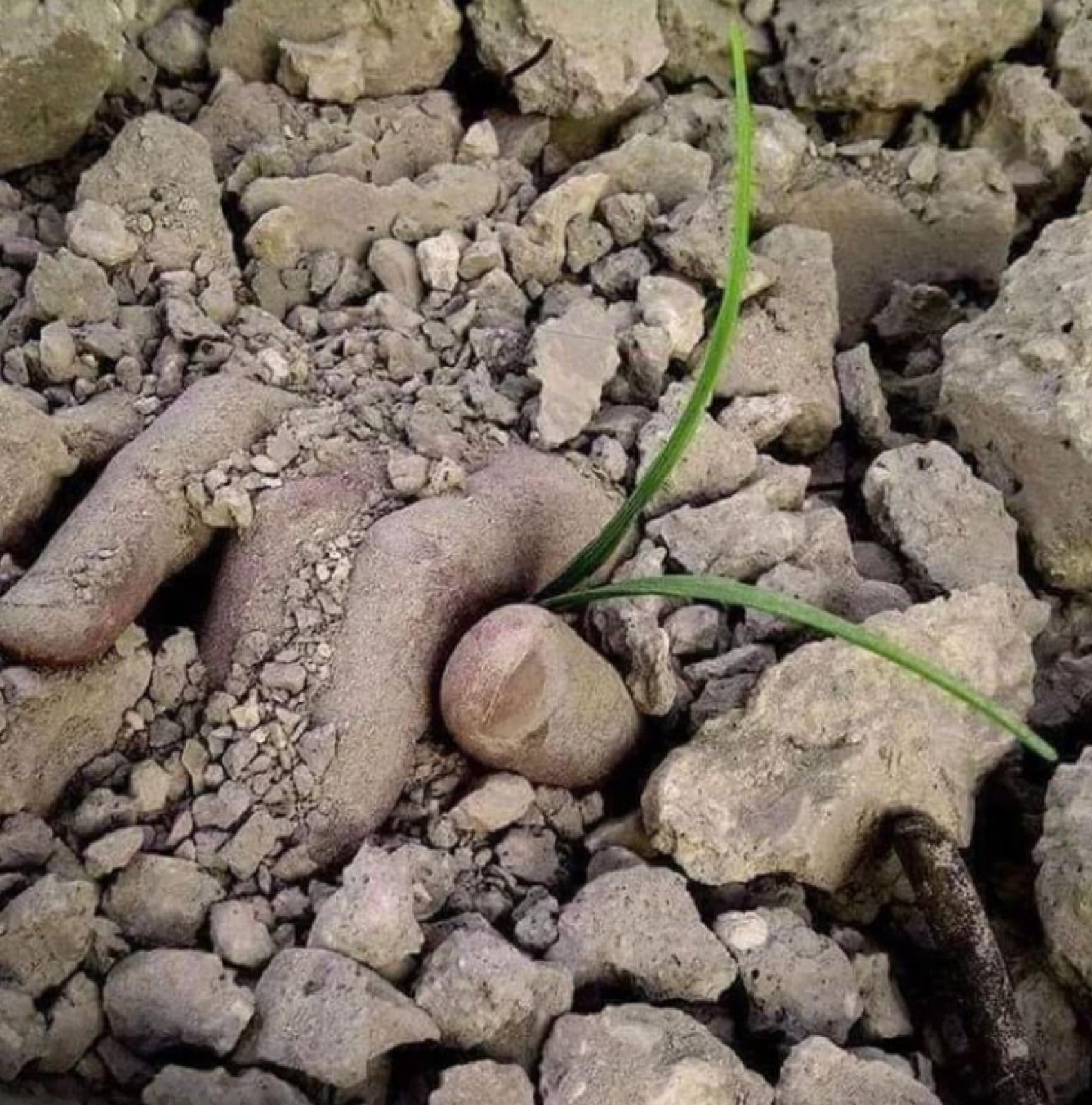
One for the most shattering images I have seen in these past 28 weeks – I believe it will stay with me forever – is that of a date seed that is sprouting between the fingers of a person who is buried under the rubbles. It is both a horror and a miracle, a devastating metaphor that needs no explanation. It is a glimmer and an omen of the indomitable strength of resistance and solidarity.

Unknown's avatar

The things that I don’t know

white-noise

Yesterday the cousin of one of our teachers has been killed in a targeted assassination. It felt like one of those stories that you read on the newspaper and you think they will never be part of your life because they belong to a foreign elsewhere. One of those stories that are beyond the ordinary and have nothing to do with the normality of the everyday.

I am here to run a school. Before I started, my idea of what my routine would look like included the revision of teaching methods, the achievement of artistic excellence, grades and disciplinary notes. What turned out to be a part of my ordinary administration is also the management of situations that are extraordinary, alien and emotionally destabilising – which, however, in a country at war are sadly integral to daily life.

Impermanence and transience are difficult to conceive as some of the inevitable ingredients of our life; they are difficult to digest as a force that roots you in the present rather than as a windstorm that erases any sense of direction.

The concept of resilience is often abused and quoted far too frequently and light-hardheartedly. But it is moments like this, when all the things that I don’t know lay bare, that reveal the mysterious strength that we have inside and we’re often not aware of. It is an immense force that helps keeping things together; that helps continuing to look ahead; a silent strength that protects the desire – as Vittorio Arrigoni used to say – to stay human.

Unknown's avatar

Make Hope

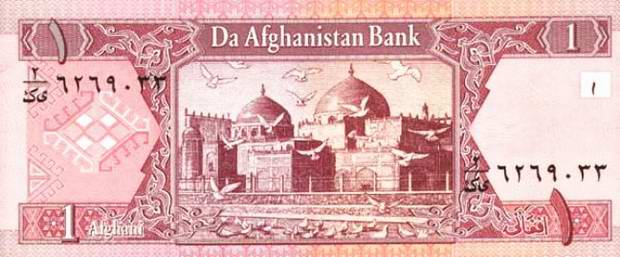
banknote_1_afghan_afghani_reverse

At the Institute we are going through a period of transformation. Before we can start building new things, we have to do a lot of cleaning up and should not forget the bigger picture in spite of the frustration coming from tons of banal daily tasks.

Fear is often the first response to change along with great diffidence for those who want or have to promote alternatives.

Yesterday I was talking to my colleague, the real cornerstone of the Institute, about this complicated period: about what we are doing, what is expected of us and about how we need to keep focusing on the vision we are striving to realise. My colleague is a very serious person, a man of few words; discussions with him don’t divert from what is essential neither do they indulge in gossip or self-celebration.

The problem in this country – he told me – is that nobody looks at the future; people are not even sure that a future exists. That’s why we are all here holding on to the present, trying to get the most out of it for ourselves, for our own personal interest, without even thinking of a greater good.

I replied that such an attitude is an enormous obstacle for those who are working in education as they build in the present with an eye to the future.

It is a matter of bad habits – he continued. People are happy with what they have now, the little privileges they have accumulated and close off against anyone who tries to question them.

A bit discouraged, I asked: What are we doing here then?

Before averting his eyes and going back to work, he answered: We are here to make hope.

I just can’t stop thinking about this conversation. These two words – make hope – have completely changed the way I look at things. I have always thought of hope as a dimension of the heart and the soul; as a beautiful feeling, a source of optimism that may however run the risk to turn into a passive waiting for a better future to come. And now I discover that hope is something you can make.

I think this is the beginning of a small revolution. I came to the Institute thinking that I was here to revive the educational offer and now, all of a sudden, I find myself to be here to make hope. The weight of such responsibility terrifies me, but at least now I know that I am in a domain that is familiar: whether I succeed or not is a different story, but at least I can try – at least there is plenty to get my hands dirty.


Unknown's avatar

On Advocacy and Policies

Below is the keynote address I delivered in occasion of the Fall Meeting of the Global Consortium for the Preservation of Cultural Heritage (GCPCH)

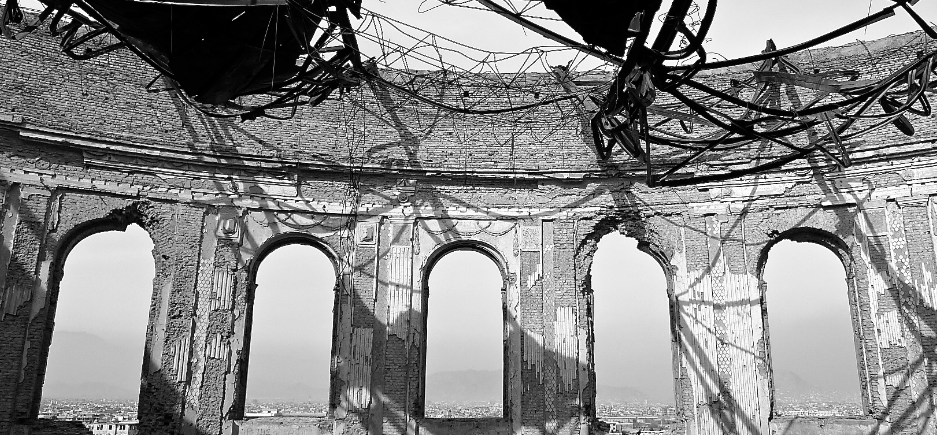
darulaman

It is a great privilege to be here today and have the opportunity to deliver this address on Advocacy and Policies.

Considering the amazing amount of institutional knowledge in the room, the best way I can meaningfully contribute to the conversation is by bringing to the table my experience from “the ground.”

Over the past fifteen years I have been working as an independent researcher supporting artists, cultural practices and productions in countries in conflict. For me, it is hardly possible to think of cultural heritage without thinking of people first.

I would like to begin by showing you a short art film from Afghanistan.
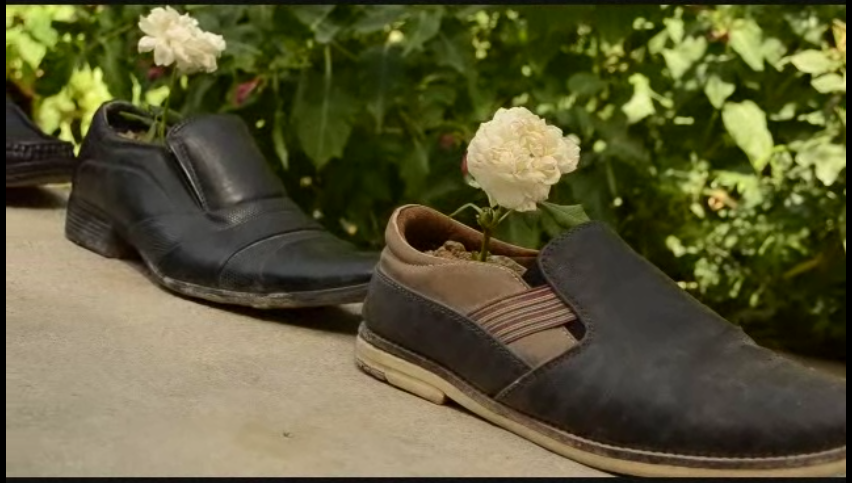
Screen Shot 2017-09-22 at 11.07.13 pm

The film, directed by Farahnaz Yusufi, is titled Ruyeeha-e Parihaa which in Farsi means Angel’s Dream.

There is not much to add to such a testament to the power of ingenuity. Farahnaz Yusufi opens for us a window to the never-ending quest for poetry. In the film, she also makes a complex reference to Sufi mystical culture that I have no time to unpack now, but we can certainly return to later in the discussion. Works like this, which combine a multiplicity of emotional, cultural and symbolic layers, interpellate us – as professionals who work towards the protection, preservation and revival of cultural heritage – with many fundamental questions. These questions, rather than the answers to them, will be the fil rouge that will guide my presentation.
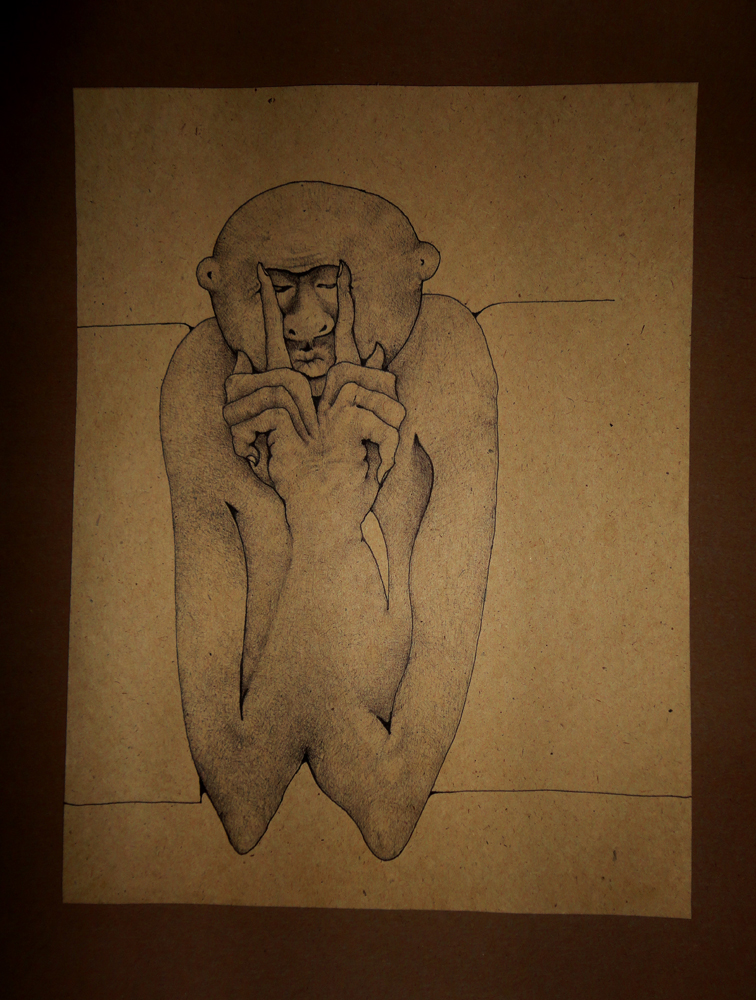
silent face

Baqer Ahmedi, Silent Face, 2014

A few days ago I met up with Baqer Ahmedi, one of the most talented emerging artists in Afghanistan, whom I have had the pleasure to mentor since he started his artistic journey. He updated me about his work and told me that he was not entirely satisfied with the progress he was making: for several months he could not draw as he had ran out of wasli paper and there wasn’t any available to buy in Kabul. Baqer Ahmedi is a contemporary artist, who works on a kind of handmade paper called wasli that is traditionally used for miniature painting – you can see here a couple of images from his work.

Baqer is about to leave Afghanistan as many artists have done before him. He’s going to Pakistan in a couple of weeks to begin his bachelor’s degree in Lahore. There he will be able to buy more paper and resume drawing. His matter of fact tone in telling this story stayed with me: there was no resentment. This is how often things are there in Afghanistan; it is normal not to have paper and not to be able to draw: there’s not much else to add.

It is from this lack of paper that we should probably start when we think of our role in protecting and reviving cultural heritage.

Luckily not the whole world is experiencing the same extreme conditions of Afghanistan, but I believe there’s much to learn from situations of conflict. I have just come back from Kabul, where I have been based for the past five years. In spite of the immense problems that the country is facing to shape itself into a mature and diverse nationstate, it is absolutely remarkable to see the relevance and centrality that culture and heritage play in the political debate.

During the last year, as a programme specialist with the Aga Khan Trust for Culture, I worked closely with the Afghan Minister of Information and Culture to design a roadmap for both a National Cultural Policy and for the National Inventory of Intangible Cultural Heritage. The challenges have been and still are enormous. I would like to share some thoughts on my experience and perhaps we can further discuss them in our roundtable later on.

Working at the crossroad between international organisations, funding agencies and public institutions requires a lot of juggling. There are petty power games, there is the pressure to show progress and present deliverables, there is the aspiration to be relevant, to be accurate, to be meaningful. It is a jigsaw made of tons of tiny moving pieces: each of them requires full attention as the puzzle needs them all in order to be complete. Any attempt at cutting corners simply backfires. The greatest dilemma is between the urge to be efficient and the ethical desire to be sustainable.

Here the biggest variables are “the people” and time.

Because of my personal political history, I have always distrusted top-down decisions. This attitude has a profound influence on how I conceive my work. More on this later.

To go back to the issue of “the people” and time, when working in the context of so-called developing countries, our activities are measured by the strict sets of deadlines dictated by donors’ fundings. It is the logic of projects that orientates us along with the requirement to show short-term tangible results matched against large, sustained financial investments. This is all well and good, but it is also extremely easy to lose perspective and forget the big picture.

Most of what I do is to work with people, but working with people requires time and the kind of time that is needed to gain trust and build an equal relationship is out of sync with the temporality of a project-driven modality.

Let’s think of the National Cultural Policy for Afghanistan as an example. The quickest I could envision a roadmap for its development was on a three year scale with at least two rounds of nation-wide consultation with civil society organisations, local elders, religious and community leaders. In a country like Afghanistan, though, even three years into the future are difficult to envision: hardly any donor engages in such a “longterm” commitment, many of the decisions are personality-driven and so directions change along with the high turnover of the people in charge. Moreover, from next April the new electoral season will begin and the uncertainty that this entails may discourage anyone to engage in anything that at this point would appear utterly impossible.

I do not intend to paint a hopeless scenario here, I am rather trying to think out loud about the rationale that is behind what may seem a more pragmatic and certainly faster approach, whereby experts are brought into the picture for short-term consultancies to give answers and supposedly solve problems. Not always, however, is the specific professional competence of these experts paired with a nuanced understanding of the complexity and uniqueness of the context.

This way of working raises a number of questions. Will this ever be impactful? Will the results ever last? Will people ever feel ownership of any of the decisions made in such a detached manner?

The answer to this lack of space and time is often found in advocacy. An unavoidable component of every project proposal, it becomes the way to reach out to the people, to involve them, to make sure that we tick the box of inclusiveness.

In this sense, the idea of advocacy is often mistaken with public campaigning, with large scale mobilisations that bring attention to pressing issues. By doing this, we hope to inculcate new ideas, to communicate to the people the urgency of concentrating our efforts for the preservation of physical and intangible heritage. Besides actions taken within the institutional framework, there are also special events that serve the same purpose.

Here are a couple of examples of individual initiatives that have quite successfully brought to the public attention elements of endangered cultural heritage.

29913DD700000578-3124580-Stunning_They_used_the_projections_to_fill_the_175_feet_hole_lef-a-7_1434389593675

In 2015, Zhang Xinyu and Liang Hong, two Chinese philanthropes, built in Bamiyan a 3D laser projector to create a 50-meter-tall hologram of the Buddhas that were destroyed in 2001 by the Taliban. This hologram was presented in a public event where 150 people participated.

 Another beautiful example is the “before and after” series of photographs that Joseph Eid took in 2016 in Palmyra.
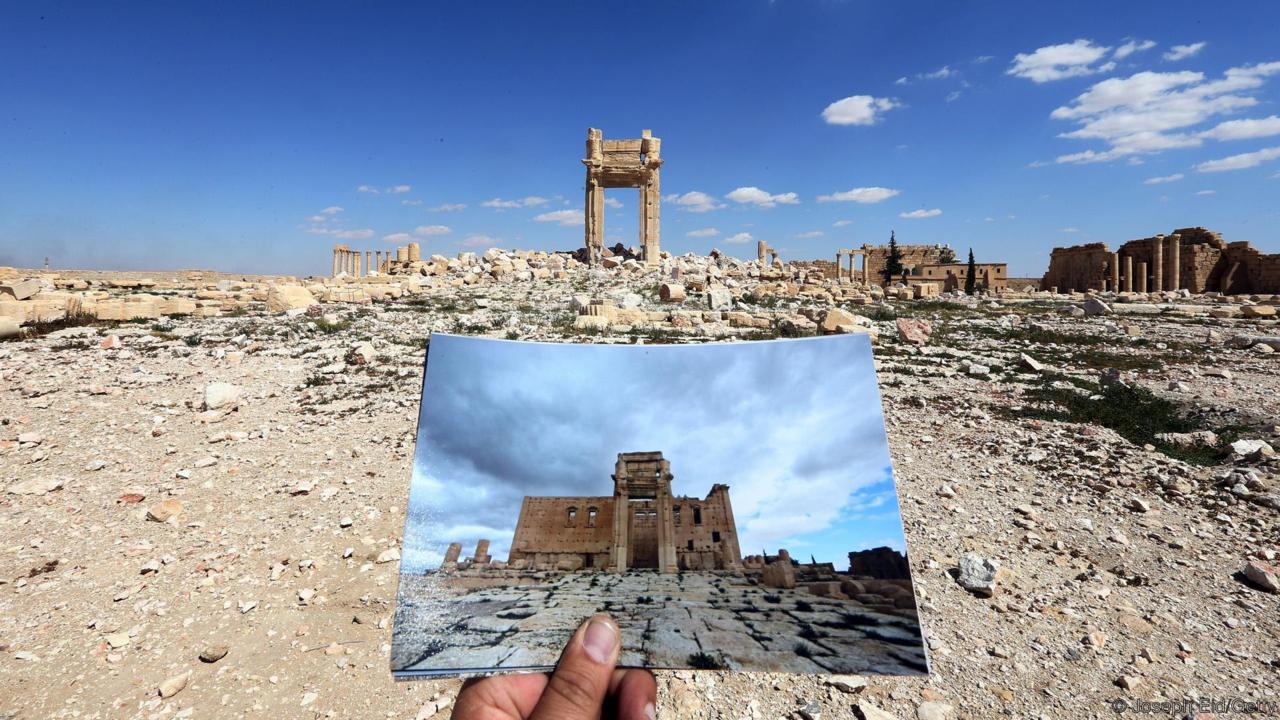
SYRIA-CONFLICT-HERITAGE-PALMYRA

Joseph Eid/Getty

 Expressions like these are significant examples of advocacy, but I believe it is important to think beyond them. Don’t get me wrong, I am not against campaigning and public mobilisation. I am however suspicious of an approach to advocacy that is limited to that. In these terms, in fact, advocacy becomes a tactic, almost a quick fix instead of a form of strategy.

I just finished reading a book by Italian psychoanalyst Massimo Recalcati titled L’ora di Lezione. Per un’erotica dell’insegnamento.
recalcati

Massimo Recalcati, L’ora di lezione. Per un’erotica dell’insegnamento. Cover Photo.

There is no English translation of the book yet, the title roughly means The Lesson’s Hour. For an Erotic Approach to Teaching. The book addresses the profound crisis that the Italian school system is undergoing. It looks at how the great social transformations of the last four decades have had an impact on School (with capital S) as an institution as well as on the role that teachers play in the educational enterprise. This is not the right time to go into further detail about the book, but there is one point that Recalcati makes that may be useful for our discussion. He believes that teachers should reclaim their role in presenting to the students the objects of knowledge as erotic objects. In other words, the task of the teacher is to activate the desire to know. In Socratic terms, this is an unearthing process rather than an imposition. The maieutic art of teaching recognises potentials, nurtures desire and facilitates the space of expression.

I wonder if we can use the same model and re-think of advocacy in such terms. This will require, however, a serious shift in attitude.

A few weeks ago, I gave a talk at a gathering of geographers and GIS experts in Bangalore in South India on the role that mapping can play in heritage preservation. Most of the participants came from a non proprietary OpenStreetMap (and a free software) background and the discussion that followed ended up focussing on the possibility of communities’ involvement and participation in the identification and geo-localisation of heritage sites. At this point a member of the audience, the only urban planner in the room, stood up and quite forcefully stated that people don’t know what is relevant; it is therefore our duty to teach them the importance of heritage. She left the room soon after, but the echo of her statement informed the rest of the conversation.

The presumption that we, all of us in a position of power and responsibility, know better than “the people” is a scary beast and it encages the nature of heritage within narrow and “managerial” parameters.

Statements like these are problematic at a multiplicity of different levels and they are – whether in a spoken or unspoken fashion – more common than one would be willing to admit. The first order of troubles comes from the fact that we (the experts, the bureaucrats, the academics) set ourselves apart from them, the people. We forget that beyond our expertise it is our cultural roots to make us who we are – be it by embracing or by opposing them. Somewhere, somehow, beyond our professional lives, we belong, we are members of a community and we are shaped and defined by a set of cultural practices, places and meanings that we share with others.

It is remarkable how quick we are in forgetting this when we wear our professional hats.

The second layer of problems with such statements comes from the fact that they ossify the idea of heritage within strict rules and regulations thereby ignoring its granular and embodied nature. In both physical and intangible terms, heritage is malleable and ever-changing, it is that particular tree, that folktale, this street corner that a community aggregates around and identifies with.

When my sister tells the story of where we come from, she loves to say that local dialects change every few kilometres and with every single village. What sets our hometown apart, she would go on, is the fact that we don’t have any distinctive dialect as the city was entirely destroyed by an earthquake in 1915.
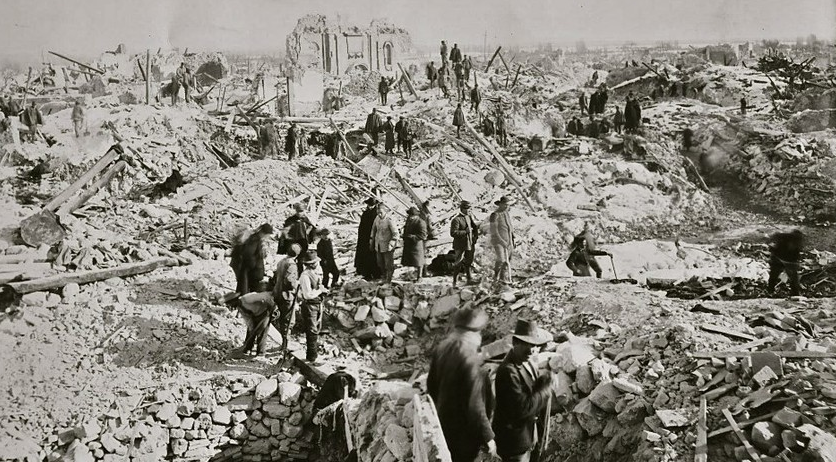
Screen Shot 2017-09-24 at 5.40.12 pm

Photo by Lansing Callan for USGS (Us Geological Survey)

It is apocryphal stories like this one that help us shape our narratives as individuals who belong to a place and a community. It is stories like these that perpetuate a notion of living traditions.

I have recently discovered an incredibly inspiring document written under the auspices of UNESCO in 1998 in occasion of the 50th anniversary of the Universal Declaration of Human Rights. It is the Declaration of Human Duties and Responsibilities, which quite simply responds to the rights we claim with a set of duties and responsibilities that we have in order for our rights to come alive.

The Declaration is a manifesto of the ethics of responsibility and helps us conceiving the shift between moral and legal duties: it is about what we ought to do in order to guarantee the survival of the universal democratic values we cherish and claim as fundamental.

The strive towards equality and meaningful participation in public affairs is at the core of the document.

Relevant to our context, Chapter 11 of the Declaration is dedicated to Education, Art and Culture. Within this section, article 38 reminds us that within communities there is both an individual and a collective responsibility to provide a framework for and to foster arts and culture.

It is on this note that I want to conclude my address today.

As professionals who work towards the preservation of heritage – as well as as individuals who belong to a particular community – our job is also our duty.

When we create the conditions for the protection and the full enjoyment of cultural heritage we are basically performing our civic, obligatory and reciprocal duty as citizens.

Unknown's avatar

Liberticide

BunmGlGIIAAJ1Z7


“It happens slowly, irreparably, slyly. What was the title of that song? Killing me softly. That’s how freedoms are killed – for the most.”

I write on Chapati Mystery about the slow, inexorable curbing of freedoms.

You can find the full article here.

Unknown's avatar

L’esercizio della responsabilità

Image result for responsabilità

Storicamente, i periodi di crisi socio-politiche sono caratterizzati da grandi movimenti popolari di protesta e rivendicazione dei diritti. L’enfasi sulla dimensione di rivendicazione da una parte implica la presupposizione di un potere che ascolta, dall’altra sposta la necessità dell’azione al di là di chi protesta.
E’ forse anche per questo che un documento tanto importante quanto la Carta Universale dei Doveri e delle Responsabilità è praticamente sconosciuta. A seguito di un processo consultivo internazionale che ha coinvolto esperti, politici (fra cui Leoluca Orlando), intellettuali (inclusi Dario Fo e Gianni Vattimo) e rappresentanti di comunità, la Carta è stata redatta a Valencia nel 1998 in occasione del 50º anniversario della Dichiarazione Universale dei Diritti Umani sotto il patrocinio dell’UNESCO. La Carta è una versione speculare della Dichiarazione dei Diritti Umani e funziona quasi da contrappunto: a tutto ciò di cui abbiamo diritto, fa da contraltare quello che dobbiamo fare per renderlo possibile.
Premessa fondamentale del documento è la distinzione di piani fra doveri e responsabilità. I primi hanno un valore di impegno morale, che si traduce in vincolo legale attraverso l’assunzione di responsabilità: se non espletiamo a pieno i nostri doveri per garantire i diritti di tutti, siamo perseguibili penalmente.
In tempi come questi, per esempio, è importante ricordare che al sacrosanto diritto al libero movimento fa eco il dovere all’ospitalità – in particolare verso chi è dislocato a causa di guerre o carestie – nell’ottica di un’equità non solo formale, ma sostanziale.
L’articolo 38 della Carta si concentra su doveri e responsabilità tanto degli individui che delle comunità di creare le condizioni e sostenere le arti e la produzione culturale.
Lavoro da oltre dieci anni nella promozione culturale, rivitalizzazione del patrimonio immateriale e sostegno agli artisti in paesi in conflitto. Fra le ragioni che muovono il mio agire c’è la consapevolezza di una profonda interconnessione tra urgenza, diritto e dovere alla libera espressione. Alla luce della Carta, la mia attività professionale è la risposta a una chiamata all’assunzione di responsabilità per cui ciò che facciamo è parte di una tutela dei diritti tanto individuali che collettivi.