Unknown's avatar

Before and after

A few weeks ago, a person I have known for many years wrote me to say that reading my bulletins they felt that I was quite disturbed by the situation in Gaza. The message caught me by surprise and my first response was to react piquedly – of course I am disturbed and so are many of the people who are close to my heart; how can one possibly not be disturbed and go about life as if nothing in a moment like this?

The message stayed in my mind and kept me thinking.

It has been 28 weeks since 7 October and this period marks for me a clear before and after. A line I heard from a recently released film buzzes in my head: “What has Gaza changed for me? My entire being.”

There is an easy risk of sounding rhetorical here, yet I think that this is true for me as well: more in the sense of an unveiling than in terms of actual change, Gaza has changed my entire being. The struggle for Palestinian self-determination has been an integral part of my political formation and has been a fundamental element of my being in the world for over thirty years. In this respect, therefore, there is little change.

So then, what has Gaza changed in me?

Gaza confronted me with myself in unexpected ways.

Not to take a stance is a privilege I have no right to. Not running risks to stand for my ideas is a privilege I have no right to. I have no right to look away and pretend I don’t see what’s happening.

As someone who writes for a living, I have the ethical duty to use clear and precise words. An assassin is an assassin; a genocide is a genocide; a massacre of innocents is a massacre and not an incident; a child does not starve to death randomly, it is killed by a precise strategic machination.  

Silence and indifference are forms of complicity that I no longer want to endorse. They are choices I have no respect for, so I no longer intend to pretend that we are all friends as before.

In a moment of such blinding grief, however, there is a community that is taking shape. A community that is both tight and wide, made of people who are nearby and far away, of people known and unknown, who now perceive a clear demarcation of before and after, who identify with this irrevocable change and support each other in light of such chasm.

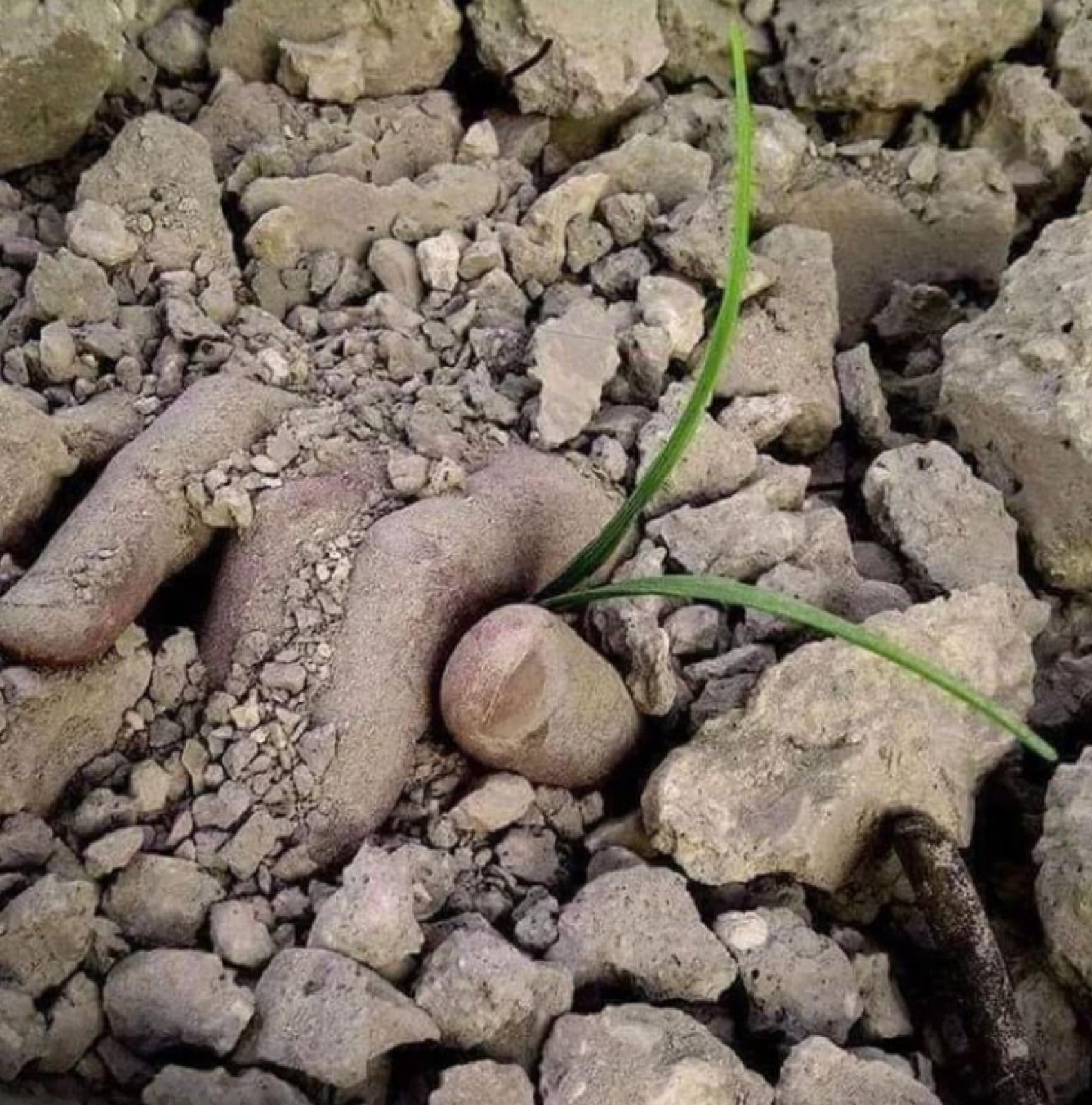
One for the most shattering images I have seen in these past 28 weeks – I believe it will stay with me forever – is that of a date seed that is sprouting between the fingers of a person who is buried under the rubbles. It is both a horror and a miracle, a devastating metaphor that needs no explanation. It is a glimmer and an omen of the indomitable strength of resistance and solidarity.
Unknown's avatar

315 mines

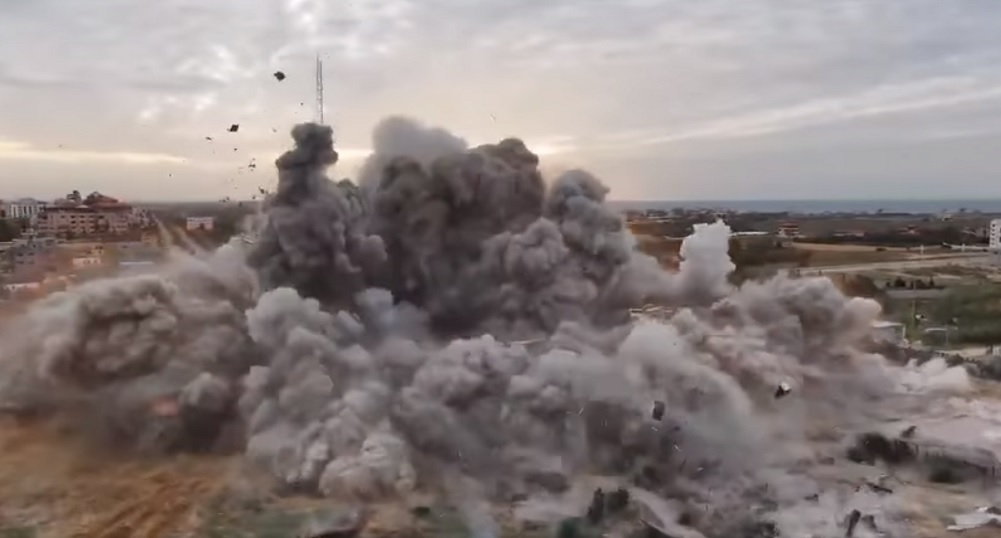
Yesterday the Israeli Army detonated 315 mines to destroy Al-Israa University in Gaza – it was the last standing university in the Gaza Strip. In the campus there was also a museum that preserved 3,000 rare artifacts.

Till October there used to be seven universities in Gaza. Now there is not a single one left.

Al-Israa was occupied by the Israeli Forces seventy days ago and turned into a detention centre where they kept in isolation the Palestinian civilians they arrested before interrogating them. The Israeli Army published a video of the detonation: it only took a bunch of seconds to turn into dust and eliminate any physical presence of a cultural institution.

As I write, there’s also the news of the complete destruction of the last functioning hospital in Gaza.

Till October there used to be thirty-six hospitals. Now there is not a single one left.

It is a list of horrors that does not seem to have an end.

News of war come to our homes as fait accompli. What we witness every day are the end results, the outcomes: a certain number of casualties; the toll of displaced people; the success or failure of a military operation; the raids and round-ups; the arrests; the number of destroyed homes, villages, schools, hospitals.

What is usually not completely visible in the journalistic narration we receive is the extreme complexity of the logistics behind such operations.

I keep thinking about those 315 mines that destroyed Al-Israa – it’s a huge number. Huge.

It takes a perfect coordination of forces, means and resources, but most of all of wills and intentions to be able to destroy a building complex with 315 mines.

To observe the logistics of war with its apparent banality made of chains of command, mechanisations and gestures in themselves “innocent,” is a tremendous way to look at cruelty in the eye.

Besides the political decision, there is a lot of people who spend a lot of time understanding and deciding how to destroy a university, how many bulldozers it takes to raze a village to the ground, how many soldiers are needed for a night raid.

For me, the biggest horror of war is here. In the minds, daily activities and routines of all those who create the conditions to destroy and inflict death and desolation.

The devastating outcomes we witness in the news are the product of a million little gestures, of infinite micro-complicities. It’s for this reason that it makes no sense to speak about collateral damages or involuntary errors – this is a benefit of the doubt that perpetrators of such horrors do not deserve.

War is never necessary; it is instead always deliberately cruel.