Unknown's avatar

Flour and blood

To look at Gaza from Kabul amplifies everything, including the sense of powerlessness.

It is since 7 October that every day I think we have seen the worst and yet every new day brings a new measure of horror that shreds whatever is left of our broken hearts.

When Israeli soldiers posted their selfies with female lingerie looted from the drawers of the Palestinian homes that they just destroyed, I thought we had hit the rock bottom. And then there were photos of Israeli soldiers posing all smiles cradled in the cribs of the Palestinian children they just killed. And then rave parties to block the trucks carrying humanitarian aid. And then drones shot at children flying kites on the border with Egypt. And then the daily updates on the number of babies and children killed by starvation.

I thought we couldn’t do any worse. I thought we now had the taste of the apocalypse in our mouths.  

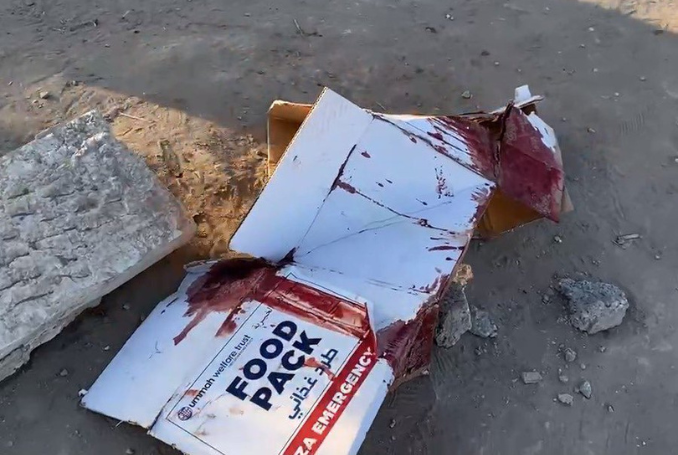
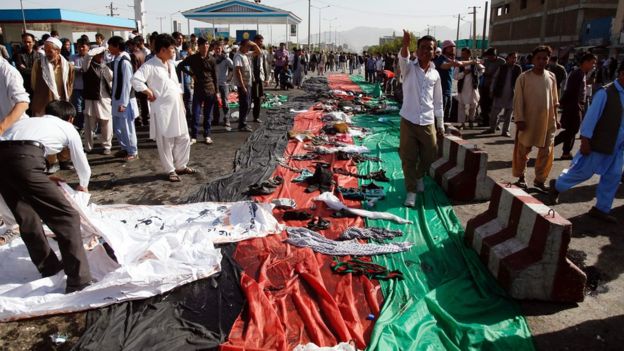
And then what will go down in history as the “flour massacre” happened. The Israeli government defined an unfortunate incident what is in fact a deliberate massacre where the Israeli Army shot at people rushing to gather the little humanitarian aid the Israelis are allowing to trickle into the Gaza Strip. So far there are 104 Palestinians killed and 700 wounded. The balance is likely to increase.

I struggle to come to terms with this and I struggle to breathe fully, a sense of failure chokes me. A few days ago, in an interview to Humza Yousaf, the Scottish First Minister, they asked him what his message to the people of Gaza would be. His answer, with a broken voice, was: I am sorry, humanity has failed you.

And so, I am sorry Gaza for all that we haven’t done and for all that we continue not to do. Maybe we can’t do worse than this, so we are probably only left with facing the pain of such failure and to do a little better: to continue feeling indignation and to continue denouncing these horrors so as they won’t become the norm.

Because it is not true that we have to be resigned to live in a world that we don’t like.

Unknown's avatar

The day of reckoning

I have been looking for words for over a month.

Audre Lorde’s exhortation on the tyranny of silence continued to resonate in my ears as, for all these days, I tried to come to terms with my inability to articulate rage and tribulation, with incredulity and with the feeling of being lost, with the impression that humanity has reached a point of no return.

Nothing will ever be the same.

I hope that the horror of the past few weeks will stay with us as a fire mark of shame that will forever prevent us to forget and will force us to decide who we want to be, where we want to stand, what we want to teach to our children, where shall we find the courage to look at ourselves in the mirror every morning.

Nothing can ever be the same. Certain images – their meaning, their pain, their consequences – should never be deleted from the individual and ancestral memory that humanity transmits across generations.

A father who collects the remains of his children killed by bombs in garbage bags.

Premature babies who die because the hospitals infrastructures have been destroyed and there’s no electricity to power incubators. The survivors who scream under the rubbles. The stench of mass graves.

What does it mean for a mother to write the name on the body of her child, so it won’t be an unidentified corpse or an nameless orphan or an anonymous digit in mass statistics? Where did that hand find the strength to write that name?

I write and I feel sick to my stomach.

We are at a point of no return. We are at a day of reckoning with ourselves and with those around us. Those who chose not take a stance are accomplices.

There are no innocent observers.

Let us then gather around those who find the courage to resist. Let us regroup. Let us support each other as a community. Let us listen to the discomfort, the fear, the anguish of those who are close to us and struggle to find the words for it. In this moment of no return, it is clear who stays in our life and who doesn’t – you are either on one side or on the other. Indifference is a choice – and it is a criminal one.

Solidarity is costly, it is tiring and requires running risks. Let us celebrate the courage of those who chose to run these risks – let us not miss an opportunity to offer a word of support: in the midst of so much horror, kindness can still help building little bridges, can help us feel a little less lonely and less lost in the face of the decay of humanity.

I read somewhere that resistance is the highest form of love. Let us then resist together, as a final act of redemption. Let us support each other in reclaiming the right to self-determination.

The objective is not a ceasefire. The objective is the end of occupation, the end of abuses, the end of the monopoly of victimhood that allows Israel to commit abominable atrocities.

The objective is that with the liberation of Palestine we shall collectively achieve the liberation of a sense of humanity that is now buried under the rubbles of the hospitals in Gaza.

Unknown's avatar

To Resist is to Exist

images50 years ago, the revolutionary masterpiece The Battle of Algiers by Gillo Pontecorvo won the Golden Lion at the Venice Film Festival. To mark the anniversary, the film has been restaured and CG Entertainment launched a campaign to published this new edition (in Italian). To support the initiative, they asked me to engage in a conversation with this great work of art. My thougths are below and this is the link to support the campaign.


We live in dark times, in a precarious equilibrium between fear and inurement. The big engine of the empire huffs and puffs, hit at its core by lone wolves and organised terrorists. The chasm between us and them grows wider, defined by shortcuts and superficial understandings that seem convincing because are worded in the incontestable language of reassuring populism. We live in dark times that are nurtured by historical courses and recourses: History does not teach, human kind does not learn from past mistakes, the thirst for revenge is more satisfying than the desire for transformation. The dystopia of the present builds isolating and fragmentary geographies, designed in the negative and founded on divisions. In this grim picture, instead of the possibility of encounters, the only thing that seems to multiply are separating devices and mechanisms of exclusion: concrete walls, thousand-eyed drones, coils of barbed wire.  

Read the full article on With Kashmir 

Unknown's avatar

A good person

The last few weeks have been quite difficult and emotionally exhausting. I went through a rough patch and ended up being face to face with the tangible risk of becoming the person I don’t want to be: impatient, detached and surrounded by a big, black cloud of bad mood.

However trite it may sound, it proved to be true that you need to be confronted by darkness in order to recognise the light.

The result of the exhaustion of the past days has been in fact that I finally understood that my main objective in life is to be a good person. It may sound naive, but in this historical conjuncture I believe it may turn into a radical political choice: not giving in to fear and suspicion, keeping a curious, open and allowing attitude.

I think such a choice may represent the sole root to cultivate in order to transform our social dimension and contribute in a constructive manner to rethinking the sphere of the collective. This is perhaps the only way to emancipate ourselves from economic and political models that channel us towards a grey and faceless uniformity.

I am thinking about my parents’ decision to retreat to a simple life, I am thinking about my sister’s professional choices based on respect and inclusiveness irrespective of visible and invisible differences.

The investment on integrity, both at the level of the person and that of the practice, is the only way to survive these terrible times and to resist the vulgarity of shoutings, spitted hate and violence.

We were discussing it last night with Sandi Hilal in one of our very special transoceanic conversations. The great challenge for our future is to keep cultivating the courage to leave the doors of our houses open, to keep investing on hospitality and exchange. The difficult step is to realise that this personal choice becomes a civic responsibility, that the way we choose to live our today has immense political repercussions.

The biggest ambition is therefore to be a good person – while regaining the courage not to worry about being out of fashion.

(Dedicated to Sandi Hilal)

Unknown's avatar

No looking away: From Kabul to Kashmir

This article was first published on Kashmir Reader on the 25th of August 2016.
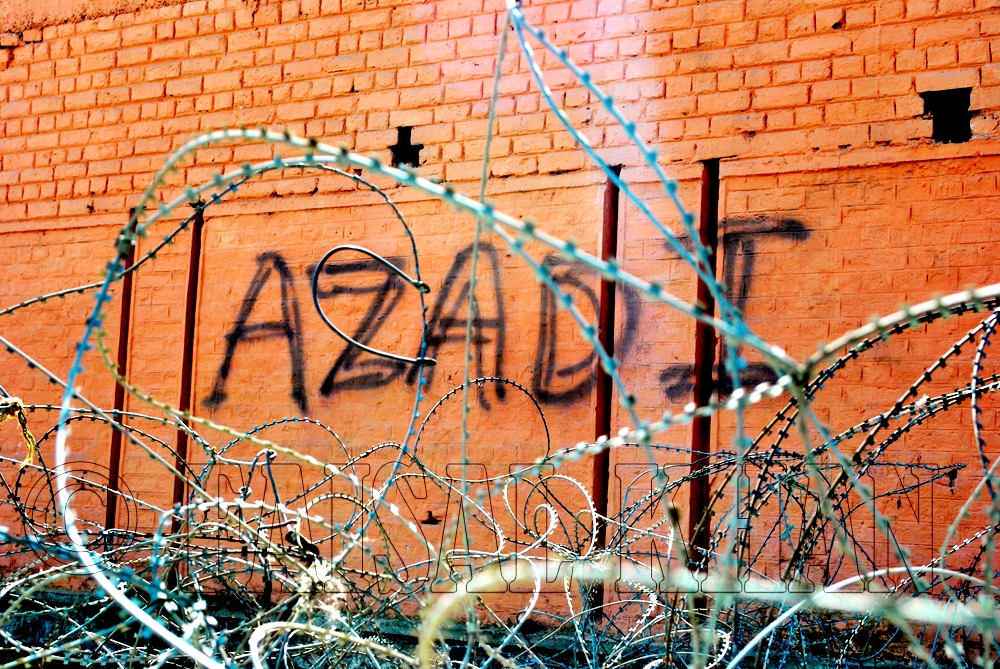
 

AZADII don’t understand those who don’t understand that politics comes also from the belly. Beyond the viscerality of a political existence, there are always contingent factors that, by chance or by necessity, force me to confront the reasons of what I chose, and the values for which I live. There is no looking away.
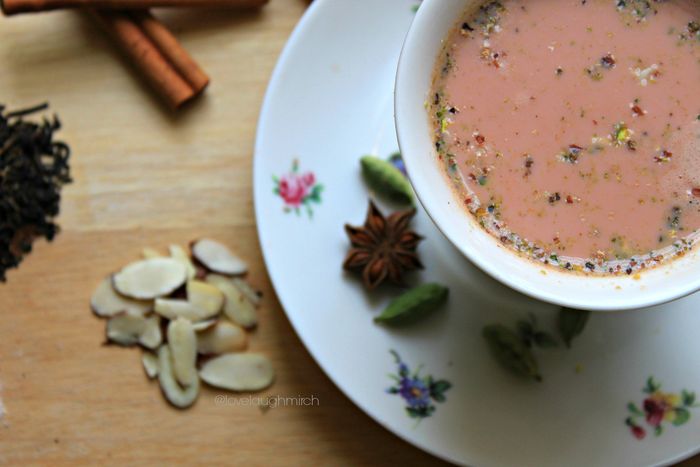
This time the occasion has come from a cup of salty tea, typical of Kashmir and of the Himalayan valleys on either side of the contested border between India and Pakistan.

A couple of days ago I was talking with one of my colleagues, he comes from Hunza, a picturesque and isolated valley 2500 meters above sea level in the extreme north of Pakistan. We were discussing about regional variations in recipes, habits and tradition of the salty tea. As he knows that I like it a lot, after our conversation he made it for me for breakfast. What he calls sheer or shur chai is a version (with butter and without baking soda) of what I know as nun chai and what for me represents the flavour of Kashmir.

Sitting across from each other, we had our tea in silence: our thoughts lost somewhere further East, in two different beautiful valleys of the Himalaya. As I was sipping from my cup, with my body in Kabul and my heart in Srinagar, he filled a bowl with bites of old bread, poured tea over them and ate the whole as a soup, nostalgically thinking of the breakfasts of his childhood.
p2
My cup of sheer chai made me face what I had been avoiding for days.
As I write this I am sitting in Kabul, in a beautiful late summer day that started with an unreported explosion while I was making breakfast. By nature I am not particularly fearful, squeamish or impressionable, and years of work in countries in conflict made my skin pretty thick. Yet, what is happening in Kashmir feels incomprehensible, utterly incommensurable.
It has been for more than forty-six days that I have felt the need to write about the mayhem that has taken over Kashmir, but every passing day made finding the words more difficult. I kept procrastinating, used the fact that I am busy as an excuse and looked away. My guilt, however, kept growing: my silence was becoming a form of complicity. This is the time to speak up, to take sides: the end result of a concerned silence is not different from a lax or irresponsible indifference.
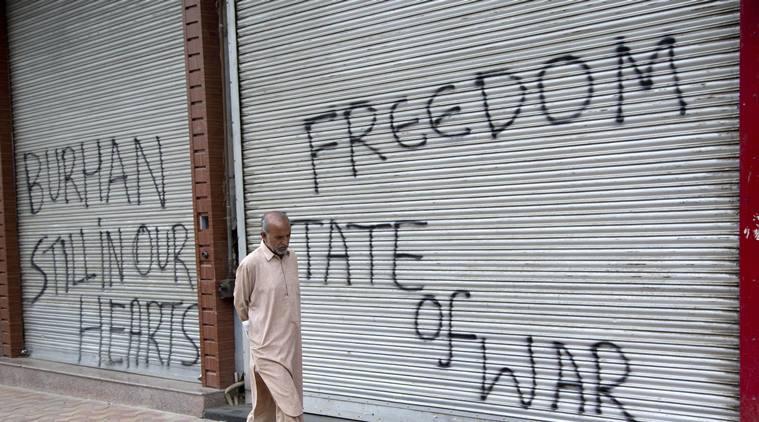
For the past forty-six days the Valley has been under siege. After the killing of Burhan Wani, the young, indigenous, non-Pakistan sponsored, rebel commander fighting against Indian rule in the name of self-determination, Kashmir erupted and took it to the streets. This was by no means unannounced, the rage was simmering and slowly mounting under the surface. Those who cared looking, knew far too well that it was only a matter of time. Nobody, however, could predict that things would escalate to this level.
India responded to protests and stone pelting with an iron fist: with an unprecedented and unimaginable violence. In forty-six days almost seventy people have been killed, at least 6,000 were injured and more than 500 have been hit, mostly in the eye, by pellet guns. Curfew has been extended to both day and night, making it almost impossible even to buy milk. The Border Security Force has once again been deployed in Srinagar, a frightening reminder of the 1990s, certainly not a measure encouraging dialogue. A few days ago the Army prevented the distribution of petrol and an ambulance driver was shot at as he was taking several wounded people to the hospital.
India Kashmir Protests
After the 8th of July, when it became clear that the use of so called non-lethal weapons such as pellet guns would be part of the daily updates, it occurred to me that I had never seen one (why should I after all?) and I could not really grasp how the idea of non-lethal could possibly sit in the same sentence with a firearm. Not knowing how else I could educate myself on the subject, I thought I would check on YouTube. After a bit of browsing, and studiously trying to avoid gory images, I stumbled upon a video shot somewhere in suburban America. The protagonist was a white young man who was defending the efficiency of the pellet gun with spherical projectiles against those detractors who were trying to discredit its firepower. To demonstrate the accuracy of his thesis, he shot at a watermelon at a close range. The fruit cracked open, and the young man showed to the camera with great satisfaction that the watermelon’s inside was smashed beyond recognition.
My heart stopped and I wondered why it was that I did that to myself. I just could not bring myself to think that this was what was happening in Kashmir, to the faces of children as young as five. And not with spherical projectiles, but with modified, irregular pellets that would tear to pieces whatever they would encounter.
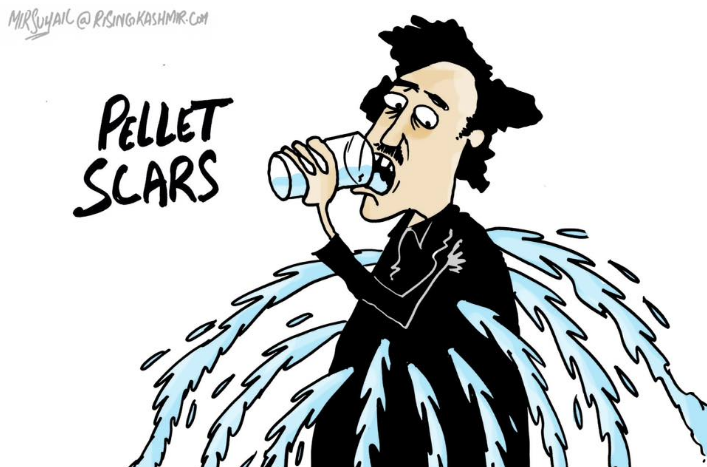
Pellet-scars-Mir-Suhail-Aug-12-2016

Pellet Scars, Mir Suhail

Quite literally, by hitting in the eye, the Indian government forces are not killing people directly, is attempting to kill the idea of the future. It is systematically trying to remove the possibility of looking at the future in a manner that differs from what is envisaged by those in power. This makes me wonder who is it that is really blind: those whom violence have deprived of the sun light or those who think that violence and brutality can kill ideas.
How far can this go? Would an entire population deprived of eyesight stop seeing the way towards freedom, the path to azadi?
I think of my friends, of those who hold a very special place in my heart, of the mothers whose teenage sons are protesting in the streets. I think about the anger, the fear and the right to decide for themselves.
How can one write about all this? Where are the words to be found? The other night a friend told me that there’s no point in writing in times such as these because there is really nothing left to add. Maybe it is true, there are no words to give measure to such a horror and what I am writing is irrelevant, but never like now does silence feel culpable.
At times I wish we’d live in a simpler world where a cup of salty tea could be the trigger to start changing things.
Freedom’s terrible thirst, flooding Kashmir,
is bringing love to its tormented glass,
Stranger, who will inherit the last night of the past?
Of what shall I not sing, and sing?
Agha Shahid Ali
Unknown's avatar

A cup of salty tea

I don’t understand those who don’t understand that politics comes also from the belly. Beyond the viscerality of a political existence, for me there are always contingent factors that, by chance or by necessity, bring me back to the reasons of what I chose and the values for which I live.

Today the occasion has been a cup of salty tea, typical of Kashmir and of the Himalayan valleys on either side of the contested border between India and Pakistan.

A couple of days ago I was talking about it with one of my colleagues, he comes from Hunza a valley 2500 meters above sea level in the extreme north of Pakistan. We were discussing about regional variations in recipes, habits and tradition of the salty tea. As he knows that I like it a lot, he made it for me for breakfast. What he calls shur chai is a version (with butter and without baking soda) of what I know as noon chai and what for me represents the flavour of Kashmir.

As I was sipping from my cup, with my head in Kabul and my heart in Srinagar, he filled a bowl with bites of old bread, poured tea over it and ate it as a soup, nostalgically thinking of the breakfasts of his childhood.

My cup of shur chai made me face what I have been avoiding for days.

It has been for the past forty-three days that I have felt the need to write about what is happening in Kashmir, but every passing day made finding the words more difficult. I kept procrastinating and my guilt kept growing as I felt that my silence was becoming a form of complicity.  

For the past forty-three days the Valley has been under siege. After the killing of a young rebel commander fighting against Indian rule in the name of self-determination, Kashmir took it to the streets and India responded with an iron fist and unprecedented and unimaginable violence. In forty-three days almost seventy people have been killed and hundreds have been hit, mostly in the eye, by pellet guns. Quite literally, the Indian Army is systematically removing the possibility of looking at the future in a manner that differs from what is envisaged by those in power. Over the past few days, curfew has been extended to both day and night, making it almost impossible even to buy milk. The day before yesterday they prevented the distribution of petrol and an ambulance driver was shot at as he was taking several wounded people to the hospital.

I think of my friends, of those who hold a very special place in my heart, of the mothers whose teenage sons are protesting in the streets. I think about the anger, the fear and the right to decide for themselves.

How can one write about all this? Where are the words to be found? Last night a friend told me that there’s no point in writing in times such as these because there is really nothing left to add. Maybe it is true, there are no words to give measure to such horror and what I am writing is irrelevant, but never like now does silence feel culpable.

At times I wish we’d live in a simpler world where a cup of salty tea could be the trigger to start changing things.

Unknown's avatar

Una tazza di te salato

Non capisco chi non capisce che la politica passa anche dalla pancia. Oltre alla visceralità dell’esistenza politica, per me ci sono anche sempre fattori contingenti che, per caso o per necessità, mi riconducono al perché di quello che ho scelto e di quello che per cui vivo.

Oggi l’occasione è stata una tazza di te salato, tipico del Kashmir e delle valli himalayane al di qua e al di là del confine contestato tra India e Pakistan.

Un paio di giorni fa ne parlavo con uno dei miei colleghi; lui viene da Hunza, una valle a 2500 metri d’altitudine nell’estremo nord del Pakistan. Discutevamo di variazioni regionali nelle ricette, di abitudini e tradizioni del te salato. Sapendo che mi piace molto, me lo ha preparato stamattina per colazione. Quello che lui chiama shur chai è una versione (con il burro e senza il bicarbonato) di quello che io conosco come noon chai e che per me rappresenta il sapore che associo col Kashmir. Mentre io bevevo la mia tazza, con la testa a Kabul e il cuore a Srinagar, lui ha riempito una ciotola con pezzi di pane vecchio, poi ha versato il te e lo ha mangiato come una zuppa, pensando con nostalgia alle colazioni di quando era bambino.

La mia tazza di shur chai mi ha messo di fronte a quello che da giorni cercavo di evitare.

Sono quarantatré giorni che sento il bisogno di scrivere di quanto sta succedendo in Kashmir, ma ogni giorno che passa rende più difficile trovare le parole. Ho continuato a procrastinare, incapace di affrontare l’impensabilità di tanto orrore. E con ogni giorno che passa cresce il senso di colpa perché sento che il mio silenzio diventa complice.

Sono quarantatré giorni che la Valle è sotto assedio. Dopo l’uccisione del giovane comandante di uno dei gruppi ribelli che combattono il controllo indiano in nome dell’autodeterminazione, il Kashmir è insorto e l’India ha risposto col pugno di ferro. Con una violenza inaudita e difficile da comprendere. In quarantatré giorni sono state uccise quasi settanta persone e centinaia sono state colpite, per lo più agli occhi, da fucili ad aria compressa. Fuor di metafora, l’esercito indiano sta sistematicamente rimuovendo la possibilità di guardare al futuro in maniera diversa da quella immaginata da chi sta al potere. Nei giorni scorsi il coprifuoco è stato esteso tanto al giorno che alla notte, rendendo praticamente impossibile anche solo comperare il latte. L’altro ieri è stata impedita la distribuzione di carburante e hanno sparato all’autista di un’ambulanza che trasportava dei feriti all’ospedale. Penso ai miei amici lì, a chi ha un posto molto speciale nel mio cuore, alle madri degli adolescenti che protestano per le strade. Alla rabbia, alla paura, al diritto di scegliere e di decidere per se stessi.

Come si scrive di tutto questo? Dove si trovano le parole? Oggi un amico mi ha detto che scrivere è inutile perché in tempi come questi non ci resta niente da aggiungere. Forse è vero, non ci sono parole che possano dare la misura dell’orrore e quello che scrivo è irrilevante, ma mai come adesso il silenzio mi sembra colpevole.

A volte vorrei tanto vivere in un mondo semplice in cui una tazza di te salato potesse essere sufficiente per cominciare a cambiare le cose.

Unknown's avatar

Who cleans the city?

90498189_034190772
Photo EPA

After the terrible attack that shook Kabul, I wrote about those who clean the city.

Auctorly hosted my piece.

The day after is always difficult.

Yesterday’s suicide attack has been the worst in Kabul since 2001–the victims were all civilians, all young: a terrible blast for the already fragile heart of the city.

Read the full article here.

Unknown's avatar

A culture of writing in absence of freedoms

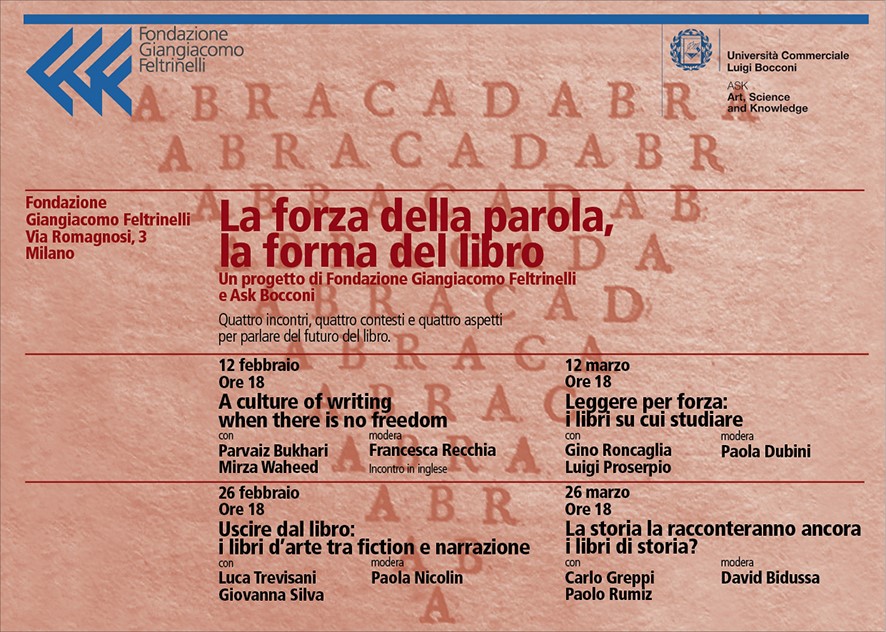
Il 12 febbraio saremo alla Fondazione Feltrinelli con Parvaiz Bukhari e Mirza Waheed a parlare di libri e Kashmir.

Gli ultimi anni hanno visto una crescita esponenziale dell’uso dei social media da parte dei giovani Kashmiri a testimonianza del bisogno di comunicare un’immagine differente e più radicata della storia politica della regione.

Riflettendo su questa situazione, la conversazione prende in esame il ruolo della scrittura, la cultura della lettura e la scelta delle possibilità di pubblicazione in un contesto in cui il conflitto si articola in termini religiosi, linguistici e coloniali.

Qui orari e indirizzo.

invito

Unknown's avatar

The Pain of Others

I wrote this bulletin a while ago, after coming back from a trip to Kashmir. I think it sums up the how and why I do what I do.

***

Srinagar_01

I have come back from Srinagar a week ago and the voices and details of the city are still vividly present in my memory. The Dal lake, the snow-capped mountains, the windstorm that shook my last night in the city and got mingled with the lamenting voices of women praying to fight their fear.

Srinagar is not leaving me, I would like perhaps some distance, but it has decided to stay with me. The Kashmir of the almost forgotten conflict has crept under my skin.

Agha Shahid Ali, the poet who more than anyone else gave voice to the unique mixture of beauty and brutality that seems to be the essence of the Valley, has been my guide. I have looked at his Valley through the lens of his words. And Srinagar inevitably became also for me the city of daughters: where almost every man has a police record – if not as a suspect, as a spy: it seems, in fact, that there are some 170 thousand spies for a population of 10 million people – and where women make life go on, in silence, away from indiscreet gazes and the clamours of public domain.

And so it is that also the apparent quiet that surrounds Srinagar, the renewed presence of tourists, the rhetoric of the regained stability acquire a new meaning through the verses of

Agha Shahid Ali, who quotes Tacitus: solitudinem faciunt, pacem appellant – they make a desolation and call it peace.

It is not the first time that I experience this kind of desolation. It hit me in Palestine, in refugee camps in Iraq and Tunisia, in the slums of Pakistan.

But it seems that this desolation has now come back to claim a long overdue credit.

Of years of stories that I listened to, collected and preserved in my memory. Of tales of lives and places that I visited, felt and shared through my writings.

How can I do justice to so much richness and pain?

How to give proper credit to those who tell you that they feel guilty to be happy when their country is under an oppression that seems to have no end?

How do to sail in this big sea? Where is the compass that leads the path so as to preserve a sensitive eye and yet avoid pitiful sympathy? How can one tell about the power of human dignity without risking the objectifying gaze of the anthropologist who looks for truths?

Questions multiply and answers seem to slip away.

Hitting the road is the only solution I know: the source of more questions that animate the quest for more answers.

The road and a desire for care, dedication and attention – in my words and politics – towards the people and places that have told and continue telling me these stories.