Unknown's avatar

Quanto / How much?

Quanto ci vuole per arrivare dove dobbiamo andare?
Quanta pena riusciamo a sopportare e quanta ne dobbiamo ignorare?
 
Da 460 giorni il senso di umanità si è frantumato e c’è ancora chi continua a guardare dall’altra parte.
 
Stamattina ho visto il video di un maestro di musica di Gaza che accordava la chitarra col ronzio dei droni israeliani che volavano minacciosi sulla scuola. Quanto sono profondi la capacità di resistenza, la forza di ridere, il potere di sperare, l’abilità di immaginare?
 
Il ronzio dei droni è terrorizzante, è pericolo in potenza, un pericolo possibile e imminente che non serve si materializzi per fare paura. Le braccia si contraggono e le orecchie restano allerta. Quanto tempo ci vuole per risanare le crepe che il terrore genera nell’anima? Quante generazioni ci vogliono per smettere di immaginare la paura?
 
Col genocidio ridotto a statistica, di quanto abbiamo bisogno per svegliarci e realizzare? Quante vite congelate sono necessarie per smettere di far finta di niente?
 
E quanto amore e quanta solidarietà per rimanere umani?
 
***

How much does it take to go where we have to go?

How much grief can we bare and how much should we ignore?

In the past 460 days the sense of humanity has shattered and there is still someone who continues to look away.

This morning I watched a video of a music teacher from Gaza who was tuning his guitar to the buzzing of the Israeli drones that were menacingly hovering over the school. How deep are the capacity to resist, the strength to laugh, the power to hope, the ability to imagine?

The buzzing of drones is terrifying, it is looming danger, a kind of danger that is potential and imminent and does not have to materialise to be scary. Arms get contracted and ears stay alert. How much time does it take to mend the cracks that terror etches in the soul? How many generations are needed to stop living in fear?

With the genocide reduced to mere statistics, how much do we need to wake up and realise? How many frozen lives are necessary to stop going about life as if nothing?

And how much love and solidarity do we need to remain human?

Unknown's avatar

We passed through the Earth lightly

These days, the title of a book by Sergio Atzeni keeps coming back to mind. The book talks about something else, but the title resonates in my head as an invitation: We passed through the Earth lightly.

It is almost a year that we have been living through a genocide and the Museum of Palestine has an ongoing campaign titled Gaza Remains the Story. One of its poetic provocations interpellates each one of us directly by asking: How do you lighten your steps as you walk over the rubble, so that those buried under do not have to carry the burden of your weight?

These two exhortations resonate in my head as a unison, as a unique invite – personal and political, individual and collective – to rethink about the weight of my steps and consequently the direction of my choices.

The egotistical dimension of the concept of impact is connected to a weighty passage and presence that are meant to leave a mark. For good or bad, as an invite or as a threat, weight and impact are terms that are frequently used in pedagogical paths as well as in the rhetoric of civilisational, “development” or humanitarian interventions.

What if this is all wrong? What if the violence of the mark we are meant to leave would not be the necessary root for change?

What if stepping lightly – respectfully and delicately, sensibly and kindly, slowly and tenderly – would be the way to be in the world for ourselves and for others? A way that respects the Earth we walk on, that gives precedence to care rooted in the present and not aimed at a future outcome, that values reciprocity over profit.

A light step that respects those who are physically and symbolically buried under the rubbles, that teaches children kindness; a light step that helps us be in the world in a moment of inexplicable pain and violence.

Unknown's avatar

If I didn’t hate the word resilience…

The other evening, over dinner, a journalist who was visiting Kabul for the first time asked me if it were possible to imagine that in this particular historical and political conjuncture creative and artistic expressions would be able to survive in Afghanistan. From the way he phased the question it was clear that he thought that the answer would be negative.

If I didn’t hate the word resilience, I would have probably started to answer from there.

Imagining that spaces of creativity wouldn’t resit or even exist is like thinking that one could survive without breathing or making love. There is nothing heroic or voluntaristic, it is just a necessary part of life. And this is the reason why I don’t like the word resilience because it romanticises suffering in exchange for the redemption of a sense of humanity.

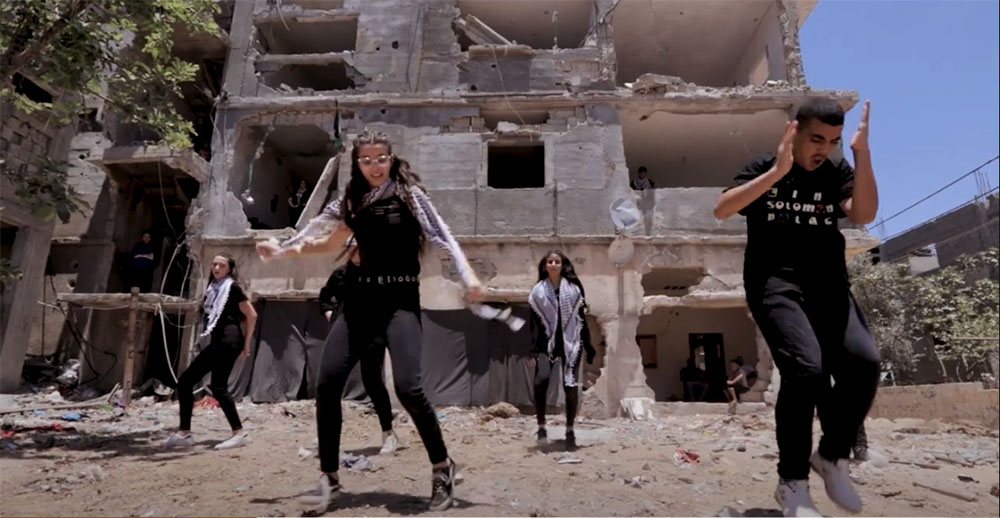
A few days ago, I saw on social media the video of two kids from Gaza who built a swing with ropes and a piece of sponge and played among the debris of a destroyed house.

However small and desperate, that glimpse of humanity resists and survives: it dances, recites poems, invents new games, depicts scenarios for possible futures.

It is hardly ever the case that war wins over that spark of humanity. Costs are high, tremendous, but war is always the one that loses in the end.

Unknown's avatar

Prima e dopo

Qualche settimana fa, una persona che conosco da anni mi ha scritto per dirmi che dagli ultimi bollettini le era sembrato che fossi molto disturbata dalla situazione a Gaza. L’osservazione mi ha colto di sorpresa e la mia immediata reazione è stata di irrigidimento, ovviamente sono molto disturbata – lo sono io e lo sono molte delle persone a me care, come si fa a non essere profondamente disturbati e continuare ad andare avanti come se niente fosse?

Quell’osservazione continua a farmi pensare.

Sono passate 28 settimane dal 7 ottobre e questo periodo marca per me un chiaro prima e dopo. Una frase di un film uscito di recente mi ha molto colpito e mi ronza nella testa: “Cosa ha cambiato in me Gaza? Il mio intero essere.”

C’è un facile rischio di retorica, ma credo che questo sia vero anche per me: più nel senso dello svelamento che in termini di cambiamento. La lotta per l’autodeterminazione della Palestina è stata parte integrante della mia formazione politica ed è un elemento fondamentale del mio stare al mondo da più di trent’anni. In questo senso, quindi, c’è poco da cambiare.

Cosa dunque ha cambiato in me Gaza?

Mi ha messo di fronte a me stessa in modi inaspettati.

Non prendere posizione non è un privilegio a cui ho diritto. Non correre rischi per le mie idee politiche non è un privilegio a cui ho diritto. Non ho il diritto di girare lo sguardo e far finta di non vedere.

Per chi come me scrive per mestiere, c’è il dovere deontologico di parole chiare e precise. Un assassino è un assassino; un genocidio è un genocidio; una strage di innocenti non è un incidente, ma un massacro; un bambino non muore di fame per caso, ma è ucciso da un preciso disegno strategico. 

Il silenzio e il quieto vivere sono forme di complicità che non voglio più avallarle. Non sono scelte che condivido e che rispetto e quindi non voglio far finta che siamo tutti amici come prima.

In un momento di lutto così accecante, c’è però una comunità che si sta ritrovando. Una comunità di maglie strette e maglie larghe, di gente lontana e vicina, conosciuta e sconosciuta che vive chiaramente un prima e un dopo, che si riconosce in questo cambiamento irrevocabile e si sostiene a vicenda alla luce di questa cesura.

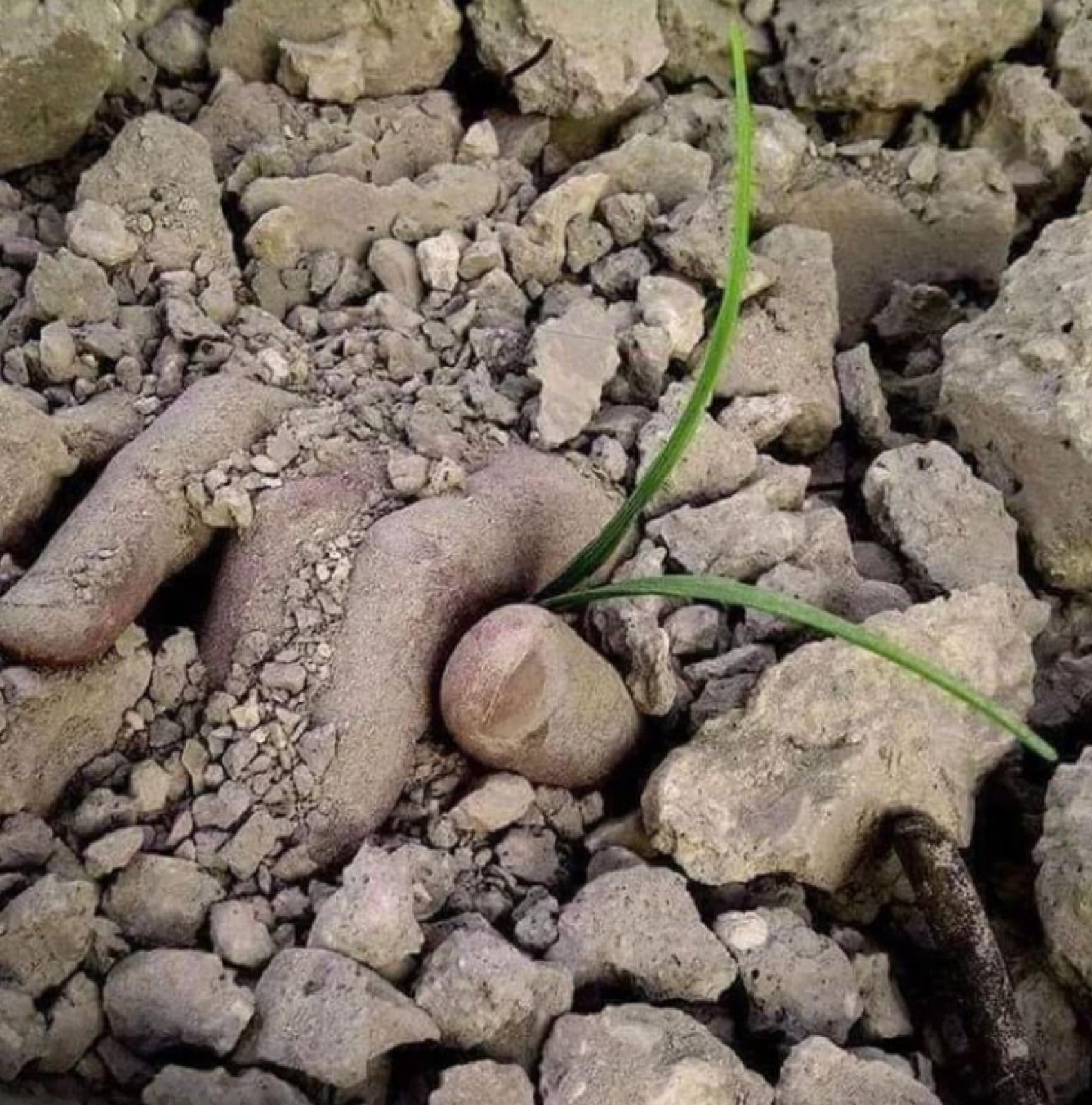
Una delle immagini più terribili che ho visto in queste 28 settimane e che non mi abbandonerà mai più è quella di un seme di dattero che ha germogliato fra le dita di una persona sepolta sotto le macerie. Un orrore e un miracolo allo stesso tempo. Una metafora devastante che non ha bisogno di spiegazioni. Uno spiraglio e forse un auspicio sulla forza indomabile della resistenza e della solidarietà.

Unknown's avatar

Grey

February in Kabul is the coldest month of the year; a month made of power cuts, snowfalls and the hope that there would be enough snow to avert the fear of forthcoming droughts. The first snowfall is always celebrated with an exchange of wishes and sweets.

I wrote about snow in Kabul for the first time more than ten years ago. Now I am back in the city after a very long time and there is snow again and I have the impression of closing an old circle while opening a new cycle.

Never like in this conjuncture, a return feels more like an arrival. Everything is familiar and yet everything is also to be understood afresh, from scratch; everything is to be looked at with new eyes free of prejudice, without the bias of conclusions reached even before fully comprehending details and premises.

I have been here for more than three weeks, but I write only now because probably it is only now that I have mastered the courage to face the fear of being misunderstood and to embrace the desire to highlight the dissonances that emerge every day against opposite polarising and ideological narratives.

After last night’s snowfall, Kabul is all grey; covered by worn and trampled snow and wrapped by an uncertain sky that doesn’t seem to know if it wants to stay hazy or send more snow. It is all these shades of grey that are the most difficult to represent. As days go by, I realise that shouted truths no longer hold when faced with reality; that rules and exceptions coexist side by side; that fear may turn life into survival; that glimpses of hope and possibility open up among millions of contradictions.

In its brutal beauty, Afghanistan has a unique way to crawl under my skin, to call me back and always give me a reason to return, one more question to chase, an epochal transformation to witness, an opportunity to question myself, my ideas and my prejudices. It is a disarming country, that somehow always leaves me alone and bare in front of myself and the reasons of my choices.

Unknown's avatar

Grigio

Febbraio a Kabul è sempre il mese più freddo dell’anno. Un mese fatto di blackout, di nevicate e di speranza che di neve ce ne sia abbastanza per scongiurare la paura della siccità. La prima nevicata dell’anno qui si festeggia con dolci e scambi di auguri.

Ho scritto per la prima volta della neve a Kabul più di dieci anni fa, essere di ritorno dopo tanto tempo e con la neve mi dà l’impressione di chiudere un vecchio cerchio ed aprire un nuovo ciclo.

Mai come in questo momento, il ritorno è piuttosto un arrivo. Tutto è familiare, ma tutto è da capire da capo; con occhi nuovi, liberi da pregiudizi e da conclusioni tirate ancora prima di comprendere a fondo dettagli e premesse.

Sono qui da più di tre settimane e scrivo solo adesso perché forse solo adesso ho trovato il coraggio di guardare in faccia la paura di essere fraintesa e prendere in mano il desiderio di raccontare le dissonanze che emergono qui ogni momento rispetto a versioni della storia opposte, ma comunque ideologiche e polarizzanti.

Dopo la nevicata di stanotte, Kabul è tutta grigia di neve calpestata e avvolta in un cielo incerto che non sa se rimanere nebuloso o buttar giù ancora neve. Sono tutte queste sfumature di grigio ad essere le più difficili da rappresentare. Più passano i giorni e più mi rendo conto che le verità proclamate non reggono il confronto con la realtà; che le regole e le eccezioni convivono fianco a fianco; che la paura rischia di trasformare la vita in sopravvivenza; e che spiragli di speranza e possibilità si aprono in mezzo alle migliaia di contraddizioni.

Nella sua brutale bellezza, L’Afghanistan ha un modo unico di infilarsi sotto la pelle e richiamare a sé, di far sì che ci sia sempre una ragione per tornare, una domanda da inseguire, una transizione epocale a cui assistere, un motivo per mettere in questione se stessi, le proprie idee e pregiudizi. È un paese disarmante, che in qualche modo lascia sempre soli davanti a sé stessi e alle ragioni delle proprie scelte.

Unknown's avatar

L’esercizio della responsabilità

Image result for responsabilità

Storicamente, i periodi di crisi socio-politiche sono caratterizzati da grandi movimenti popolari di protesta e rivendicazione dei diritti. L’enfasi sulla dimensione di rivendicazione da una parte implica la presupposizione di un potere che ascolta, dall’altra sposta la necessità dell’azione al di là di chi protesta.
E’ forse anche per questo che un documento tanto importante quanto la Carta Universale dei Doveri e delle Responsabilità è praticamente sconosciuta. A seguito di un processo consultivo internazionale che ha coinvolto esperti, politici (fra cui Leoluca Orlando), intellettuali (inclusi Dario Fo e Gianni Vattimo) e rappresentanti di comunità, la Carta è stata redatta a Valencia nel 1998 in occasione del 50º anniversario della Dichiarazione Universale dei Diritti Umani sotto il patrocinio dell’UNESCO. La Carta è una versione speculare della Dichiarazione dei Diritti Umani e funziona quasi da contrappunto: a tutto ciò di cui abbiamo diritto, fa da contraltare quello che dobbiamo fare per renderlo possibile.
Premessa fondamentale del documento è la distinzione di piani fra doveri e responsabilità. I primi hanno un valore di impegno morale, che si traduce in vincolo legale attraverso l’assunzione di responsabilità: se non espletiamo a pieno i nostri doveri per garantire i diritti di tutti, siamo perseguibili penalmente.
In tempi come questi, per esempio, è importante ricordare che al sacrosanto diritto al libero movimento fa eco il dovere all’ospitalità – in particolare verso chi è dislocato a causa di guerre o carestie – nell’ottica di un’equità non solo formale, ma sostanziale.
L’articolo 38 della Carta si concentra su doveri e responsabilità tanto degli individui che delle comunità di creare le condizioni e sostenere le arti e la produzione culturale.
Lavoro da oltre dieci anni nella promozione culturale, rivitalizzazione del patrimonio immateriale e sostegno agli artisti in paesi in conflitto. Fra le ragioni che muovono il mio agire c’è la consapevolezza di una profonda interconnessione tra urgenza, diritto e dovere alla libera espressione. Alla luce della Carta, la mia attività professionale è la risposta a una chiamata all’assunzione di responsabilità per cui ciò che facciamo è parte di una tutela dei diritti tanto individuali che collettivi.

Unknown's avatar

Cultural Heritage, Conflicts, and the Map

On the 27th of July at 6 pm, I will speak as part of GeoBLR at the Mapbox office in Bangalore about Cultural Heritage, Conflicts, and the Map.

For the past 15 years I have been working in the promotion and revitalisation of cultural heritage and practices in countries in conflict. Mapping can be an important device to support locating archeological remains as well as living traditions.

The talk explores the challenges and opportunities of mapping in this context. It further addresses the issue of the value of (cultural) objects on the map. As there are many questions and no definitive answer, I hope that the presentation will turn into an engaging collective discussion.

Find the Mapbox office here on the map.

Unknown's avatar

Heritage and Politics in Kashmir

Amarnath-Yatra

This text was originally published on Kashmir Reader on the 6th of May 2016

Indian-occupied Kashmir is one of the most densely militarised corners of the world even though it is not officially a country at war. With over half a million troops stationed within its boundaries, the ratio between Indian armed forces and Kashmiri civilians is even higher than that between foreign military and civilian population at the peak of the American invasion of Iraq and Afghanistan. Despite the promise of a plebiscite, the region has been denied the right of self-determination and has seen the criminalisation of organised forms of dissent. Movement is regulated and the right to public space curbed under the pretence of maintaining law and order. In such a climate, the struggle over the control and definition of territory assumes a fundamental role. Within this context, therefore, the management and articulation of heritage assume a loaded political meaning. Whose history is preserved and promoted? By whom and through which political allegiances? What messages and agendas are championed through heritage? What are the meanings and reasons for reclaiming cultural roots through fabricated notions of tradition?
After the 2008 and 2010 uprisings, the Indian government has associated systematic repressive violence with a renewed public discourse on the beauty of Kashmir – a pristine landscape devoid of people. To strengthen its propagandistic effectiveness, the central government started providing financial incentives to tourism and pilgrimages as devices to normalise the conflict. This whole political apparatus is mostly articulated in religious terms with an emphasis on the indivisible sacrality of Indian land since ancient pre-Islamic times. The same strategy is adopted in relation to the border, where Hindu shrines are installed within the premises or in the vicinity of Army check-posts. These newly established religious sites, which become collective yet segregated places of worship, indirectly sanction the Army’s presence as well as the quintessentially Hindu nature of India as a country.
In the decades that followed Partition, India and Pakistan sat at the negotiating table several times to try and solve, among other things, their disagreement over the management of Kashmir. These talks did not achieve much, but sanctioned the “question of Kashmir” as aterritorial dispute – an empty land on a map where the issue was how – rather than if – it should be divided.Almost seventy years and several UN resolutions later, the situation has not changed. The articulation of the discourse is still framed in bilateral terms and continues to exclude the political voice of Kashmiris. Through a narrative that reinforces the idea that the “solution” for Kashmir has to come from India and Pakistan, Kashmiris themselves are sidelined and not acknowledged as equal, let alone indispensable, interlocutors. It is the fate of the land that is at stake, not the fate of those who belong to it. This unchanged perspective perpetuates the legitimacy of a “mystical” tone whereby Kashmir has come to symbolise the unquestionable wholeness of India as a country.
The first months of 2016 have seen open and rampant tensions around the oneness of India. The central government and its supporters are undeterred in their attempt to promote such unity and reinstate the intrinsically religious nature of Indian nationalist loyalty founded on the centrality of the myth of Bharat Mata. The reinforcement of the identification of the Indian land with the body of the mother collapses political and religious categories, turns the nationalist struggle into a religious duty and charges political claims for self-determination with an almost blasphemous and hence seditious connotation. Incidentally, by reciting the Bharat Mata ki Jai, the Indian Army finds a religious justification to their brutality: their mission is to protect the integrity of the land thus turning into the uncontested custodians of a dominant interpretation of belonging and heritage.
In order to be able to grasp the complexity of the notion of heritage and the intertwining between the sacralisation of the land and a sense of belonging in Kashmir, it is fundamental to grasp the relevance of the events of the 1990s and the displacement of the Kashmiri Pandits. Much of their pledge has been in fact appropriated by a chauvinist nationalist agenda and their desire to return to their homeland has been manipulated to reinforce the Hindu nature of the wholeness of India.
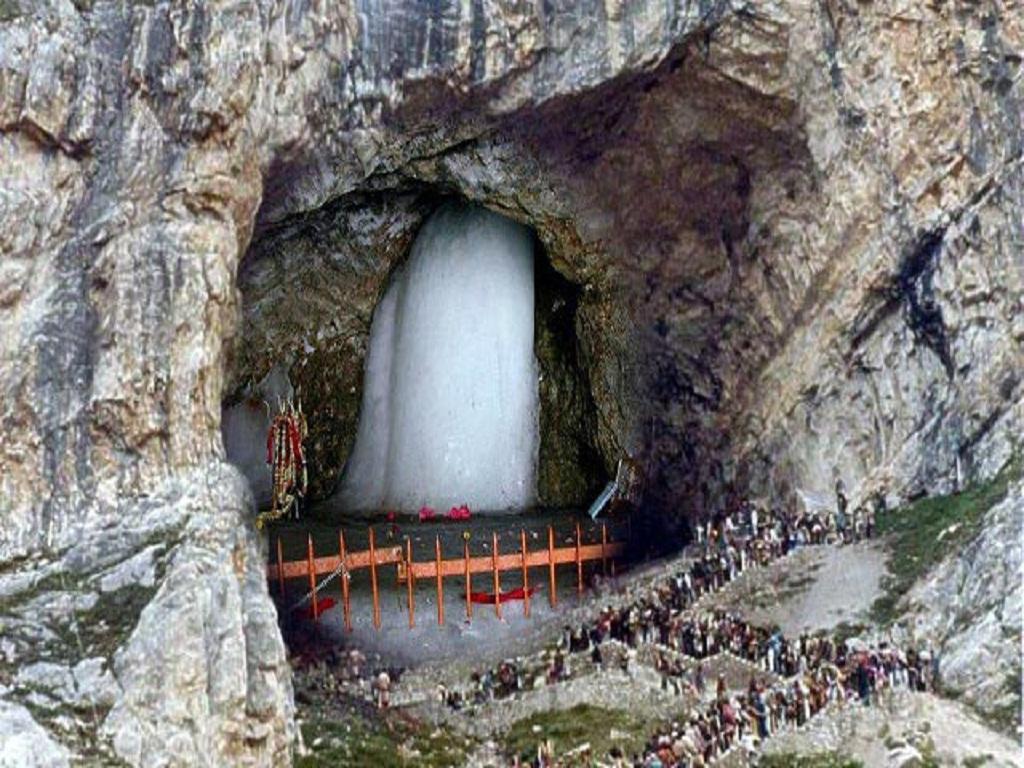
The recent revival of the Amarnath Yatra is an important example of how people’s mobilisation around cultural memorialisation can be used to interpret the political implications of the promotion of immaterial heritage. Located 140 kilometres North East of Srinagar, at an altitude of almost 4,000 meters, the cave of Amarnath, with its ice stalagmite, has been for centuries the site of religious pilgrimages. At the end of a steep climb in a pristine forest, the cave is blocked by snow for most of the year and it is only accessible for a short period of time during which pilgrims challenge altitude and asperities to pay their respect to the god. Legend has it that this is the secluded place that Lord Shiva chose to reveal to Parvati the secrets of immortality and of the creation of the Universe without being heard by any other living being. The cave is therefore revered and considered among the most important religious sites for Hindus. To corroborate its sacrality, it is believed that the ice stalagmite, which is thought to be waxing and waning in accordance to the moon cycles, is an embodiment of the Lingam, the phallic representation of Lord Shiva himself.
After being forgotten for centuries, the cave was “miraculously” rediscovered around the 1850s by Buta Malik, a wandering shepherd during the reign of Gulab Singh, the first Dogra ruler of Kashmir. The Maharaja was all too happy to encourage pilgrims to visit the site. Since its modern inception, the Yatra was a relatively small event that lasted no longer than fifteen days and included twenty to thirty thousand local Kashmiri Pandits. Between 1991 and 1995, the pilgrimage was suspended because of political instability; it was then resumed in 1996 after assurances by the militants that they would not harm the pilgrims. That year, however, a sudden change of weather and unexpected snowfall caused the death of more than 250 people. In response to this tragedy, the government decided to impose stricter regulations and set up the Shri Amarnathji Shrine Board (SASB).
The institutionalisation of the pilgrimage and the definition of the religious pre-requisites for the eligibility for the SASB represent a momentous turning point in the significance, promotion and political connotation that the Amarnath Yatra has acquired. It is after this transition, in fact, that the Sangh Parivar has shown a proactive interest in the pilgrimage, radically changing the narrative around it, thus escalating the politicisation of the initiative and hence its divisive nature.
Historian Eric Hobsbawm defines the process of the invention of tradition as an intentional way of using material from the past to serve novel purposes. This perspective resonates with an interpretation of heritage as a contemporary cultural use of the past, thus highlighting its political dimension. Hobsbawm’s definition of “invented traditions” can provide a useful framework for the understanding of the shift in meaning and political significance of the Amarnath Yatra. Even though there is no academic analysis of the Yatra, the debate around it is quite heated at the level of civil society. Positions are deeply polarised and mostly see a split between the government bodies, militant Kashmiri Pandits and Hindus from mainland India on one side, and moderate Kashmiri Pandits and Kashmiri civil society organisations on the other.
Over the course of several interviews with Kashmiri Pandits living both in the Valley and outside it, it emerged that there was a shared agreement around the preposterous notion of “reclamation of Kashmir” utilised to justify the scale of mobilisation around the Amarnath Yatra. In a phone interview, S. – who spoke on the condition of anonymity as he feared that his positions would upset the community – told me: “Amarnath has no relation whatsoever with Kashmiri Pandits, we as a community have nothing to do with the shrine. Those who will tell you that the tradition is ours and Muslims are trying to destroy it, hold false and biased views that are fuelled by their anger at the displacement they underwent. This reactionary narrative is not inherent to Kashmir, it is the result of Indianisation and the media are contributing to exacerbating a narrative that is more important to Indians than it is to us.”
Sanjay Tickoo, a Kashmiri Pandit social activist, who decided not to leave his native Srinagar during the 1989 exodus and has lived in the Valley his entire life, highlighted the deep religious connection with nature in Kashmir that characterises the Pandits’ religiosity and framed the relation with the Amarnath Yatra in the same terms. He also expressed his discontent towards the fact that the pilgrimage was taken over “by those who claim to be the real custodians of Hinduism”. While dissenting from the interpretations of the Yatra as a form of political oppression, Tickoo criticised the composition of the Shri Amarnathji Shrine Board where currently only one member, Bhajan Sopori, is a Kashmiri Pandit. He told me that this detail can be indicative of the politicisation of the pilgrimage and its disconnection from the Pandit community. Even though he did not seem too preoccupied with the implications of such adevelopment, his main concern had to do with the terrible environmental consequences the massive expansion of the Amarnath Yatra has caused over the years. He was highly critical of the great numbers and of the extension of the pilgrimage time from fifteen days to almost two months.
The effect that hundreds of thousands of people can have on a fragile mountainous environment is a general reason of concern. For many civil society activists, however, the ecological preoccupation is framed in broader political terms. Khurram Parvez, a member of the Jammu and Kashmir Coalition of Civil Society (JKCCS), lamented the detrimental effects that the Amarnath Yatra has on Kashmiri culture in terms of “its impact on our natural resources, its absolute lack of sustainability and the fact that it has become an alibi for an even further militarisation” Parvez was adamant in calling the Amarnath Yatra as a “military project run under the patronage of the State” and accused the SASB of being complicit with the State-sponsored narrative of reclaiming Kashmir.
As the BJP, RSS and other extreme right-wing Hindutva organisations appropriated the narrative around the Yatra, they started aggressive fundraising campaigns gathering large sums of money from diaspora Hindus across the world so as to be able to sponsor increasingly larger numbers of pilgrims entirely free of cost. This process changed dramatically the demography of the pilgrims who for the most joined the Yatra for opportunistic or ideological reasons. This tension is further heightened by the fact that pilgrims consider the Army to be there to protect them from aggressions by locals and terrorists alike, whereas for Kashmiris the military presence is an obvious disruption of their own lives.
Moreover, as the number of pilgrims grew exponentially, Kashmiri civil society organisations started denouncing the visible deterioration of the fragile Himalayan ecosystem around the cave. Scientific research shows the increase of waterborne diseases and water shortage in villages in South Kashmir during and in the immediate aftermaths of the pilgrimage. Yatris neither show any respect for the natural environment, by throwing all sorts of waste in the Lidder River and by defecating in the open, nor are they provided with the necessary facilities for a more considerate behaviour, despite it being one of the main tasks assigned to the SASB.
The tension between civil society organisations and the Shri Amarnathji Shrine Board reached a peak in May-August 2008 after the state government granted the transfer of 40 acres of forest land to the SASB for the construction of temporary structures for the accommodation of pilgrims. The announcement that this would represent a permanent transfer created public outrage as Kashmiris saw the transaction as a blatant violation of article 370 of the Indian Constitution. One of the provisions of such article is that only citizens of the state can purchase and own land in the Valley. Khurram Parvez defined the land transfer and the plan to build on forest land permanent structures to host pilgrims as “an ecological disaster and yet other manifestation of the Indian occupation.” Street protests erupted across Kashmir and clashes between civilians and Indian Army determined the withdrawal of the transfer. This in turn triggered a wave of unrest in Jammu – where the majority of the population is Hindu – with Hindutva parties and organisations were up in arms calling for a comprehensive agitation to fight and take back the land of Kashmir defined as “the paternal property of Hindus”.
The 2015 Amarnath Yatra counted more than 350 thousand participants and several deaths. The 2016 edition is scheduled to begin on the 2nd of July and will last for 48 days. In an ostentatious attempt to regulate the Yatra, the Shri Amarnathji Shrine Board announced that it will “only” allow 7,500 people per day on each of the two routes, therefore bringing the estimated attendance to 720,000 people. Violence and unrest are ebbing again in Kashmir following various episodes of brutal military responses to critical voices that dared questioning the indiscriminate acceptance of the oneness of India. In this climate, the forthcoming Amarnath Yatra may acquire further ideological connotations and be instrumentally used to serve chauvinistic Hindu nationalistic agendas. Leveraging on sentiments of belonging and the right to reclaim their own land through the construction of a well orchestrated invented tradition, the Amarnath Yatra is an important, if little known, example of the ways in which heritage movements can serve political purposes. Heritage activism in this particular case shows a dark and antagonistic side where the promotion of a carefully fabricated continuity to a selective sense of the past serves the Indian hegemonic discourse and indirectly legitimises both the presence of the Army and their deeds as custodians of the sacred unity of Bharat Mata.

Unknown's avatar

The architecture of conflicts

I will be part of a round table discussion on the 15th of June at The Triennale in Milan during the Milano Arch Week 2017.

Here are the details:

 15th June 2017 La Triennale – Giardino delle Sculture
16.30 / 17.30 TALK
THE ARCHITECTURE OF CONFLICTS:A DIALOGUE AROUND LANGUAGES,  TERRITORIES AND REPRESENTATION
moderato da Camillo Boano con:
* Eyal Weizman,
* A
mos Gitai,
* Francesca Recchia,
* Arcò,
* Vento di Terra

Hope to see you there