Unknown's avatar

A journey to the Other Iraq

This article was initially published in Domus 958 in May 2012.

Screen Shot 2014-11-03 at 9.11.40 AM

Photo Credit: Sebastian Meyer

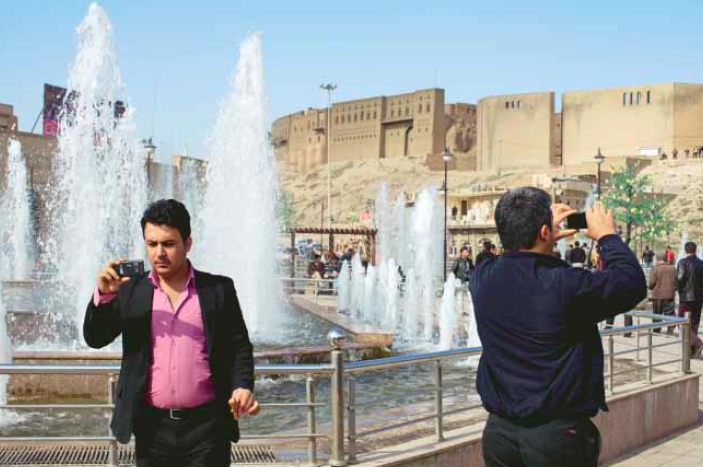
The Autonomous Region of Kurdistan has in recent years been in the news as the “Other Iraq”. In 2011, National Geographic described it as an oasis of peace and development, and The New York Times placed it 34th out of 41 best travel destinations— beating Miami, which finished up in last place. In reality, the region is not so much a tourist attraction as it is land prized by multinational and private investors. After Saddam Hussein’s bloody ethnic persecution, a decade of armed conflict between Iraq and Iran, two wars to export democracy, and one civil war, Iraqi Kurdistan today is striding towards a new state of political and economic stability. Its long history of war and violence has left indelible marks and scars. At the same time, however, it has created a unique situation characterised by openness and opportunity. The future is all there to be invented, there is plenty of scope for experimentation, and the direction to be followed can still be chosen. Erbil, the regional government capital and one of the world’s most ancient cities, inhabited without interruption for thousands of years, is an extraordinary example of that condition. One of the principal artifices of this growth is Nawzad Hadi, governor of Erbil since 2004. In a recent interview, with the clarity of a visionary he illustrated to me the steps required to fulfil what he calls a great dream: the building of a city worthy of being an international capital, “a new Dubai”. That is no mean statement, considering that Kurdistan is not even an officially recognised state. “I am doing it for my people, who deserve it after years of oppression.” The magnitude of Nawzad Hadi’s challenge is quite incredible. It began with the asphalting of roads and the guarantee of standard access to water and electricity, continued with the completion and implementation of a master plan and the prospect of a green belt around the city, and is now on its way to transforming Erbil into an economic and commercial hub. In an explosive mixture of individual profit and common good, the governor has embraced the city’s historic and cultural profile as the symbol of this rebirth. He has started a restoration of the Citadel, Erbil’s ancient heart, by working with UNESCO to have it included in the list of World Heritage Sites. At the same time, with an eye to the international trends of the architecture star system, he appointed Daniel Libeskind to design a museum of Kurdish memory, an audio-visual project for the historical and narrative reconstruction of the Kurdish genocide. Work on the museum is scheduled to commence this year.

The Autonomous Region of Kurdistan chose Erbil as the emblematic image of its capacity for self-government, and in this case investment in its urban growth has been notably political. Through the concession of land-tax benefits and structural support, the regional government is encouraging the circulation of private capital. This has made a significant impact on the city’s development and building prospects. In the past five years the world’s biggest corporations have staked claims in the city, luxury hotels have multiplied, and new residential complexes have sprung up suggesting the possibility of exclusive lifestyles and their desirability. Dream City, Empire City, English Village, Royal City, Vital City and Italian Village are gated communities now occupying a large slice of Erbil’s outer ring road, not far from the construction site of the Marriot Hotel and from the 23-storey Hotel Divan tower. Erbil’s economic prosperity is just one of the multiple sides of this transition to a mature state of democracy. Traces of years of conflict—and the fact that virtually all investment has been confined to the growth of this capital city—are on the other hand dramatically evident in the rest of the region. Contrasting the enthusiasm of this new prosperity are the mountain villages and refugee camps where resilience and the art of making ends meet are means of ensuring survival. Wlaxlw is a village of about 50 mud-and-stone houses, on the border between Iraq and Iran. Its geographical position made it a constant target of bombardment during the war between the two countries. To this day it is surrounded by the aftermath of that conflict in the shape of missiles, bullets and bombshells, ammunition boxes and helmets. Over the past 20 years the inhabitants of Wlaxlw have made a virtue of necessity, by utilising the debris and rubble as building material for their postwar reconstruction. Thus Katyusha rockets have become support beams for ceilings or pillars for pergolas, missile casings are converted into drainpipes, and helmets (those without bullet holes at forehead level) are used as flowerpots or to collect rainwater, while landmine warning signs serve as firewood props, and ammunition boxes sunk into the ground provide steps to the higher part of the village. Wlaxlw is a cross-section of an amazing world, a bizarre combination of a post-apocalyptic landscape and an oil painting by an 18th-century orientalist. But it is not the only example of the contradictoriness of these coexistences. Stories of this kind are illustrated by the various army buildings once occupied by Saddam Hussein’s troops stationed in Kurdistan. From the end of 1996, at the height of the civil war, these structures began to be converted into “villages”, complete with mosques, small shops and elementary schools. Ma’asker Salam, Top Khane and Raparin are three such villages, located a few kilometres from Sulaymaniyah, the second largest city in the Automous Region of Kurdistan. Ma’asker Salam is where Saddam’s army stables were situated. Today, some 300 families have found accommodation there. Not far away is Top Khane, a group of 12 buildings formerly used as an arms depot and now occupied by another 300 families. Raparin, located closer to the city centre, was in Sadam’s day a large industrial complex used to produce and repair weapons. Today it hosts a maze of self-built huts, inhabited by some 70 families. By a curious twist of fate, what were once the building-symbols of the Ba’athist regime’s military oppression have been transformed into a safe haven for hundreds of families, the place of refuge they call home, while waiting (with ever diminishing faith) for the politicians to keep their promises of compensation and assignment of public housing. During this long wait of more than 15 years, the old army buildings have changed their appearance as a result of spontaneous actions by inhabitants. Using improvised materials and traditional construction techniques, they have gradually turned this political aberration into something more like a familiar and hospitable landscape. Haji Mahmoud and Nadja, two residents of Ma’asker Salam, recount that local and international NGOs helped refugees to settle into the abandoned military structures. At Ma’asker Salam, the stables were initially divided by makeshift walls into rooms to accommodate one or more families each. In the course of time and with a growing awareness that the situation would take years and not months to be resolved, the inhabitants of these permanently temporary villages began to expand. They partitioned the rooms assigned to them in order to meet the needs of their families and to create more comfortable living conditions.

Nadja lives in a corner house and changes the colour of its interior three times a year. With her husband she has laid out a garden, its flowerbeds bordered with stones and broken bricks. There are also three trees, grown from the kernels of fruit and each planted to mark the birth of her three daughters. “All I’d like is a nice house,” she says, “nothing more”. With snow-capped mountains on the horizon, the landscape of Ma’asker Salam and Top Khane has a surreal look. The picturesque impression of mountain villages clashes with memories of a cruel and dramatic past which the inhabitants have not yet managed to cast off. The old stable buildings at Ma’asker Salam are today barely visible. Covered with satellite dishes, they are now a mass of irregular dwellings built from cement blocks, stone and rough earth bricks, and wrapped in coloured striped plastic sheets for winter insulation. In a surprising combination of improvisation, recycling and vernacular architecture, remnants of plastic and metal mark out Haji Mahmoud’s garden, where birds are kept off by scarecrows made of snipped plastic bags. In the courtyard next door, his son and daughter-in-law have built a pergola with the wooden poles of building sites, while their neighbour has used the door of a derelict car as the gate to a courtyard surrounded by a dry wall. Between the sushi bar on the 21st floor of a 5-star hotel in downtown Erbil and the Katyusha rockets used as construction material in Wlaxlw, observing the anthropised landscape can be an outstanding means of interpreting what is often, abstractly, defined as a postwar dimension. The iniquitous distribution of wealth derived from the postwar reconstruction efforts has left indisputable signs of the temporality of a twisting and frequently obstacle-strewn path. In Iraqi Kurdistan, improvisation and resilience are the other side of the coin to massive urban development and the dream of becoming the next Dubai. Torn between far-sightedness, forgetfulness and selective memory, territory is revealed as neither a neutral nor an innocent platform, on which political debate and intervention are staged and the future takes shape.

Unknown's avatar

The Little Book of Kabul is on TIME Lightbox

Photo credit Lorenzo Tugnoli

Photo credit Lorenzo Tugnoli

Lorenzo and I met Mikko Takkunen at Visa pour l’Image in Perpignan.

It was a beautiful encounter, Mikko gave us and our book time and attention. We were happy to have met someone with a genuine passion for photography and an unbiased curiosity.

We are grateful that from that meeting TIME Lightbox decided to feature The Little Book of Kabul.

You can read the review: Follow the Everyday Lives of Artists in Kabul here.

Unknown's avatar

Khaakbaad

L’autunno a Kabul è una stagione preziosa. Mentre scrivo, vedo nel giardino le ultime rose: quelle ancora fiorite sono rosa e rosse; i tre alberi di mele cotogne carichi di frutti che stanno pian piano maturando; la pergola con i pochi grappoli d’uva che hanno resistito alla grandinata dell’altro giorno; e le macchie rosso sangue dei frutti del melograno, piccoli quest’anno, ma pieni di succo.

La percezione del cambiamento è quotidiana, annunciata in modo teatrale da mezzora di grandine. Chissà perché solo una all’anno, la terza da quando sono qui, veloce e violenta segna il passaggio da una stagione all’altra.

La temperatura si abbassa, le giornate si accorciano, mi ostino a dormire ancora con la finestra aperta e ad uscire senza calzini – anche perché mi sono dimenticata le scarpe in Italia, ma questa è un’altra storia.

Con l’autunno arrivano anche le tempeste di sabbia, che qui hanno anche un nome tutto loro, khaakbaad, che letteralmente significa vento di polvere. Anche queste improvvise e passeggere – coprono tutto di una coltre marroncina, una tosse, uno starnuto e vanno via. Poi tornano, ma il passaggio è sempre breve e mai annunciato.

Mi domando perché finisco sempre per andare a vivere in paesi in cui le tempeste di sabbia sono una parte integrante del paesaggio e della conversazione.

Sono passati esattamente sei anni dal primo bollettino che ho spedito, era il 14 ottobre del 2008, e allora come adesso scrivo di tempeste di sabbia. Buffo.

Sei anni fa, raccontavo così le mie prime impressioni di Erbil:

Montagne e deserto… una combinazione incredibile e mozzafiato che non smette mai di sorprendere: le montagne si alzano all’improvviso sempre un po’ inafferrabili attraverso la foschia. L’aria infatti non è mai limpida; una sabbia del colore e della finezza della cipria copre ogni cosa e rende l’aria quasi palpabile (e i miei capelli della consistenza della paglia…)”

Montagne, deserto e tempeste di sabbia: strani elementi ricorrenti che danno forma e colore a tutti questi anni di viaggi, simboli inaspettati delle mie nomadi geografie dell’affetto.

Unknown's avatar

Khaakbaad

Autumn in Kabul feels very special.

As I write I see in the garden the last blooming roses, the ones that are left are red and pink. The three quince trees are full of ripening fruits; the grapes that survived the hailstorm are waiting to be picked; and the blood-red pomegranates, which are smaller this year, are full of juice.

In this time of the year you can feel the changes day after day. The season begins quite theatrically announced by a hailstorm that lasts just about half an hour. I wonder why hailstorms only happen once a year – it is the third since I arrived, they are quick and violent and they visibly mark the passage between the seasons.

After the storm, in fact, temperature drops, days become shorter, yet I still insist in sleeping with an open window and wear no socks – well, also because I forgot my shoes in Italy, but that’s a different story…

Autumn brings with dust storms, which here have their own name: khaakbaad that literally means wind of dust. Even these storms are sudden and transient – they cover everything in a brownish coat, trigger a cough, a sneeze and then go. But they come back, once again sudden, and always unannounced.

I wonder why I always end up living in places where dust storms are an integral part of the landscape and the conversation.

It is exactly six years since I sent out my first bulletin, it was the 14th of October 2008, then like now I wrote about sand storms. Funny.

Six years ago, in that first bulletin, I wrote about my first impressions of Erbil:

Here is all mountains and desert: an incredible and breathtaking combination that keeps surprising me. Mountains rise all of a sudden, a bit blurred in the murky air. The sky is never clear: there is always a fine and powdery sand that covers everything, making air almost palpable – and my hair feeling like straw.”

Mountains, deserts and dust storms: strange recurring elements that give shape and colour to all these years of travels, unexpected symbols of my nomadic geographies of affection.

Unknown's avatar

Enciclopedia delle Donne

Tempo fa, Malavika Velayanikal ha scritto di me per l’Enciclopedia delle Donne. Molto è cambiato, il viaggio si è allungato, ma parte della storia resta.

Photo Credit: Selvaprakash L.

Photo Credit: Selvaprakash L.

Francesca Recchia ha attraversato mezzo mondo, spinta dalla passione per la conoscenza. Forzando sia letteralmente che figurativamente molti confini, i suoi vagabondaggi l’hanno portata in posti insoliti e spesso pericolosi.
Francesca ha sempre infranto convenzioni e stereotipi – come quando, da adolescente, è stata la prima rappresentante d’istituto di sinistra, interrompendo la lunga tradizione politica di destra del liceo di Avezzano, in centro Italia; oppure quando, molti anni più tardi, ha fatto conoscere agli studenti della University of Kurdistan Hawler, in nord Iraq, le potenzialità del pensiero critico e di forme alternative di dialogo. Lascia il suo paese d’origine subito dopo gli anni “molto” politici del liceo. Non è stata solo la scelta di laurearsi in Conservazione dei Beni Culturali a spingerla a Venezia, dalla parte opposta dell’Italia; trasferirsi a Venezia è stato perciò per lei un modo di ricominciare da zero: «dove nessuno mi conosceva e io potevo davvero capire chi fossi e che cosa volessi». Questa è per lei una costante: «Mi sento sempre un po’ fuori posto, cerco continuamente cose diverse e finisco sempre per essere un po’ più fuori posto, ma un po’ più contenta di prima».
In ambito accademico la sua irrequietezza ha acquisito nel tempo significati diversi: non è mai stata capace di dedicarsi ad una sola disciplina, di studiare con un solo professore o in una sola università – «intellettualmente non sono monogama», dice.
Nei primi anni di università hanno cominciato a prendere forma le sue convinzioni intellettuali: l’idea che la conoscenza non sia unidirezionale e che l’intelligenza sia un prodotto collettivo, ha giocato nel tempo un ruolo importante. Un’idea potente che, in realtà, non molti accademici condividono. Per la tesi di laurea (1999) ha mescolato arte e sociologia, scrivendo sull’arte contemporanea e i suoi devianti: l’esplorazione della linea sottile fra il genio e la follia non ha raccolto il consenso di tutti i professori. La sua relatrice, Giuliana Chiaretti, è stata la sola a sostenerla e ad incoraggiare il suo approccio interdisciplinare.
Il Master in Studi Visivi al Goldsmiths College di Londra le ha cambiato la vita grazie all’incontro con Sarat Maharaj, un professore sudafricano di origini indiane.
Qui, ancora una volta, ha rotto gli schemi organizzando un gruppo di discussione alternativo aperto a tutti, in cui artisti e critici potevano incontrarsi, cosa fino a quel momento piuttosto rara. Francesca, in questa fase del suo percorso intellettuale, ha cominciato a mettere in discussione le dinamiche di produzione della conoscenza ed è così che gli Studi Postcoloniali e Subalterni hanno colpito la sua attenzione.
Quando Londra sembrava praticamente perfetta per lei, ha deciso di spostarsi di nuovo: l’Italia era nel bel mezzo della “fuga dei cervelli” e tornare le è sembrato un dovere morale.
Con una borsa di studio consegue il dottorato di ricerca in Letterature, Culture e Storie dei Paesi Anglofoni presso l’Università L’Orientale di Napoli. Dopo le ondate di migrazioni successive alla seconda guerra mondiale, l’idea di Europa è cambiata e il “noi” e gli “altri” hanno preso all’interno dei suoi confini una nuova forma.
Francesca ha subito il fascino della trasformazione di questa idea di alterità e ha deciso di scriverne per la sua tesi, utilizzando la città di Londra come caso studio.
Infrangere i muri dell’arroganza intellettuale non rende la vita semplice a nessuno, e così è stato anche per lei. Con i suoi professori di Napoli ha sempre avuto difficoltà ma “fortunatamente” Sarat Maharaj è tornato nella sua vita, invitandola a lavorare per Documenta 11, la prestigiosa mostra che segna ogni cinque anni i paradigmi dell’arte contemporanea. Da lì ha cominciato a lavorare con multiplicity, un gruppo interdisciplinare di ricerca con cui ha condiviso, dice: «l’interesse per come cambiano le città e per il modo in cui le persone e i luoghi interagiscono». A Documenta, il gruppo di cui faceva parte aveva un mantra – Sbatti contro il muro e impara ad abbracciare il tuo destino – questo è stato da allora un motto che ha continuato ad accompagnarla visto che l’unico modo in cui riesce ad imparare è sempre per la strada più difficile. Ha viaggiato con diversi gruppi di ricercatori trovando opportunità per fare lezioni, studiare ed esplorare posti quali il Pakistan, la Palestina, il Kashmir, l’Oman, la Tunisia oltre a diversi paesi europei, sempre esercitando la sua non comune abilità di interpretare patterns insoliti, di unire punti di disegni invisibili.
«Mi ha insegnato l’umiltà intellettuale e la consapevolezza che la curiosità non ha mai fine!», dice di lei Sir Peter Hall, uno dei padri fondatori dell’urbanistica europea. Con lui Francesca ha completato il post-dottorato alla Bartlett School of Planning della University College of London.
Grazie alla collaborazione nel 2008 con TU Delft, in Olanda, con il gruppo Urban Body – che si interessa di sviluppo urbano mettendo al centro della prospettiva di ricerca il corpo umano – Francesca Recchia è arrivata a Bombay, in India, dopo analoghe esperienze a Pechino e Madrid.
«Credo che l’intelligenza e la conoscenza siano processi condivisi, le mie lezioni non sono quasi mai frontali, ma fondate sulla discussione».
Lezioni e conferenze nel tempo l’hanno portata a Venezia, Milano, Delft, in India, in Pakistan, in Palestina… Francesca ha sempre pensato all’insegnamento come ad un’attività politica – un’azione politica intesa nel senso della possibilità di produrre cambiamento anche se fino a quel momento la sua esperienza sembrava mettere in discussione le sue idee: «Ero a disagio, mi sembrava di essere pagata per prestare un servizio.» Per lei, insegnare l’importanza del pensiero critico, del dialogo, della discussione, dell’apprendimento democratico è sempre stato tanto rilevante quanto trasmettere i contenuti.
Il Kurdistan iracheno è in una fase di transizione verso la democrazia e la missione della University of Kurdistan Hawler è quella di combinare tradizioni locali e pensiero contemporaneo: cercavano un docente di sociologia urbana e a Francesca Recchia questa è sembrata una occasione perfetta: l’esperienza di quei due anni sta diventando un libro che testimonia la ricchezza di quell’incontro.
Francesca è tornata in India a luglio del 2010 dove ha lavorato per un periodo alla trasformazione radicale di un villaggio rurale prima di rimettersi di nuovo in viaggio. Il mondo è lì che chiama e lei è sempre pronta a rispondere.

Unknown's avatar

Seasons in the Garden of Fidelity

This piece was first published in Chapati Mystery

AUTUMN

Anar

Anar is the Persian for pomegranate. It is one of those fascinating words that travel in space and time: from the Middle East to India through Afghanistan, anar is a word used in Farsi, Kurdish, Dari, Urdu and Hindi.

There is something magic and poetic to the pomegranate: it is a fruit full of symbolic meanings and is present in mythological accounts all across the world. For ancient Romans and Greeks it is the fruit of the underworld; for Christianity it represents resurrection after suffering; in Judaism it is a symbol of fertility and of the Promised Land; in the Quran it is mentioned as one of the examples of the beautiful things that God created.

In the last few years, pomegranate has been a constant presence in my life: it strangely became associated to life in a country in conflict as well as to the positive sensations of the small pleasures that make life special.

The taste of pomegranate is connected to vivid and precise memories of places and moments in time.

After her first trip to Palestine, my mother came home fascinated by the discovery of the freshly pressed pomegranate juice. Its unforgettable colour, its rich and thirst-quenching flavour. While talking, we realised that in different points in time, both my mum and I had pomegranate juice at the same stall: in East Jerusalem, in the Old City, just to the right of the Damascus Gate.

In Kurdistan pomegranate is the pride of Halabja – the city that has become the symbol of the Kurdish genocide and claims to have the best anar in the world. The flavour of the pomegranate I had there is, in fact, hard to forget. On top of a hill, in the golden light of sunset, after a visit to the cemetery where the victims of Saddam Hussain’s gas attack are buried, with Ayub who worked for the New York Times and told us about the bombs over Baghdad during the Second Gulf War.

And now in Afghanistan, where pomegranate help remember the passing of time, as one of the signs of the changing seasons. When Radio Capital journalist asked me a few days ago what will be the flavour I will miss the most once I will leave Afghanistan I answered: “Pomegranate” without even thinking. I had the first of the season – the special one from Kandahar – talking about the future with Andrea, in the garden of his house in Herat. And again under a pergola in Istalef, a little village nested on the mountains: we picked the fruit from the tree and ate it while looking over the valley suspended in time.

WINTER

Paraphrasing Marquez. Snow in the time of war.

It started to snow yesterday evening. My first snowfall in Kabul. It started slowly with small flakes that grew bigger through the night until dawn, when the city was entirely covered in white.

This morning I go out early, on my own.

There are very few people on the street. The fresh snow allows me to negotiate my path between the frozen road and the non existing footpaths. The uncertainty of my steps forces me to look down, towards the dirty mix of snow, smog and ice, in search for stability and safety.

It takes me a deep breath and a bit of self control to realise that I am missing out and to lift my eyes off the ground.

And once again the city surprises me with the poetry of its unexpected beauty. What surrounds me pays me back for these efforts.

With my nose upwards and snowflakes on the lenses of my specs: it’s all right – I tell myself – even if it takes fifteen minutes to walk five hundred meters and a bit of breathing to fight the fear of slipping and falling: it’s all right.

A boy with a green woollen hat smiles and says hello. Salaam, I reply.

It is all so beautiful.

The softened sounds: the magic of silence in a place where the noise of traffic and helicopters dominates the soundscape. The icy embroidery on the naked branches of the trees: a delicate parenthesis in a city scarred by bombs first and by the bad taste of the post war reconstruction later.

A car runs past me sloshing brown snow all over and pulls me out of my reverie. I wonder what army tanks covered in snow may look like, I wonder if the white coat may make them look less scary.

The brown slosh is a powerful coming back to my present: a reminder that is important to think of beauty in relation to its context and that is important not to forget to keep looking around.

SPRING

Quasi Fellini

Dedicated to Pierce O’ Broin

Rain, rain. A slow and cold rain. It is supposed to be spring, but it seems it has gone hiding somewhere. The dull grey sky paints an eerie atmosphere that looks like one of Giorgio De Chirico’s paintings.

Kabul is strangely beautiful in this light.

Mud softens the sound of our steps, I have the displacing feeling of looking at myself from the outside.

The camera is set on black and white.

Pierce and I walk on the street trying to avoid puddles. It feels like stepping into the Afghan version of a Fellini movie.

Quasi Amarcord. Including Nino Rota’s soundtrack.

Below the hill of Tappeh-ye Maranjan sprawls the whole of Kabul. This is where people go to fly kites on a Friday afternoon. In a makeshift market of improvised stalls, car booths are full of colourful kites and children crouching next to torn rugs balanced between a stone and a puddle sell spools of bright red, blue, green string. There is a cart selling strawberries and one selling popcorn, a cart selling ice cream, one dates and one sunflower seed.

A group of kids with extremely long brooms pointing at the sky run around trying not to trip over the colourful strings.

– What are the brooms for?

– Look over there.

In the kite war, kids use the brooms to get hold of the falling kites – these are the kite runners, bedraggled and with broken shoes. They run and laugh and shout.

A few steps away there is a merry-go-round: a green pole with green arms and small dangling planks of wood. Boys and girls get hold of ropes and planks – when they are all ready, a man grabs one of the arms of the merry-go-round and starts running in circles. Round and round; faster and faster. Feet lift off the ground, legs get a tighter hold of the rope, a hand brushes the ground. Round and round; faster and faster.

A black, menacing cloud surprises us from behind. Rain coms fast. People start running to avoid getting soaked in the storm. We look at each other and smile with a shiver. It is time to go.

A different afternoon, a different hill. The ame black and white photos, the same persistent rain.

On Wazir Akbar Khan hill, in the north of the city, there is a swimming pool. Empty but freshly painted, it has three diving boards with bright yellow ladders: a strident contrast to the infinite shades of brown and grey of the city and the sky. Empty, but full of memories: it is rumoured that the Taliban used the highest diving board to execute political prisoners. A deadly jump with a stunning view and the city and the mountains as witnesses.

Outside the swimming pool there are reels of razor wire and a military barrack.

A girl walks past eating chips; she has a sailor’s hat and a coat of the same shade of blue as the pool.

Fellini. Amarcord. Nino Rota.

A few steps and a few puddles away, beyond the soft mud, there are the carcasses of two Soviet tanks; rusty, derelict, abandoned.

We look for the right angle for a photo.

In the background on the top the silhouettes of the diving boards, then the razor wire, the military barrack, the tanks looking over Kabul.

Untitled. Landscape with Soviet tank.

Rain becomes colder. We look at each other and smile with a shiver. It is time to go.


SUMMER

The eye of God. Kabul from above.

Dedicated to T.M.

Earlier this morning I sent him a photo I took last night: three dots – two yellow and one orange – in a black background. This is all my phone could record of the stunning view of Kabul I was surprised with.

Maybe you should delete it. The one in your mind’s will always be brighter.” Comes his response.

It is one of our usual early morning email exchanges. We generally talk about writing and the small, cherished details that life in Kabul offers us: they would be soon transformed into written words. Like the little bird that the guards keep at the entrance of the compound, or the policeman who stops the taxi driver to offer him dates to break the fast during Ramadan.

The last email of this morning’s thread ends with these words and no salutation: “Everything in Kabul is caged… the women, the birds, the bookstore, the city itself”. He is referring to his own writings and I can see the expression of his eyes while I read these words – very serious, concerned, almost stern and yet mixed with a glint of excitement for the new discovery – I could hear the intonation of his voice had he spoken them.

As I read his words, my eye fill with last night’s breathtaking view of Kabul. A friend invited us for dinner, she had anticipated that the rooftop terrace was what made her fall in love with her new house, she also mentioned that it would be the best place in town to spot the exact location of bombs and attacks as they may happen. I recorded the information without really making sense of it. Until last night.

We climb up the spiral stair case and an immense sky opens over our heads. We are on the seventh floor of a building in the very heart of the city: Kabul surrounds us in all her beauty.

I stand in the wind and turn on my feet, three-hundred-and-sixty degrees, the city is all around me: I feel happy and free and blessed with opportunity to experience a moment like this.

A gigantic orange moon is rising above the hills; I am surprised by the amount of little, dim lights: I was not expecting the hills to be so densely populated. The hills embrace that side of town as a crescent, they look like a necklace full of sparkling precious stones: an unintended homage to the wealth of this country.

There is something peaceful and liberating about the view. Kabul is not a city in a cage, this is a city that secretly hatches hope and the possibility of change. It is a city that is growing, aggressive and resilient, powerful in all the potentials that are yet to be revealed.

Unknown's avatar

Scoprire l’arte a Kabul

Photo Credit: Lorenzo Tugnoli

Photo Credit: Lorenzo Tugnoli

Durnate la 14. Mostra Internazionale di Architettura della Biennale di Venezia, il gruppo di ricerca ASK – Art, Society and Knowledge dell’Università Bocconi è stato invitato a partecipare a  Monditalia – Weekend Specials.

Per questa occasione, hanno prodotto una mia lunga intervista sulla relazione fra pratiche culturali e trasformazione sociale.

L’intervista è adesso disponibile sul sito di RAI Arte.