Unknown's avatar

Sotto lo stesso cielo / Under the same sky

Photo credit : Lorenzo Tugnoli

Il cielo è grigio e si fa fatica a tenere gli occhi del tutto aperti; da quello spiraglio oggi si vedono nuvole nere e si sente il peso degli anniversari incombenti.

Da quello spiraglio, la polvere e il fumo per le strade di Beirut appannano la vista.

Da quello spiraglio si intravedono le macerie di Gaza e si respirano odori inimmaginabili.

Da quello spiraglio filtra la puzza della cupidigia e l’avidità di chi semina morte.

Da quello spiraglio abbaglia la forza di chi si rifiuta di soccombere, della gente di Gaza che raccoglie il poco che non ha per aiutare il Libano.

Da quello spiraglio entra un barlume di speranza sempre più flebile e sempre più affaticato.

Un barlume che vacilla ma non demorde.

Un barlume che ci chiede di credere ancora in lui.

***

The sky is grey and it is difficult to keep the eyes fully open; from the tiny open crack today one can see black clouds and feel the weight of impending anniversaries.  

From that crack, the dust and the smoke over the streets of Beirut mist up the sight.

From that crack, one catches a glimpse of the rubbles in Gaza and breathes unimaginable smells.  

From that crack filters the stench of greed and the rapacity of those who sow death.

From that crack, the strength of those who refuse to succumb is bedazzling and so are the people of Gaza who share what they don’t have to help Lebanon.

From that crack, enters a glimmer of hope – ever so feeble and ever more tired.

A glimmer that falters but does not give up.

A glimmer that demands to be believed no matter what.

Unknown's avatar

We passed through the Earth lightly

These days, the title of a book by Sergio Atzeni keeps coming back to mind. The book talks about something else, but the title resonates in my head as an invitation: We passed through the Earth lightly.

It is almost a year that we have been living through a genocide and the Museum of Palestine has an ongoing campaign titled Gaza Remains the Story. One of its poetic provocations interpellates each one of us directly by asking: How do you lighten your steps as you walk over the rubble, so that those buried under do not have to carry the burden of your weight?

These two exhortations resonate in my head as a unison, as a unique invite – personal and political, individual and collective – to rethink about the weight of my steps and consequently the direction of my choices.

The egotistical dimension of the concept of impact is connected to a weighty passage and presence that are meant to leave a mark. For good or bad, as an invite or as a threat, weight and impact are terms that are frequently used in pedagogical paths as well as in the rhetoric of civilisational, “development” or humanitarian interventions.

What if this is all wrong? What if the violence of the mark we are meant to leave would not be the necessary root for change?

What if stepping lightly – respectfully and delicately, sensibly and kindly, slowly and tenderly – would be the way to be in the world for ourselves and for others? A way that respects the Earth we walk on, that gives precedence to care rooted in the present and not aimed at a future outcome, that values reciprocity over profit.

A light step that respects those who are physically and symbolically buried under the rubbles, that teaches children kindness; a light step that helps us be in the world in a moment of inexplicable pain and violence.

Unknown's avatar

Prima e dopo

Qualche settimana fa, una persona che conosco da anni mi ha scritto per dirmi che dagli ultimi bollettini le era sembrato che fossi molto disturbata dalla situazione a Gaza. L’osservazione mi ha colto di sorpresa e la mia immediata reazione è stata di irrigidimento, ovviamente sono molto disturbata – lo sono io e lo sono molte delle persone a me care, come si fa a non essere profondamente disturbati e continuare ad andare avanti come se niente fosse?

Quell’osservazione continua a farmi pensare.

Sono passate 28 settimane dal 7 ottobre e questo periodo marca per me un chiaro prima e dopo. Una frase di un film uscito di recente mi ha molto colpito e mi ronza nella testa: “Cosa ha cambiato in me Gaza? Il mio intero essere.”

C’è un facile rischio di retorica, ma credo che questo sia vero anche per me: più nel senso dello svelamento che in termini di cambiamento. La lotta per l’autodeterminazione della Palestina è stata parte integrante della mia formazione politica ed è un elemento fondamentale del mio stare al mondo da più di trent’anni. In questo senso, quindi, c’è poco da cambiare.

Cosa dunque ha cambiato in me Gaza?

Mi ha messo di fronte a me stessa in modi inaspettati.

Non prendere posizione non è un privilegio a cui ho diritto. Non correre rischi per le mie idee politiche non è un privilegio a cui ho diritto. Non ho il diritto di girare lo sguardo e far finta di non vedere.

Per chi come me scrive per mestiere, c’è il dovere deontologico di parole chiare e precise. Un assassino è un assassino; un genocidio è un genocidio; una strage di innocenti non è un incidente, ma un massacro; un bambino non muore di fame per caso, ma è ucciso da un preciso disegno strategico. 

Il silenzio e il quieto vivere sono forme di complicità che non voglio più avallarle. Non sono scelte che condivido e che rispetto e quindi non voglio far finta che siamo tutti amici come prima.

In un momento di lutto così accecante, c’è però una comunità che si sta ritrovando. Una comunità di maglie strette e maglie larghe, di gente lontana e vicina, conosciuta e sconosciuta che vive chiaramente un prima e un dopo, che si riconosce in questo cambiamento irrevocabile e si sostiene a vicenda alla luce di questa cesura.

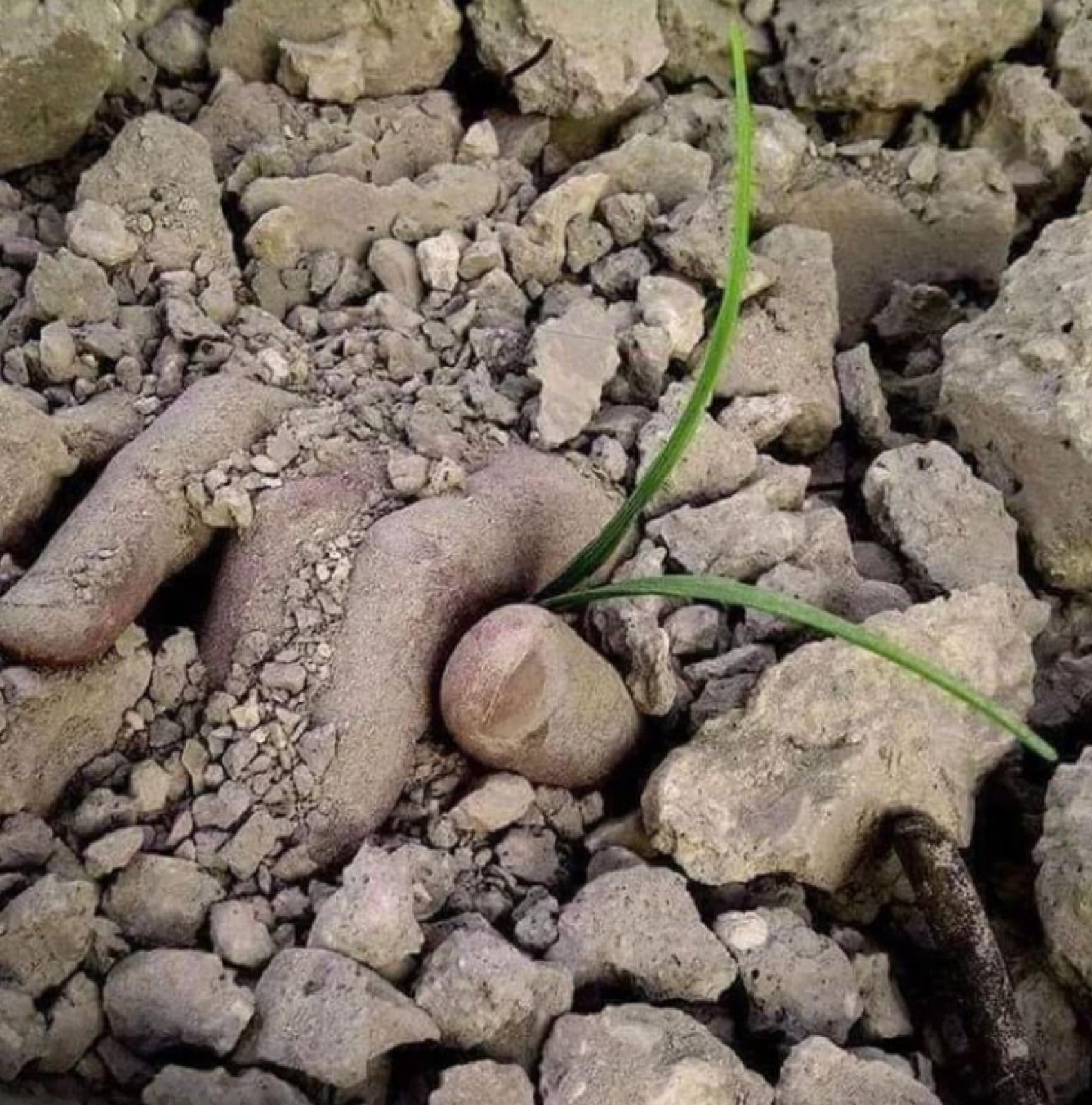
Una delle immagini più terribili che ho visto in queste 28 settimane e che non mi abbandonerà mai più è quella di un seme di dattero che ha germogliato fra le dita di una persona sepolta sotto le macerie. Un orrore e un miracolo allo stesso tempo. Una metafora devastante che non ha bisogno di spiegazioni. Uno spiraglio e forse un auspicio sulla forza indomabile della resistenza e della solidarietà.

Unknown's avatar

Grey

February in Kabul is the coldest month of the year; a month made of power cuts, snowfalls and the hope that there would be enough snow to avert the fear of forthcoming droughts. The first snowfall is always celebrated with an exchange of wishes and sweets.

I wrote about snow in Kabul for the first time more than ten years ago. Now I am back in the city after a very long time and there is snow again and I have the impression of closing an old circle while opening a new cycle.

Never like in this conjuncture, a return feels more like an arrival. Everything is familiar and yet everything is also to be understood afresh, from scratch; everything is to be looked at with new eyes free of prejudice, without the bias of conclusions reached even before fully comprehending details and premises.

I have been here for more than three weeks, but I write only now because probably it is only now that I have mastered the courage to face the fear of being misunderstood and to embrace the desire to highlight the dissonances that emerge every day against opposite polarising and ideological narratives.

After last night’s snowfall, Kabul is all grey; covered by worn and trampled snow and wrapped by an uncertain sky that doesn’t seem to know if it wants to stay hazy or send more snow. It is all these shades of grey that are the most difficult to represent. As days go by, I realise that shouted truths no longer hold when faced with reality; that rules and exceptions coexist side by side; that fear may turn life into survival; that glimpses of hope and possibility open up among millions of contradictions.

In its brutal beauty, Afghanistan has a unique way to crawl under my skin, to call me back and always give me a reason to return, one more question to chase, an epochal transformation to witness, an opportunity to question myself, my ideas and my prejudices. It is a disarming country, that somehow always leaves me alone and bare in front of myself and the reasons of my choices.

Unknown's avatar

Grigio

Febbraio a Kabul è sempre il mese più freddo dell’anno. Un mese fatto di blackout, di nevicate e di speranza che di neve ce ne sia abbastanza per scongiurare la paura della siccità. La prima nevicata dell’anno qui si festeggia con dolci e scambi di auguri.

Ho scritto per la prima volta della neve a Kabul più di dieci anni fa, essere di ritorno dopo tanto tempo e con la neve mi dà l’impressione di chiudere un vecchio cerchio ed aprire un nuovo ciclo.

Mai come in questo momento, il ritorno è piuttosto un arrivo. Tutto è familiare, ma tutto è da capire da capo; con occhi nuovi, liberi da pregiudizi e da conclusioni tirate ancora prima di comprendere a fondo dettagli e premesse.

Sono qui da più di tre settimane e scrivo solo adesso perché forse solo adesso ho trovato il coraggio di guardare in faccia la paura di essere fraintesa e prendere in mano il desiderio di raccontare le dissonanze che emergono qui ogni momento rispetto a versioni della storia opposte, ma comunque ideologiche e polarizzanti.

Dopo la nevicata di stanotte, Kabul è tutta grigia di neve calpestata e avvolta in un cielo incerto che non sa se rimanere nebuloso o buttar giù ancora neve. Sono tutte queste sfumature di grigio ad essere le più difficili da rappresentare. Più passano i giorni e più mi rendo conto che le verità proclamate non reggono il confronto con la realtà; che le regole e le eccezioni convivono fianco a fianco; che la paura rischia di trasformare la vita in sopravvivenza; e che spiragli di speranza e possibilità si aprono in mezzo alle migliaia di contraddizioni.

Nella sua brutale bellezza, L’Afghanistan ha un modo unico di infilarsi sotto la pelle e richiamare a sé, di far sì che ci sia sempre una ragione per tornare, una domanda da inseguire, una transizione epocale a cui assistere, un motivo per mettere in questione se stessi, le proprie idee e pregiudizi. È un paese disarmante, che in qualche modo lascia sempre soli davanti a sé stessi e alle ragioni delle proprie scelte.

Unknown's avatar

Spectacles

It has been a few days since one of my students at the Institute is having a hard time reading and writing and his school results have gone down. We asked a few questions and we discovered that he broke his spectacles and his family does not have money to buy new ones (about 30$ between frames and lenses).

Another one is always tired; his eyes are red, and he struggles to focus. I called him to my office and asked him what was going on. He said that there is no problem, and everything is normal. For him normal means living in a tiny room behind the woodworking workshop of his cousin. After school he works there to earn a bit of money and then in the evening he goes for tuition. His family is in Kuduz, probably the most dangerous part of the country right now. I asked him to come and stay at the students’ dorm, but he declined the offer: I think he fears that if he moves out of his cousin workshop he’ll lose the opportunity to earn a little.

There is a boy who is emotionally unstable, his parents tell him he’s good for nothing and he only finds peace of mind when he draws. He told us: “People say I am crazy.” At the Institute, he’s just a boy like anyone else: he’s found his little world and a bit of tranquillity.

Another student is distracted and absent-minded, we catch him often staring at the void. His brother – to whom he resembles immensely – has been killed in a bomb-blast last year, it has recently been the first anniversary. How can we help him restore an emotional balance?

I have been back in Kabul only for three days and these are the stories that welcomed me. Yet again, a unique opportunity to put my priorities in order and remember not to take anything for granted.

Unknown's avatar

How do we remember?

How do we manage the emptiness that the loss of a loved one creates so as to preserve the smile that characterised the time spent together?

How do we remember? How do we honour the memory of a person who dedicated her life to tell stories that are too difficult to hear? How can we forget just as much as it is needed to survive? How can we suspend the urge to understand so as to respect the inexplicable choices of a friend?

We had not been in touch for a while, but she was prone to long silences – it happened every time she was immersed in writing. We live scattered around and yet interconnected – six months go by and you don’t realise it until it is too late.

Annie spent her life embracing the world – an embrace so compassionate and open that sometimes the world ended up suffocating her. She was a good listener – she listened without reservations or prejudice. She gathered stories that would inevitably leave deep marks. She felt responsible for the words that were gifted to her.

There is a man, maybe not fully in his right mind, in a rough neighbourhood in Karachi, he lives in a cemetery with a wall full of graffiti. She wanted us to write his story together. I may have to go look for him soon. And carry with me her desire to always make an honest and generous space for all unheard voices.

And carry with me her desire to always make an honest and generous space for all unheard voices.

Annie Ali Khan (1980-2018). In memoriam.

Unknown's avatar

The things that I don’t know

white-noise

Yesterday the cousin of one of our teachers has been killed in a targeted assassination. It felt like one of those stories that you read on the newspaper and you think they will never be part of your life because they belong to a foreign elsewhere. One of those stories that are beyond the ordinary and have nothing to do with the normality of the everyday.

I am here to run a school. Before I started, my idea of what my routine would look like included the revision of teaching methods, the achievement of artistic excellence, grades and disciplinary notes. What turned out to be a part of my ordinary administration is also the management of situations that are extraordinary, alien and emotionally destabilising – which, however, in a country at war are sadly integral to daily life.

Impermanence and transience are difficult to conceive as some of the inevitable ingredients of our life; they are difficult to digest as a force that roots you in the present rather than as a windstorm that erases any sense of direction.

The concept of resilience is often abused and quoted far too frequently and light-hardheartedly. But it is moments like this, when all the things that I don’t know lay bare, that reveal the mysterious strength that we have inside and we’re often not aware of. It is an immense force that helps keeping things together; that helps continuing to look ahead; a silent strength that protects the desire – as Vittorio Arrigoni used to say – to stay human.

Unknown's avatar

Make Hope

banknote_1_afghan_afghani_reverse

At the Institute we are going through a period of transformation. Before we can start building new things, we have to do a lot of cleaning up and should not forget the bigger picture in spite of the frustration coming from tons of banal daily tasks.

Fear is often the first response to change along with great diffidence for those who want or have to promote alternatives.

Yesterday I was talking to my colleague, the real cornerstone of the Institute, about this complicated period: about what we are doing, what is expected of us and about how we need to keep focusing on the vision we are striving to realise. My colleague is a very serious person, a man of few words; discussions with him don’t divert from what is essential neither do they indulge in gossip or self-celebration.

The problem in this country – he told me – is that nobody looks at the future; people are not even sure that a future exists. That’s why we are all here holding on to the present, trying to get the most out of it for ourselves, for our own personal interest, without even thinking of a greater good.

I replied that such an attitude is an enormous obstacle for those who are working in education as they build in the present with an eye to the future.

It is a matter of bad habits – he continued. People are happy with what they have now, the little privileges they have accumulated and close off against anyone who tries to question them.

A bit discouraged, I asked: What are we doing here then?

Before averting his eyes and going back to work, he answered: We are here to make hope.

I just can’t stop thinking about this conversation. These two words – make hope – have completely changed the way I look at things. I have always thought of hope as a dimension of the heart and the soul; as a beautiful feeling, a source of optimism that may however run the risk to turn into a passive waiting for a better future to come. And now I discover that hope is something you can make.

I think this is the beginning of a small revolution. I came to the Institute thinking that I was here to revive the educational offer and now, all of a sudden, I find myself to be here to make hope. The weight of such responsibility terrifies me, but at least now I know that I am in a domain that is familiar: whether I succeed or not is a different story, but at least I can try – at least there is plenty to get my hands dirty.


Unknown's avatar

A new adventure

IMG-2279

I have said many times, far too many times, that it was time for me to look for new geographies, to leave Kabul and go somewhere else. Instead here I am, writing again from Kabul where I moved back full time, the reason being a request that was impossible to say no to.

I have been asked to work as Acting Director of the Afghan Institute of Arts and Architecture in Turquoise Mountain.

The Institute is a little corner of paradise in the heart of the old city of Kabul, a modern structure built in mud and wood according to traditional techniques.

The school was founded ten years ago to respond to the risk that traditional crafts would disappear because of war, migrations and carelessness. At the onset of the Taliban regime, in fact, many traditional masters left the country for fear or lack of opportunities thus interrupting the cycle of knowledge transmission and creating a void that was difficult to fill. Those who had stayed back in Afghanistan were struggling to survive – Ustad Hadi, for example, who once was a woodcarver at the king’s court had ended up selling bananas in a wheelbarrow on the street to feed his family.

The initial mandate of the Institute was to gather the threads of a story that risked to be forgotten; today we have one hundred students who are learning the arts of calligraphy and miniature painting, jewellery and gem cutting, woodwork and pottery with the blue glazing coming from a local plant. They are girls and boys, between fifteen and twenty years of age, who are learning a craft and a trade, while contributing to the active conservation of Afghanistan’s cultural heritage.

Working in a school like this, preserving the stories from the past while looking at the future, is a serious challenge and a great responsibility. It is also a unique opportunity to think about the role of traditional knowledge – slowly sedimented across generations – in relation to the fast pace of contemporary society; to think about how to keep it relevant and sustainable without anachronisms or the romanticisation of an ideal past.