Tag Archives: daily life
Learning to read
I have been studying Dari for a year now and I finally reached a functional level that allows me to ask to change the dynamo of the generator, check with the plumber that the sewage finally works properly and converse with taxi drivers – mostly about God and religion, conversations that – beyond the language barrier, often leave me with questions that I am not capable to answer.
I have learnt the alphabet since the very beginning, but it has only need a week since I started reading out loud.
It made me feel like a little girl again and Sister Fidalma came to mind – she was the incredibly old nun who gave me reading tuitions when I was in school. When I was little, it took me a very long time before I learnt to read properly. My first oculist got my prescriptions wrong and, despite huge baby-pink specs, I could hardly see anything and the letters on the page would hopelessly blur.
It is funny to think now that my first active relationship with books was one of effort and frustration and it makes me happy to look back and see how much things have changed.
Learning to read as an adult is turning into a funding moment in my personal development. It is a humbling experience where I have to look at myself and my limits without filters or excuses: there is no bluff and there is no hiding. Reading out loud a syllable after the other is embarrassing – I have the impression to blush every time I finish reading a word; making banal mistakes is frustrating, but reaching the end of a sentence – exhausted after barely five words – is a priceless and unforgettable pleasure.
Sayed, my fantastic teacher, has found the right balance with me: he pulls my leg and encourages me at the same time, he helps me laugh at my efforts and not to take myself too seriously.
There is so much that we take as a given, we hardly question our abilities and all those things we believe we are entitled to.
Starting from scratch again is reminding me of the importance of humility, of the satisfaction of small steps, and of the genuine joy of simple achievements.
Imparare a leggere
Studio il Dari ormai da un anno, sono arrivata ad un livello tale per cui posso chiedere di cambiare la dinamo del generatore, verificare che l’idraulico abbia riparato la fogna per bene e conversare con i tassisti – spesso di Dio e di questioni religiose a cui difficilmente riesco a dare risposta.
Sin dall’inizio ho imparato l’alfabeto, ma è solo da una settimana che ho cominciato a fare esercizi di lettura ad alta voce.
Mi sono sentita di nuovo una ragazzina e mi è tornata in mente Suor Fidalma, la suora vecchissima che mi dava ripetizione di lettura. Da piccina, mi ci è voluto tantissimo tempo per imparare a leggere. Il mio primo oculista aveva sbagliato la prescrizione delle lenti e nonostante avessi dei giganteschi occhiali rosa confetto, fondamentalmente non vedevo un granché e le lettere sulla pagina si confondevano.
Strano pensare come il mio primo rapporto attivo con i libri sia stato caratterizzato dalla fatica e dalla frustrazione, ed è bello guardarsi indietro e vedere quante cose siano cambiate.
Imparare a leggere da adulta si sta rivelando un’esperienza fondamentale nella mia formazione personale. E’ un confronto con me stessa e con i miei limiti: c’è poco da bluffare e non ci sono sconti. Sillabare ad alta voce è imbarazzante – ho l’impressione di arrossire ogni volta che leggo una parola – fare errori banali è frustrante, ma arrivare in fondo alla prima riga, stanchissima dopo cinque parole, è un’esperienza assolutamente indimenticabile. Sayed, il mio fantastico maestro, ha trovato la giusta misura: mi prende in giro e mi incoraggia, mi aiuta a ridere delle mie difficoltà e a non prendermi troppo sul serio.
Si dà così tanto per scontato, su noi stessi sulle nostre capacità e su quello che ci sembra ci sia dovuto. Ricominciare da zero, mi sta ricordando l’importanza dell’umiltà, la soddisfazione dei piccoli passi e la gioia genuina dei traguardi semplici.
A Contemporary Arts Library in Kabul?
We’ve now decided to move one step further and we want to try and set up an art library and specialised resource centre that artists can access and use for their research. This is a non-NGO funded initiative, it springs out of our time, enthusiasm and commitment.
As there is no international donor to fund this, we are looking for friends and patrons who are willing to support us – by donating a book, getting your friends to donate books or, for those who come and go from Afghanistan, make some space in their suitcase to help bring books in.
We are looking for books on contemporary arts and related subjects in English and Persian. Any contribution will be very very welcome!
Please get in touch if you want to know more [ kiccovich (@) gmail (.) com] and feel free to pass my email on to those who may be interested in contributing.
Thanks for your support!
The Pain of Others
I wrote this bulletin a while ago, after coming back from a trip to Kashmir. I think it sums up the how and why I do what I do.
***
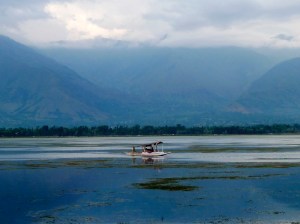
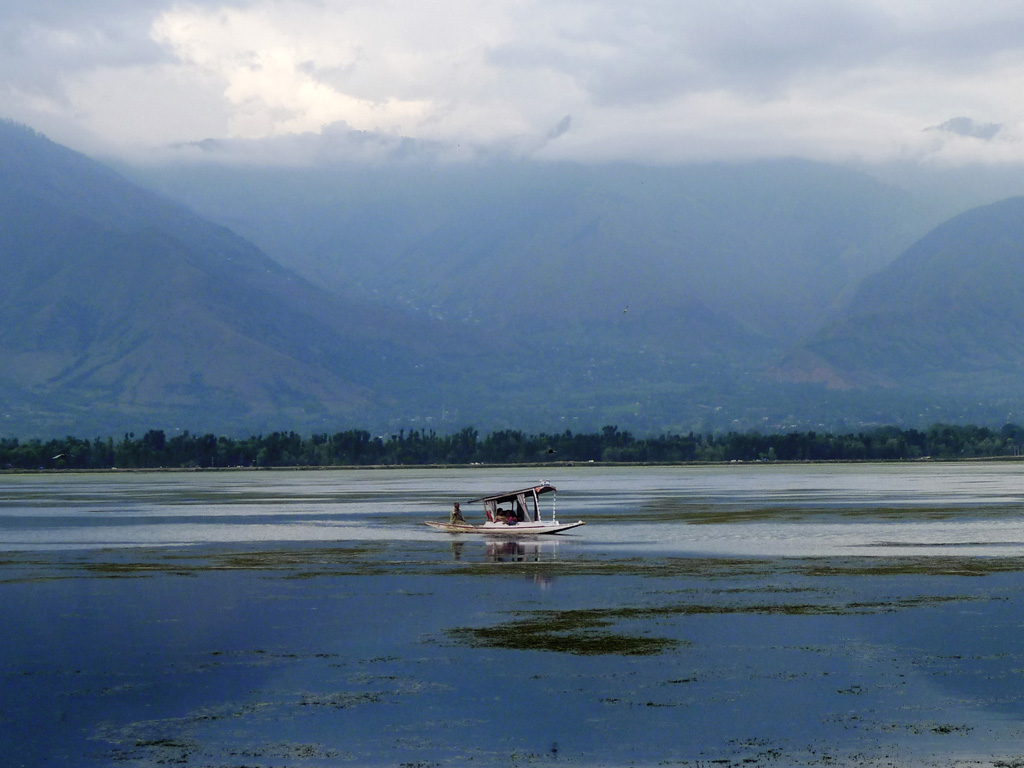
I have come back from Srinagar a week ago and the voices and details of the city are still vividly present in my memory. The Dal lake, the snow-capped mountains, the windstorm that shook my last night in the city and got mingled with the lamenting voices of women praying to fight their fear.
Srinagar is not leaving me, I would like perhaps some distance, but it has decided to stay with me. The Kashmir of the almost forgotten conflict has crept under my skin.
Agha Shahid Ali, the poet who more than anyone else gave voice to the unique mixture of beauty and brutality that seems to be the essence of the Valley, has been my guide. I have looked at his Valley through the lens of his words. And Srinagar inevitably became also for me the city of daughters: where almost every man has a police record – if not as a suspect, as a spy: it seems, in fact, that there are some 170 thousand spies for a population of 10 million people – and where women make life go on, in silence, away from indiscreet gazes and the clamours of public domain.
And so it is that also the apparent quiet that surrounds Srinagar, the renewed presence of tourists, the rhetoric of the regained stability acquire a new meaning through the verses of
Agha Shahid Ali, who quotes Tacitus: solitudinem faciunt, pacem appellant – they make a desolation and call it peace.
It is not the first time that I experience this kind of desolation. It hit me in Palestine, in refugee camps in Iraq and Tunisia, in the slums of Pakistan.
But it seems that this desolation has now come back to claim a long overdue credit.
Of years of stories that I listened to, collected and preserved in my memory. Of tales of lives and places that I visited, felt and shared through my writings.
How can I do justice to so much richness and pain?
How to give proper credit to those who tell you that they feel guilty to be happy when their country is under an oppression that seems to have no end?
How do to sail in this big sea? Where is the compass that leads the path so as to preserve a sensitive eye and yet avoid pitiful sympathy? How can one tell about the power of human dignity without risking the objectifying gaze of the anthropologist who looks for truths?
Questions multiply and answers seem to slip away.
Hitting the road is the only solution I know: the source of more questions that animate the quest for more answers.
The road and a desire for care, dedication and attention – in my words and politics – towards the people and places that have told and continue telling me these stories.
The Little Book of Kabul in London
SOAS Afghan Society will be joined by Francesca Recchia and Lorenzo Tugnoli, the authors of The Little Book of Kabul.
The Little Book of Kabul is a book project that depicts a portrait of Kabul through the daily activities of a number of artists who live in the city. With an evocative tone, it focuses on the tiny details that escape grand narratives. Colours and gestures, smells and accents. In 20 short stories and 47 black and white photographs, The Little Book of Kabul dives into the lives of the three main characters exploring what it means to be an artist in Kabul and hence unveiling the beauty and brutality of the city.
Come join us!
Date & Time: Friday 28th November, 6-8pm
Room: G3 SOAS, University of London, London WC1H 0XG
Nearest tube: Russell Square
This event is free and open to all.
The Little Book of Kabul on Fair Observer
Fair Observer featured our book:
The Little Book of Kabul is a book project that depicts a portrait of Kabul through the daily activities of a number of artists who live in the city. With an evocative tone, it focuses on the tiny details that escape grand narratives. Colors and gestures, smells and accents. In 20 short stories and 47 black and white photographs, The Little Book of Kabul dives into the lives of the three main characters exploring what it means to be an artist in Kabul and hence unveiling the beauty and brutality of the city.
Read more here.
Mountains, Mines and Memories: The Idea of Kurdistan
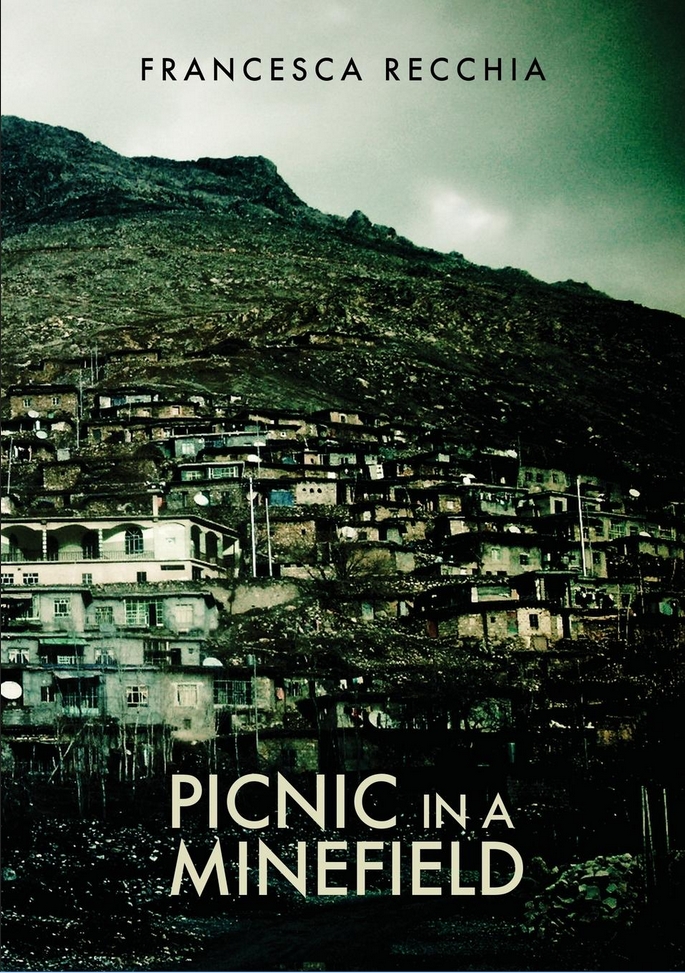
Ty Mayfield reviewed Picnic in a Minefield for War on the Rocks.
Here is a teaser:
Recchia is an Italian academic who left Europe for a position at the University of Kurdistan Hawler (UKH) in Erbil, Iraq in the hopes of expanding her professional horizons as an educator. In the course of two years, Recchia experiences life in many different circles. She transitions between guest, traveler, teacher, and mentor with an ease that disarms those who might stand in her way. It is from the unique perspectives of both her professional work at the UKH and her personal interactions with locals that Kurdistan is made real for the reader. Through Recchia’s travels, the soldiers, diplomats, journalists and humanitarian aid workers that usually narrate our collective Iraq experience, are illuminated for the reader from a new perspective. She reports their actions, thoughts and intentions in the insightful and articulate observations of a self-aware and humble narrator.
Recchia set out for Iraqi Kurdistan in search of herself. Along the way it is fair to say she found an entire group of people in search of themselves, their own identities, and perhaps, their own nation. These two arcs, one individual and one collective, intersect in Picnic in a Minefield and provide a compelling narrative that gives insight into the permanence of resistance, the pace of change, and the promise of a Kurdistan.***You can read the full review here.
The Little Book of Kabul – Launch in Kabul
The Little Book of Kabul is now out in the world.It has reached many houses and hopefully offered a glimpse of unexpected beauty.
In the next few weeks, Lorenzo and I will be travelling to present the book and tell the story of its making.
This last phase of our journey – obviously – began in Kabul.
We had the great privilege of being hosted by Margherita Stancati and Nathan Hodge at the Wall Street Journal for an evening of discussion and celebration.
*Photo Credit: Joel van Houdt *
It was beautiful to share some of the backstage stories with old friends who have followed our adventure since its inception and new friends who now walk the same streets we recount in the book.
The incredible amount of affection that surrounds The Little Book of Kabul never ceases to surprise us and we are deeply grateful for that.
A journey to the Other Iraq
This article was initially published in Domus 958 in May 2012.
The Autonomous Region of Kurdistan has in recent years been in the news as the “Other Iraq”. In 2011, National Geographic described it as an oasis of peace and development, and The New York Times placed it 34th out of 41 best travel destinations— beating Miami, which finished up in last place. In reality, the region is not so much a tourist attraction as it is land prized by multinational and private investors. After Saddam Hussein’s bloody ethnic persecution, a decade of armed conflict between Iraq and Iran, two wars to export democracy, and one civil war, Iraqi Kurdistan today is striding towards a new state of political and economic stability. Its long history of war and violence has left indelible marks and scars. At the same time, however, it has created a unique situation characterised by openness and opportunity. The future is all there to be invented, there is plenty of scope for experimentation, and the direction to be followed can still be chosen. Erbil, the regional government capital and one of the world’s most ancient cities, inhabited without interruption for thousands of years, is an extraordinary example of that condition. One of the principal artifices of this growth is Nawzad Hadi, governor of Erbil since 2004. In a recent interview, with the clarity of a visionary he illustrated to me the steps required to fulfil what he calls a great dream: the building of a city worthy of being an international capital, “a new Dubai”. That is no mean statement, considering that Kurdistan is not even an officially recognised state. “I am doing it for my people, who deserve it after years of oppression.” The magnitude of Nawzad Hadi’s challenge is quite incredible. It began with the asphalting of roads and the guarantee of standard access to water and electricity, continued with the completion and implementation of a master plan and the prospect of a green belt around the city, and is now on its way to transforming Erbil into an economic and commercial hub. In an explosive mixture of individual profit and common good, the governor has embraced the city’s historic and cultural profile as the symbol of this rebirth. He has started a restoration of the Citadel, Erbil’s ancient heart, by working with UNESCO to have it included in the list of World Heritage Sites. At the same time, with an eye to the international trends of the architecture star system, he appointed Daniel Libeskind to design a museum of Kurdish memory, an audio-visual project for the historical and narrative reconstruction of the Kurdish genocide. Work on the museum is scheduled to commence this year.
The Autonomous Region of Kurdistan chose Erbil as the emblematic image of its capacity for self-government, and in this case investment in its urban growth has been notably political. Through the concession of land-tax benefits and structural support, the regional government is encouraging the circulation of private capital. This has made a significant impact on the city’s development and building prospects. In the past five years the world’s biggest corporations have staked claims in the city, luxury hotels have multiplied, and new residential complexes have sprung up suggesting the possibility of exclusive lifestyles and their desirability. Dream City, Empire City, English Village, Royal City, Vital City and Italian Village are gated communities now occupying a large slice of Erbil’s outer ring road, not far from the construction site of the Marriot Hotel and from the 23-storey Hotel Divan tower. Erbil’s economic prosperity is just one of the multiple sides of this transition to a mature state of democracy. Traces of years of conflict—and the fact that virtually all investment has been confined to the growth of this capital city—are on the other hand dramatically evident in the rest of the region. Contrasting the enthusiasm of this new prosperity are the mountain villages and refugee camps where resilience and the art of making ends meet are means of ensuring survival. Wlaxlw is a village of about 50 mud-and-stone houses, on the border between Iraq and Iran. Its geographical position made it a constant target of bombardment during the war between the two countries. To this day it is surrounded by the aftermath of that conflict in the shape of missiles, bullets and bombshells, ammunition boxes and helmets. Over the past 20 years the inhabitants of Wlaxlw have made a virtue of necessity, by utilising the debris and rubble as building material for their postwar reconstruction. Thus Katyusha rockets have become support beams for ceilings or pillars for pergolas, missile casings are converted into drainpipes, and helmets (those without bullet holes at forehead level) are used as flowerpots or to collect rainwater, while landmine warning signs serve as firewood props, and ammunition boxes sunk into the ground provide steps to the higher part of the village. Wlaxlw is a cross-section of an amazing world, a bizarre combination of a post-apocalyptic landscape and an oil painting by an 18th-century orientalist. But it is not the only example of the contradictoriness of these coexistences. Stories of this kind are illustrated by the various army buildings once occupied by Saddam Hussein’s troops stationed in Kurdistan. From the end of 1996, at the height of the civil war, these structures began to be converted into “villages”, complete with mosques, small shops and elementary schools. Ma’asker Salam, Top Khane and Raparin are three such villages, located a few kilometres from Sulaymaniyah, the second largest city in the Automous Region of Kurdistan. Ma’asker Salam is where Saddam’s army stables were situated. Today, some 300 families have found accommodation there. Not far away is Top Khane, a group of 12 buildings formerly used as an arms depot and now occupied by another 300 families. Raparin, located closer to the city centre, was in Sadam’s day a large industrial complex used to produce and repair weapons. Today it hosts a maze of self-built huts, inhabited by some 70 families. By a curious twist of fate, what were once the building-symbols of the Ba’athist regime’s military oppression have been transformed into a safe haven for hundreds of families, the place of refuge they call home, while waiting (with ever diminishing faith) for the politicians to keep their promises of compensation and assignment of public housing. During this long wait of more than 15 years, the old army buildings have changed their appearance as a result of spontaneous actions by inhabitants. Using improvised materials and traditional construction techniques, they have gradually turned this political aberration into something more like a familiar and hospitable landscape. Haji Mahmoud and Nadja, two residents of Ma’asker Salam, recount that local and international NGOs helped refugees to settle into the abandoned military structures. At Ma’asker Salam, the stables were initially divided by makeshift walls into rooms to accommodate one or more families each. In the course of time and with a growing awareness that the situation would take years and not months to be resolved, the inhabitants of these permanently temporary villages began to expand. They partitioned the rooms assigned to them in order to meet the needs of their families and to create more comfortable living conditions.
Nadja lives in a corner house and changes the colour of its interior three times a year. With her husband she has laid out a garden, its flowerbeds bordered with stones and broken bricks. There are also three trees, grown from the kernels of fruit and each planted to mark the birth of her three daughters. “All I’d like is a nice house,” she says, “nothing more”. With snow-capped mountains on the horizon, the landscape of Ma’asker Salam and Top Khane has a surreal look. The picturesque impression of mountain villages clashes with memories of a cruel and dramatic past which the inhabitants have not yet managed to cast off. The old stable buildings at Ma’asker Salam are today barely visible. Covered with satellite dishes, they are now a mass of irregular dwellings built from cement blocks, stone and rough earth bricks, and wrapped in coloured striped plastic sheets for winter insulation. In a surprising combination of improvisation, recycling and vernacular architecture, remnants of plastic and metal mark out Haji Mahmoud’s garden, where birds are kept off by scarecrows made of snipped plastic bags. In the courtyard next door, his son and daughter-in-law have built a pergola with the wooden poles of building sites, while their neighbour has used the door of a derelict car as the gate to a courtyard surrounded by a dry wall. Between the sushi bar on the 21st floor of a 5-star hotel in downtown Erbil and the Katyusha rockets used as construction material in Wlaxlw, observing the anthropised landscape can be an outstanding means of interpreting what is often, abstractly, defined as a postwar dimension. The iniquitous distribution of wealth derived from the postwar reconstruction efforts has left indisputable signs of the temporality of a twisting and frequently obstacle-strewn path. In Iraqi Kurdistan, improvisation and resilience are the other side of the coin to massive urban development and the dream of becoming the next Dubai. Torn between far-sightedness, forgetfulness and selective memory, territory is revealed as neither a neutral nor an innocent platform, on which political debate and intervention are staged and the future takes shape.