Unknown's avatar

Book swapping in Kabul

The joys of life in Kabul

kiccovich's avatarThe Little Book of Kabul

DSCF5106

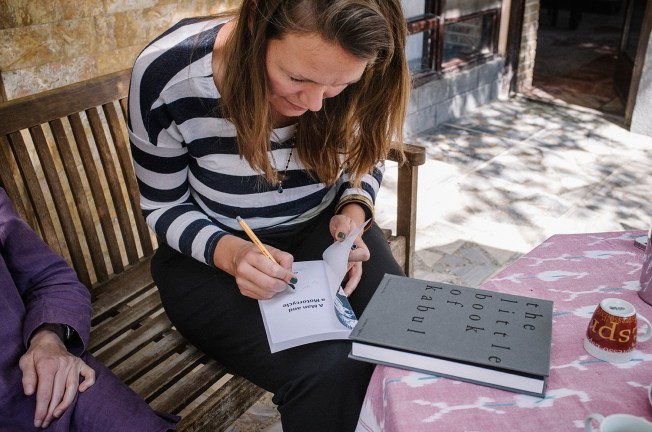
It was such a joy to have the chance to swap books with Bette Dam!

Her work is absolutely remarkable: serious, committed, scrupulous – we are really proud to count her among our friends.

Her fully-Afghan produced book, A Man and a Motorcycle. How Hamid Karzai Came to Power cam be purchased here.

A big thank you to Margherita Stancati and Nathan Hodge for offering the perfect setting with their proverbial hospitality.

View original post

Unknown's avatar

Enciclopedia delle Donne

Tempo fa, Malavika Velayanikal ha scritto di me per l’Enciclopedia delle Donne. Molto è cambiato, il viaggio si è allungato, ma parte della storia resta.

Photo Credit: Selvaprakash L.

Photo Credit: Selvaprakash L.

Francesca Recchia ha attraversato mezzo mondo, spinta dalla passione per la conoscenza. Forzando sia letteralmente che figurativamente molti confini, i suoi vagabondaggi l’hanno portata in posti insoliti e spesso pericolosi.
Francesca ha sempre infranto convenzioni e stereotipi – come quando, da adolescente, è stata la prima rappresentante d’istituto di sinistra, interrompendo la lunga tradizione politica di destra del liceo di Avezzano, in centro Italia; oppure quando, molti anni più tardi, ha fatto conoscere agli studenti della University of Kurdistan Hawler, in nord Iraq, le potenzialità del pensiero critico e di forme alternative di dialogo. Lascia il suo paese d’origine subito dopo gli anni “molto” politici del liceo. Non è stata solo la scelta di laurearsi in Conservazione dei Beni Culturali a spingerla a Venezia, dalla parte opposta dell’Italia; trasferirsi a Venezia è stato perciò per lei un modo di ricominciare da zero: «dove nessuno mi conosceva e io potevo davvero capire chi fossi e che cosa volessi». Questa è per lei una costante: «Mi sento sempre un po’ fuori posto, cerco continuamente cose diverse e finisco sempre per essere un po’ più fuori posto, ma un po’ più contenta di prima».
In ambito accademico la sua irrequietezza ha acquisito nel tempo significati diversi: non è mai stata capace di dedicarsi ad una sola disciplina, di studiare con un solo professore o in una sola università – «intellettualmente non sono monogama», dice.
Nei primi anni di università hanno cominciato a prendere forma le sue convinzioni intellettuali: l’idea che la conoscenza non sia unidirezionale e che l’intelligenza sia un prodotto collettivo, ha giocato nel tempo un ruolo importante. Un’idea potente che, in realtà, non molti accademici condividono. Per la tesi di laurea (1999) ha mescolato arte e sociologia, scrivendo sull’arte contemporanea e i suoi devianti: l’esplorazione della linea sottile fra il genio e la follia non ha raccolto il consenso di tutti i professori. La sua relatrice, Giuliana Chiaretti, è stata la sola a sostenerla e ad incoraggiare il suo approccio interdisciplinare.
Il Master in Studi Visivi al Goldsmiths College di Londra le ha cambiato la vita grazie all’incontro con Sarat Maharaj, un professore sudafricano di origini indiane.
Qui, ancora una volta, ha rotto gli schemi organizzando un gruppo di discussione alternativo aperto a tutti, in cui artisti e critici potevano incontrarsi, cosa fino a quel momento piuttosto rara. Francesca, in questa fase del suo percorso intellettuale, ha cominciato a mettere in discussione le dinamiche di produzione della conoscenza ed è così che gli Studi Postcoloniali e Subalterni hanno colpito la sua attenzione.
Quando Londra sembrava praticamente perfetta per lei, ha deciso di spostarsi di nuovo: l’Italia era nel bel mezzo della “fuga dei cervelli” e tornare le è sembrato un dovere morale.
Con una borsa di studio consegue il dottorato di ricerca in Letterature, Culture e Storie dei Paesi Anglofoni presso l’Università L’Orientale di Napoli. Dopo le ondate di migrazioni successive alla seconda guerra mondiale, l’idea di Europa è cambiata e il “noi” e gli “altri” hanno preso all’interno dei suoi confini una nuova forma.
Francesca ha subito il fascino della trasformazione di questa idea di alterità e ha deciso di scriverne per la sua tesi, utilizzando la città di Londra come caso studio.
Infrangere i muri dell’arroganza intellettuale non rende la vita semplice a nessuno, e così è stato anche per lei. Con i suoi professori di Napoli ha sempre avuto difficoltà ma “fortunatamente” Sarat Maharaj è tornato nella sua vita, invitandola a lavorare per Documenta 11, la prestigiosa mostra che segna ogni cinque anni i paradigmi dell’arte contemporanea. Da lì ha cominciato a lavorare con multiplicity, un gruppo interdisciplinare di ricerca con cui ha condiviso, dice: «l’interesse per come cambiano le città e per il modo in cui le persone e i luoghi interagiscono». A Documenta, il gruppo di cui faceva parte aveva un mantra – Sbatti contro il muro e impara ad abbracciare il tuo destino – questo è stato da allora un motto che ha continuato ad accompagnarla visto che l’unico modo in cui riesce ad imparare è sempre per la strada più difficile. Ha viaggiato con diversi gruppi di ricercatori trovando opportunità per fare lezioni, studiare ed esplorare posti quali il Pakistan, la Palestina, il Kashmir, l’Oman, la Tunisia oltre a diversi paesi europei, sempre esercitando la sua non comune abilità di interpretare patterns insoliti, di unire punti di disegni invisibili.
«Mi ha insegnato l’umiltà intellettuale e la consapevolezza che la curiosità non ha mai fine!», dice di lei Sir Peter Hall, uno dei padri fondatori dell’urbanistica europea. Con lui Francesca ha completato il post-dottorato alla Bartlett School of Planning della University College of London.
Grazie alla collaborazione nel 2008 con TU Delft, in Olanda, con il gruppo Urban Body – che si interessa di sviluppo urbano mettendo al centro della prospettiva di ricerca il corpo umano – Francesca Recchia è arrivata a Bombay, in India, dopo analoghe esperienze a Pechino e Madrid.
«Credo che l’intelligenza e la conoscenza siano processi condivisi, le mie lezioni non sono quasi mai frontali, ma fondate sulla discussione».
Lezioni e conferenze nel tempo l’hanno portata a Venezia, Milano, Delft, in India, in Pakistan, in Palestina… Francesca ha sempre pensato all’insegnamento come ad un’attività politica – un’azione politica intesa nel senso della possibilità di produrre cambiamento anche se fino a quel momento la sua esperienza sembrava mettere in discussione le sue idee: «Ero a disagio, mi sembrava di essere pagata per prestare un servizio.» Per lei, insegnare l’importanza del pensiero critico, del dialogo, della discussione, dell’apprendimento democratico è sempre stato tanto rilevante quanto trasmettere i contenuti.
Il Kurdistan iracheno è in una fase di transizione verso la democrazia e la missione della University of Kurdistan Hawler è quella di combinare tradizioni locali e pensiero contemporaneo: cercavano un docente di sociologia urbana e a Francesca Recchia questa è sembrata una occasione perfetta: l’esperienza di quei due anni sta diventando un libro che testimonia la ricchezza di quell’incontro.
Francesca è tornata in India a luglio del 2010 dove ha lavorato per un periodo alla trasformazione radicale di un villaggio rurale prima di rimettersi di nuovo in viaggio. Il mondo è lì che chiama e lei è sempre pronta a rispondere.

Unknown's avatar

The broken city – Political observations on the built environment

This article was first published in Domus, no. 967 (2013): 114-123.

Screen Shot 2014-10-06 at 10.01.33 AM

From the vantage point of a ramshackle tea stall on the south side of Hari Parbat Hill, the view over Srinagar— the summer capital of Jammu and Kashmir, India—is breathtaking: eagles flying above the skyline, snowcapped mountains on the horizon and an endless sequence of sloping tin roofs, interrupted only by the towering spires of the many mosques.

Hari Parbat is in itself a remarkable summary of the city’s complexity. On top of the hill stands a majestic fort, whose construction was first conceived and initiated by Emperor Akbar in the 1590s, and then completed in the 18th century by the Afghan governor of Kashmir. Just below the fort is the Makhdoom Sahib Dargah, the tomb and shrine of the eponymous Sufi saint and one of the holiest places in the valley, revered by both Muslims and Hindus. Indeed, Hindus consider the hill to be especially sacred due to the presence of the Sharika Devi Temple dedicated to the goddess Shakti, an embodiment of the goddess Durga, who is both a maternal figure and a bearer of destructive male energy. On the way up to the hill there is also the Akhund Mullah Shah Masjid, an abandoned mosque dating from the Mughal era. As well as having domes instead of spires, it is also one of the very few mosques that were historically built in stone rather than the vernacular wooden structure. People say that the Akhund Mullah Shah Masjid has hardly ever been used for worship, and there are two versions of this story: some say it was because the place was possessed by the djinns—naughty or angry genies—while others claim that it was an act of resistance against the foreign Mughal domination.

Hari Parbat Hill is a microcosmic representation of the complex nature of the city of Srinagar and of the whole Valley of Kashmir. It is a palimpsest of layers: multiple narratives and times across religions, identities and dominations. It holds both the power of the popular imagination of Kashmir as a site of pristine natural beauty (which, as historian Mridu Rai argues, is often rhetorically constructed as emptied of people) and the controversial meanings of the idea of Kashmiriyat (or Kashmiri-ness, an essential notion of what it means to be Kashmiri) beyond religious or sectarian belonging. The physical stratification of architectural styles, religious rituals and historical sites triggers questions on how the built environment can be interpreted in order to understand intricate stories that have several, and often contrasting versions. When asked how we can link the current situation of simmering political tensions with a parallel narrative of cherished cultural cohabitation and mutual influence, Professor M.H. Zafar, the former director of the Institute of Kashmir Studies at the University of Kashmir, told us that interrogating architecture is a good way to begin to understand. “Architecture does not wear its meaning on its sleeves,” he said. “It is a subtle matter that requires observation in order to understand the multiplicity of stories that it tells.” This multiplicity encompasses tales of subversion and experimentation, as well as conservative strategies of preservation.

Heritage and historical architecture, in fact, can also be appropriated and used to produce a pacified vision of controversial presents. In Kashmir, the discourse around its long-standing syncretic tradition is exemplary in this respect: contrasting parties have adopted this notion in ways that are instrumental to either communal political agendas or to comfortably preserving the precariously balanced status quo. Syncretic architecture is introduced in the discussion as physical evidence of a harmonious past in which all religions lived in peace, and it is only due to the radicalisation of their opponent—alternatively Muslims or Hindus, depending on who is speaking—that this harmony has now become compromised or even lost.

~ * ~

Screen Shot 2014-10-06 at 9.53.07 AMThis recollection of an ideal past is easily translated into an invitation to forget the stone (pelters) of the present and concentrate on the architecturally meaningful stones of the past. In political terms, this attitude shifts the emphasis to tourism, on the natural beauty of the Valley of Kashmir, on the richness of its cultural and culinary traditions, and becomes a clever instrument used by the Indian government to distract both visitors and detractors from the fact that Kashmir is actually one of the most heavily militarised areas in the world.

This is quite a striking detail if we consider that Kashmir is officially not a war zone.

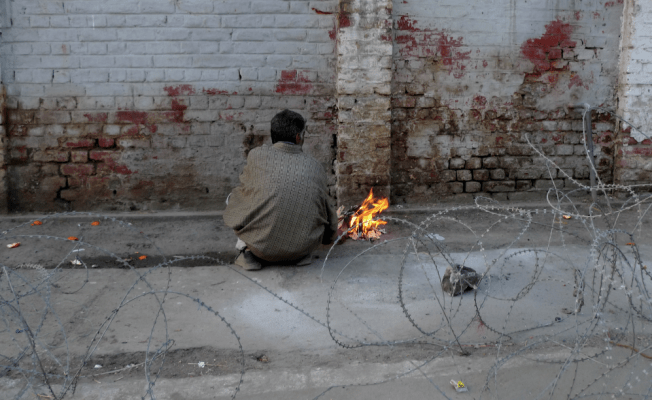
The built environment in situations of conflict is often neglected as a possible exegetic source—it is treated as a victim, accounted for as one of the many casualties, but hardly ever addressed as a witness or a repository of memories and testimonies. This is, however, an incapacitating intellectual position that overlooks the fact that the built environment does not lie, but instead preserves the evidence of facts and stories that ideological discourses may try to efface. Following the omnipresent global argument of security, and its localised version of protection of cultural minorities and their heritage, the Indian army has appropriated temples and cultural centres across Kashmir, wrapped them in razor wire and practically transformed them into military bases. It is visually revealing to take a walk through Lal Chowk—the heart of Srinagar, a busy bazaar-like commercial hub and one of the places that has historically hosted both official political events and opposition demonstrations—and from there to the Old City. The signs of military appropriation of the civil urban space do not use a subtle language and are part of the visual landscape of Srinagar’s present and recent past. By the scenic Amira Kadal Bridge, where Kashmiri women have kept the fishmonger’s trade alive despite decades of political unrest, lies the Hanuman Mandir, a prominent Hindu temple dedicated to the monkey god. Nowadays, the temple is manned by a Kalashnikov-wielding sentry. Surrounded by barbed wire, it houses the Central Reserve Police Force (CRPF), who protect it from potential Islamist attacks and use the spires of its domes to stretch out washing lines to dry their uniforms. Not too far away, in downtown Srinagar, Firdous Cinema Hall tells a more hopeful story: after being occupied by the army for more than 20 years, and being turned into a security camp in 2005, the CRPF returned it to the civilian population in December 2011. Eight other cinemas, however, are still used for military and paramilitary purposes, as are a further seventy-nine hotels. According to KashmirWatch, a branch of the Europe based Kashmir International Research Centre (KIRC), in the past 8 years the army in its various capacities has cleared out of about 1,300 private and public buildings, but, as of early April 2012, 1,800 are still under their control.

Agha Shahid Ali (1949-2001), the poet who more than anyone else managed to express the unique mixture of beauty and brutality that seems to be the essence of the Valley of Kashmir, wrote extensively about Srinagar. Through decades and centuries, the city’s built environment has incorporated the landmarks of cohabitation, syncretism, anger, defeat and resistance. It tells stories of communal harmony as well as tales of struggle and dissent. It carries the wounds and scars of the savage military occupation of civil public space. It echoes the words of Agha Shahid Ali’s poem A Pastoral 196:

We shall meet again, in Srinagar,
by the gates of the Villa of Peace,
our hands blossoming into fists
till the soldiers return the keys
and disappear. Again we’ll enter
our last world, the first that vanished
in our absence from the broken city.

This article is dedicated to Parvaiz Bukhari

Unknown's avatar

L’arte è bipede

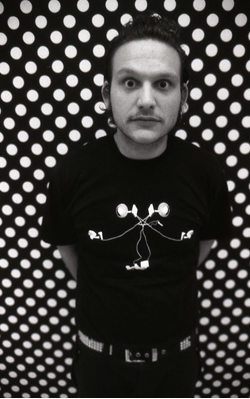
Riccardo Benassi, Novembre 2006 © Paolo Sante Cisi

Riccardo Benassi, Novembre 2006 © Paolo Sante Cisi

***

Una conversazione fra Riccardo Benassi e Francesca Recchia avvenuta il 9 luglio del 2012 al Café Gorky Park di Berlino / anche intesa come un’intervista pre-Techno Casa.

C’è un inevitabile, imbarazzante fondo di verità nel senso comune. Una guida inconscia all’interpretazione del mondo: una chiave, una lente d’ingrandimento, un invito alla sovversione. Il lavoro di Riccardo Benassi sembra prendere forma in questo spazio indefinito e indefinibile, giocando sulla linea sottile che trasforma la familiarità in straniamento.

In questa conversazione, dieci idiomi, dieci modi di dire, dieci inconfutabili banalità ci guidano alla scoperta dell’inaspettato.

***

0. Tra il dire e il fare…

Ovvero: la scultura e la scrittura

Questa fase del tuo lavoro sembra segnare un passaggio marcato dalla progettazione di spazi alla preponderanza della parola scritta, che comunque ha sempre avuto un ruolo importante. Le parole e le cose occupano due sfere semantiche ed epistemologiche diverse e la distinzione fra le due spesso si inserisce nella gerarchia non scritta fra pensiero ed azione. Quali sono le tue coordinate in questa transizione?

Lawrence Wiener ha recentemente affermato che i giovani artisti dovrebbero raccontare di meno e fare di più, ed è interessante se ci pensi che questo consiglio arrivi proprio da un padre concettuale che ha fatto del linguaggio la materia prima del suo lavoro. Se è vero che l’utilizzo del linguaggio non presuppone la narrazione, allora l’unico motivo per cui ha davvero senso raccontare è forse quello di far succedere quello che si racconta. Mi piace pensare che organizzare tridimensionalmente uno spazio architettonico vuoto equivalga in qualche modo ad organizzare bidimensionalmente lo spazio di una pagina bianca. Per questo motivo molti dei miei ultimi lavori, dopo essere stati ambienti, suoni, fotografie o sculture, diventano poi dei libri, o qualcosa di simile a libri. Partendo da questo presupposto, viene semplice immaginare un tipo di scrittura che mira ad esaltare la fenomenicità degli eventi, o ad un tipo di ambiente che diventa narrazione. Creare un’opera è il tentativo di dare forma ad una sensazione che ho provato – o sto provando – al fine di permettere ad altri di darle senso. Infatti credo che anche quando un’opera fa appello ad un mondo o ad una popolazione che ancora non esiste, lo fa partendo dalle sensazioni che – in vita – l’artista ha provato. L’utilizzo del linguaggio è quindi questa sorta di ponte levatoio tra me e i nuovi incontri. Di solito il ponte levatoio serve ad attraversare un fossato, è una sfumatura tra uno spazio indoor e uno outdoor, ma in questo caso sappiamo che predispone le derive, serve ad attraversare il mare che sta tra il dire e il fare. Si potrebbe dire che io e l’architettura, così come io e il linguaggio, ci aiutiamo a vicenda. Parte della mia ricerca si concentra sul rapporto vigente tra contenuto e contenitore, sull’occupazione temporanea – attraverso il suono – del vuoto che l’architettura lascia alle sue spalle. Studiare questo rapporto significa in qualche modo ricalibrare il mio valore in qualità di artista all’interno della società. Mi sembra inoltre che oggi il linguaggio sia quotidianamente sottoposto ad attacchi semantici atti a coadiuvare diverse tipologie di utilizzi strumentali che impongono la dissoluzione dei significati soggettivi – e l’idea di narrazione che sto sviluppando oppone un certo tipo di resistenza a questa degenerazione.

1. Prendere due piccioni con una fava

Ovvero: la scrittura che diventa scultura

Nei tuoi lavori in corso la parola promette un accesso inaspettato nella tridimensionalità. E’ questo un modo per liberare la parola dalla costrizione della pagina? O per esplorare un nuovo percorso per quella che chiami la percezione bipede dell’arte?

La parola per liberarsi dalla pagina deve nascere nella pagina. Se la parola si prende lo spazio di una parete, e ci combatte e dialoga, lo fa per aver qualcosa da dire in un sistema di riferimento fenomenico, che sintetizzando chiamerei architettura. I lavori che sto recentemente sperimentando vanno quindi in questa direzione: da un lato si appoggiano a regole interne al codice del linguaggio, come la grammatica per esempio, dall’altro presuppongo una mobilità – bipede – che fa riferimento ad una qualità animale che esclude la conoscenza di codici linguistici. Sono frasi che chiedono al lettore di camminare nella stanza al fine di essere lette, e questo porta il pubblico a mettere a fuoco – anche inconsapevolmente – i limiti dello spazio che lo circonda. Mettere a fuoco i limiti dello spazio è il primo passo verso una consapevolezza del potere strumentale dell’interfaccia spaziale, e quindi l’inizio di un cammino in direzione della conoscenza dell’attorno. Parlo d’interfaccia perché considero l’architettura la tecnologia base, e a differenza di altre tecnologie, è l’unica che percorre tutta la storia dell’arte: indipendentemente da intenti o realizzazioni l’opera d’arte prima o dopo ha bisogno di lei per esistere. Questa tipologia di nuovi lavori, che qui è una fava, prende quindi due volatili, che qui sono piccioni, che potremmo chiamare tempo e spazio.

2. L’apparenza inganna

ovvero: la molteplicità degli strati, le metafore, le letture plurime

Nell’attraversamento fisico e mentale del tuo lavoro, il visitatore / viaggiatore è guidato o invitato a perdersi in una molteplicità di mondi diversi: le possibili interpretazioni iniziali vengono contraddette e confutate dai dettagli che emergono ad un’osservazione più ravvicinata. Quando le soglie di attenzione si abbassano drammaticamente e rapidamente, mi chiedo se questa non sia una scelta per avvicinare un pubblico più ampio e far si che l’audience si possa relazionare al tuo lavoro indipendentemente dalla capacità di lettura e concentrazione.

È assolutamente così, anche se in pratica non funziona. Ovvero l’assenza di determinazione finale crea confusione e obbliga a trovare da sé una soluzione, e non è detto che chiunque abbia voglia di farlo, e sinceramente lo capisco. Non condivido l’idea che l’arte debba fornire soluzioni, ma comprendo il motivo per cui sempre più persone glielo chiedono. Quindi l’apparenza inganna significa prima di tutto che questo tentativo di pseudo-democratizzazione è fallimentare, e va nella direzione opposta, ovvero verso una proposta artistica esclusivista ed elitaria. Nel paradosso sono a mio agio, lo comprendo e ne intuisco la portata. Come interpretare il concetto stesso di democrazia se non attraverso il paradosso? Il rendersi conto di lavorare per pochi, di appartenere ad una minoranza, non nega la possibilità di costante espansione, l’attivazione di dialoghi fondamentali con chi non la pensa come noi. Ho avuto la fortuna e la possibilità di crescere rendendomi conto di quanto è grande il mondo, e di quanti molteplici punti di vista esistono, e nel mio piccolo cerco di dare voce a tutti quelli che esistono in me. Questo non vuol dire che sento le voci, che ho disturbi di personalità o che sono particolarmente indeciso: analizzo la co-presenza di punti di vista – la discussione interna – al fine di solidificare la soluzione finale – l’output esterno. Questa solidificazione permetterà al lavoro di vivere facendo convivere contraddizioni, ma la sua esistenza, la sua verità sensoriale di opera d’arte, è sempre una scelta ben precisa e indissolubilmente unica.

3. Tutto il mondo è paese

ovvero: sulla diversità, il tempo le generazioni

Un elemento importante della riflessione che informa il tuo lavoro è il come della relazione con l’altro da te. Una cosa che mi affascina del tuo pensare la differenza è il modo che hai di articolarla nel tempo e nello spazio: in termini di generazioni come in termini di alterità socio-culturale.

A livello temporale, credo che il lavoro dell’artista non sia dissimile da quello dello scienziato: si continua un discorso iniziato da altri e lo si consegna nelle mani delle generazioni a venire. Questo dovrebbe aiutarci a pensare al nostro operato come ad una porzione di tempo minima rispetto alla vita dell’idea che soggiace ad esso, e in generale, ci dovrebbe far credere nell’esistenza delle intuizioni e nella totale assenza del genio. A livello spaziale invece – e tu viaggi molto più di me e sicuramente sai di cosa sto parlando – è molto più interessante ragionare su ciò che abbiamo in comune rispetto a ciò che ci differenzia l’uno dall’altro, perché questo “comune” di cui parlo sarà sicuramente extralinguistico e sensoriale, quindi non definito ma in costruzione. Mi è capitato recentemente, per esempio, di ritrovare in una zuppa di alghe il sapore del soffritto che faceva mia nonna con le creste di gallo – e ho capito che si trattava del medesimo sapore dai brividi che si sono impossessati del mio corpo tutto d’un tratto. In generale – visto che vivo in Europa – ti potrei dire che è facilmente percepibile un clima socio-politico in cui vige il disaccordo fra gli stati, mascherato da ricatti numerici, e quindi diplomatiche soluzioni teoriche che abbiamo imparato a chiamare accordi trasversali. Quindi tutto il mondo è paese, ma solo e finché esisteranno i paesi.

4. Non è bello ciò che è bello, ma è bello ciò che piace

ovvero: sulla questione della dimensione estetica

In che modo prende forma il tuo lavoro? La dimensione fenomenologica è fondamentale nel tuo pensiero, che ruolo ha la dimensione estetica nel progettare l’esperienza del tuo lavoro?

Vivendo, mi accorgo che ci sono attimi straordinari, e son porzioni minime di quella meravigliosa e terribile operazione di default che chiamiamo vita. Il lavoro è il tentativo di riprendere quegli attimi, e l’estetica è il metodo con cui far tornare quegli attimi sulla realtà, farli riatterrare nuovamente dopo una prima comparsa in forma di vita. Da questo punto di vista è fondamentale l’approccio fenomenico, perché è incontrovertibile… so che il mio corpo non mente, mentre la mia mente perde corpo quotidianamente. Infatti il concetto di ciò che è bello risiede nella sfera estetica, mentre il concetto (molto più divertente) di ciò che piace prende vita nella sfera dell’esperienza sensoriale.

Riccardo Benassi, Left Elbow. Spatial intervention. Handmade curved PVC, spray paint (505 x 55 x 11 cm) 2012

5. Vedere lucciole per lanterne

ovvero: un viaggio in ottica Correlazionista

Nella nostra chiacchierata a zig zag dentro, fuori e oltre i cliché non potevano mancare i neologismi. Parlami della definizione di ottica Correlazionista, si tratta di una nuova scelta di percorso? Una nuova concettualizzazione della relazione fra spazio, oggetti, persone, pensieri, parole?

In ottica Correlazionista, chiunque ha il diritto di vedere lucciole per lanterne, soprattutto le lucciole – che si conoscono meglio di come le conosciamo noi. Ho chiamato Correlazionista la possibilità di creare legami di significato nuovi e inaspettati tra significanti apparentemente distanti. Non credo che il mondo abbia bisogno di particolari neologismi, piuttosto credo nella necessità di nuovi significati per parole d’uso comune. Spingo chiunque a farlo, senza dovere spiegazioni a nessuno – non per un eccesso di individualismo, ma per evidenziare il fatto che non sono necessarie, perché ognuno può trovare le sue, fidandosi di se stesso e della propria percezione del reale. La patologia che soggiace al Correlazionismo viene banalmente definita “disturbo d’attenzione” ed è tipica di una generazione che è cresciuta con tecnologie multitasking, quindi con il vizio o la virtù di fare più cose contemporaneamente senza riuscire a concentrarsi per lunghi periodi di tempo. Quando qualcuno attorno a te incollerà sulla tua fronte con ostinazione l’etichetta di “Post-“ (post-moderno, post-politico, post-concettuale, ecc.) sarà per te naturale avere la sensazione di essere arrivato in ritardo, e quando qualcuno incollerà – sempre sulla tua fronte spaziosa – l’etichetta di “Neo-“ non ti sentirai in anticipo, ma ti sentirai un bambino per sempre… Credo che sia giunto il momento per gli artisti di trovare un modo – a ciascuno il suo – per scollarsi di dosso questi giochi di parole insignificanti. Il gioco che ho chiamato Correlazionismo è infatti la dimensione adatta ad un momento storico in cui non ci si può permettere di avere un unico lavoro e non ha più senso occupare esclusivamente un ruolo all’interno del sistema della produzione di conoscenza. In alcuni campi del sapere il professionismo è necessario, in altri è un metodo per reiterare storicamente delle falsità.

6. Dimmi con chi vai e ti dirò chi sei

ovvero: i maestri, i distacchi e le influenze

Chi sono le persone e quali sono i pensieri che ti hanno guidato e ti guidano nel tuo percorso di ricerca? Quali le affinità e quali le prese di distanza?

I compagni di viaggio sono molto più importanti dei maestri, perché sono vivi. (con chi vai non presuppone forse uno spostamento? Ti dirò chi seiinvece – non promette, definendolo, di uccidere un divenire?) Io sono stato molto fortunato perché ho incontrato maestri che sono diventati compagni di viaggio, tra questi particolarmente importanti in questo momento della mia vita sono Piero Frassinelli / Superstudio, Jimmie Durham, Brandon LaBelle e Liam Gillick.

7. Si stava meglio quando si stava peggio

ovvero: il ruolo della tecnologia

Parli spesso del tuo lavoro in termini di elaborazione e realizzazione di interfacce. Cos’è o chi è che metti in relazione? E che ruolo gioca la tecnologia in questo percorso di costruzione di ponti?

Tecnologia significa Politica, così come il crescente tecno-feticismo è un segnale di una progressiva depauperazione delle menti. Mi piace pensare che un’opera possa essere utilizzata dall’utente, ovvero che torni da lui quando meno se lo aspetta per essergli in qualche modo utile. Anche quando si tratta di un tipo di funzionalismo totalmente irrazionale l’opera d’arte mira sempre al raggiungimento di una vita migliore. Si stava meglio quando si stava peggio manifesta apertamente il tentativo di intravedere in momenti storici che non si sono vissuti delle soluzioni per il presente – e funziona solo ed unicamente perché focalizza un’unità di tempo non esperibile sensorialmente. In breve, quel peggio contenuto nella frase riguarda altre persone e non noi stessi – adesso – e questo lo rende un male facilmente digeribile. Mentre il meglio contenuto nella frase ha secondo me a che vedere con un rigurgito anti-tecnologico, una volontà di ritrovare un certo tipo di naturalezza smarrita, come le aiuole e i ritagli di verde pubblico nelle grandi città italiane. Ma – esattamente come le aiuole – questo tipo di ritorno (organizzato) al naturale sembra più adatto ad altri tipi di animali che a noi bipedi.

8. Chi lascia la via vecchia per la nuova sa quella che lascia, ma non sa quella che trova.

ovvero: quali progetti per il futuro?

Che prospettive nell’immediato futuro? Quali idee di ricerca? Che sfide ti aspetti?

Mi sono reso conto che mi mancavano nozioni fondamentali di economia, ed è su quello che da neofita mi sto concentrando al momento – perché viviamo un momento storico estremamente interessante da questo punto di vista e vorrei essere in grado di comprenderlo a pieno. Una delle mie volontà è anche quella di riuscire a non definire univocamente il mio ruolo di artista all’interno della società, in modo da mantenere un approccio flessibile e adatto ad accogliere e determinare gli eventi. In fondo mi aspetto – come ognuno di noi – di capire qualcosa di più di questa esistenza, e sto mettendo a punto a questo proposito dei nuovi meccanismi narrativi.

9. Al contadino non far sapere quanto è buono il cacio con le pere

ovvero: questo non l’ho mai capito, me lo spieghi?

Significa che se ogni persona si rendesse conto di quanto vale la sua esperienza di vita, finiremmo tutti ad essere artisti… e infatti sta succedendo.


Unknown's avatar

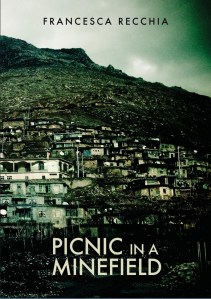
Picnic in a Minefield

picnic-coverIn 2014 Western efforts at engaging the Middle East—diplomacy, occupation, sanctions, bribery, adjusted trade policy, ill-considered cultural engagement and, worst of all, war, collapsed in the ruins of Syria and Iraq.
Ignorance of the locale’s complex braid of culture, peoples, language, and faith among leaders and populations in the English-speaking world compounded the failed attempts at influence.
Brutal death-cults fill the vacuum left by these bankrupt Imperial efforts. Leaving death, desperation, and trails of blood in their wake, they stalk villages and byways under the conceit of establishing a “new Caliphate.”
Just in time, intrepid traveler, teacher, scholar, and journalist Francesca Recchia brings hope for enlightenment, nuanced discussion, and moral clarity with her stunning new memoir, Picnic in a Minefield.
The book details her experiences living, working, and traveling among the Kurds of northern Iraq. This timely book offers a first-hand account of life, living, and lives-lived in area of the globe that perpetually dominates the West’s concerns and discourse.
Recchia’s unique style and points-of-view illuminate Kurdish culture and the place of Kurds, who have long yearned for self-determination, amidst a cohort of nations intent on denying the mountainous Kurdish homeland its sovereignty.
Recchia recounts how living in the region affected more than her understanding of, and opinions on, Kurdish culture.
Through crisp prose and unforgettable anecdote, she shares with us the gift she received in Kurdistan: the company of the Kurdish people, liberated from an abstract prison of newsprint, brought to life in the minds and hearts of readers.
Picnic in a Minefield, by Francesca Recchia, is published by Foxhead Books.

The book is on sale now at bookstores, online retailers, and at Foxhead Books.
Foxhead Books publishes trade, electronic-books, and fine books.

Foxhead Books is an independent book publisher and a division of Potemkin Media Omnibus, Ltd., an Ohio Limited Liability Company.
CONTACT: GREG ENSLEN
140 E. BROADWAY AVE.
TIPP CITY, OH 45371
888-345-5847
INFO@FOXHEADBOOKS.COM


Unknown's avatar

Seasons in the Garden of Fidelity

This piece was first published in Chapati Mystery

AUTUMN

Anar

Anar is the Persian for pomegranate. It is one of those fascinating words that travel in space and time: from the Middle East to India through Afghanistan, anar is a word used in Farsi, Kurdish, Dari, Urdu and Hindi.

There is something magic and poetic to the pomegranate: it is a fruit full of symbolic meanings and is present in mythological accounts all across the world. For ancient Romans and Greeks it is the fruit of the underworld; for Christianity it represents resurrection after suffering; in Judaism it is a symbol of fertility and of the Promised Land; in the Quran it is mentioned as one of the examples of the beautiful things that God created.

In the last few years, pomegranate has been a constant presence in my life: it strangely became associated to life in a country in conflict as well as to the positive sensations of the small pleasures that make life special.

The taste of pomegranate is connected to vivid and precise memories of places and moments in time.

After her first trip to Palestine, my mother came home fascinated by the discovery of the freshly pressed pomegranate juice. Its unforgettable colour, its rich and thirst-quenching flavour. While talking, we realised that in different points in time, both my mum and I had pomegranate juice at the same stall: in East Jerusalem, in the Old City, just to the right of the Damascus Gate.

In Kurdistan pomegranate is the pride of Halabja – the city that has become the symbol of the Kurdish genocide and claims to have the best anar in the world. The flavour of the pomegranate I had there is, in fact, hard to forget. On top of a hill, in the golden light of sunset, after a visit to the cemetery where the victims of Saddam Hussain’s gas attack are buried, with Ayub who worked for the New York Times and told us about the bombs over Baghdad during the Second Gulf War.

And now in Afghanistan, where pomegranate help remember the passing of time, as one of the signs of the changing seasons. When Radio Capital journalist asked me a few days ago what will be the flavour I will miss the most once I will leave Afghanistan I answered: “Pomegranate” without even thinking. I had the first of the season – the special one from Kandahar – talking about the future with Andrea, in the garden of his house in Herat. And again under a pergola in Istalef, a little village nested on the mountains: we picked the fruit from the tree and ate it while looking over the valley suspended in time.

WINTER

Paraphrasing Marquez. Snow in the time of war.

It started to snow yesterday evening. My first snowfall in Kabul. It started slowly with small flakes that grew bigger through the night until dawn, when the city was entirely covered in white.

This morning I go out early, on my own.

There are very few people on the street. The fresh snow allows me to negotiate my path between the frozen road and the non existing footpaths. The uncertainty of my steps forces me to look down, towards the dirty mix of snow, smog and ice, in search for stability and safety.

It takes me a deep breath and a bit of self control to realise that I am missing out and to lift my eyes off the ground.

And once again the city surprises me with the poetry of its unexpected beauty. What surrounds me pays me back for these efforts.

With my nose upwards and snowflakes on the lenses of my specs: it’s all right – I tell myself – even if it takes fifteen minutes to walk five hundred meters and a bit of breathing to fight the fear of slipping and falling: it’s all right.

A boy with a green woollen hat smiles and says hello. Salaam, I reply.

It is all so beautiful.

The softened sounds: the magic of silence in a place where the noise of traffic and helicopters dominates the soundscape. The icy embroidery on the naked branches of the trees: a delicate parenthesis in a city scarred by bombs first and by the bad taste of the post war reconstruction later.

A car runs past me sloshing brown snow all over and pulls me out of my reverie. I wonder what army tanks covered in snow may look like, I wonder if the white coat may make them look less scary.

The brown slosh is a powerful coming back to my present: a reminder that is important to think of beauty in relation to its context and that is important not to forget to keep looking around.

SPRING

Quasi Fellini

Dedicated to Pierce O’ Broin

Rain, rain. A slow and cold rain. It is supposed to be spring, but it seems it has gone hiding somewhere. The dull grey sky paints an eerie atmosphere that looks like one of Giorgio De Chirico’s paintings.

Kabul is strangely beautiful in this light.

Mud softens the sound of our steps, I have the displacing feeling of looking at myself from the outside.

The camera is set on black and white.

Pierce and I walk on the street trying to avoid puddles. It feels like stepping into the Afghan version of a Fellini movie.

Quasi Amarcord. Including Nino Rota’s soundtrack.

Below the hill of Tappeh-ye Maranjan sprawls the whole of Kabul. This is where people go to fly kites on a Friday afternoon. In a makeshift market of improvised stalls, car booths are full of colourful kites and children crouching next to torn rugs balanced between a stone and a puddle sell spools of bright red, blue, green string. There is a cart selling strawberries and one selling popcorn, a cart selling ice cream, one dates and one sunflower seed.

A group of kids with extremely long brooms pointing at the sky run around trying not to trip over the colourful strings.

– What are the brooms for?

– Look over there.

In the kite war, kids use the brooms to get hold of the falling kites – these are the kite runners, bedraggled and with broken shoes. They run and laugh and shout.

A few steps away there is a merry-go-round: a green pole with green arms and small dangling planks of wood. Boys and girls get hold of ropes and planks – when they are all ready, a man grabs one of the arms of the merry-go-round and starts running in circles. Round and round; faster and faster. Feet lift off the ground, legs get a tighter hold of the rope, a hand brushes the ground. Round and round; faster and faster.

A black, menacing cloud surprises us from behind. Rain coms fast. People start running to avoid getting soaked in the storm. We look at each other and smile with a shiver. It is time to go.

A different afternoon, a different hill. The ame black and white photos, the same persistent rain.

On Wazir Akbar Khan hill, in the north of the city, there is a swimming pool. Empty but freshly painted, it has three diving boards with bright yellow ladders: a strident contrast to the infinite shades of brown and grey of the city and the sky. Empty, but full of memories: it is rumoured that the Taliban used the highest diving board to execute political prisoners. A deadly jump with a stunning view and the city and the mountains as witnesses.

Outside the swimming pool there are reels of razor wire and a military barrack.

A girl walks past eating chips; she has a sailor’s hat and a coat of the same shade of blue as the pool.

Fellini. Amarcord. Nino Rota.

A few steps and a few puddles away, beyond the soft mud, there are the carcasses of two Soviet tanks; rusty, derelict, abandoned.

We look for the right angle for a photo.

In the background on the top the silhouettes of the diving boards, then the razor wire, the military barrack, the tanks looking over Kabul.

Untitled. Landscape with Soviet tank.

Rain becomes colder. We look at each other and smile with a shiver. It is time to go.


SUMMER

The eye of God. Kabul from above.

Dedicated to T.M.

Earlier this morning I sent him a photo I took last night: three dots – two yellow and one orange – in a black background. This is all my phone could record of the stunning view of Kabul I was surprised with.

Maybe you should delete it. The one in your mind’s will always be brighter.” Comes his response.

It is one of our usual early morning email exchanges. We generally talk about writing and the small, cherished details that life in Kabul offers us: they would be soon transformed into written words. Like the little bird that the guards keep at the entrance of the compound, or the policeman who stops the taxi driver to offer him dates to break the fast during Ramadan.

The last email of this morning’s thread ends with these words and no salutation: “Everything in Kabul is caged… the women, the birds, the bookstore, the city itself”. He is referring to his own writings and I can see the expression of his eyes while I read these words – very serious, concerned, almost stern and yet mixed with a glint of excitement for the new discovery – I could hear the intonation of his voice had he spoken them.

As I read his words, my eye fill with last night’s breathtaking view of Kabul. A friend invited us for dinner, she had anticipated that the rooftop terrace was what made her fall in love with her new house, she also mentioned that it would be the best place in town to spot the exact location of bombs and attacks as they may happen. I recorded the information without really making sense of it. Until last night.

We climb up the spiral stair case and an immense sky opens over our heads. We are on the seventh floor of a building in the very heart of the city: Kabul surrounds us in all her beauty.

I stand in the wind and turn on my feet, three-hundred-and-sixty degrees, the city is all around me: I feel happy and free and blessed with opportunity to experience a moment like this.

A gigantic orange moon is rising above the hills; I am surprised by the amount of little, dim lights: I was not expecting the hills to be so densely populated. The hills embrace that side of town as a crescent, they look like a necklace full of sparkling precious stones: an unintended homage to the wealth of this country.

There is something peaceful and liberating about the view. Kabul is not a city in a cage, this is a city that secretly hatches hope and the possibility of change. It is a city that is growing, aggressive and resilient, powerful in all the potentials that are yet to be revealed.

Unknown's avatar

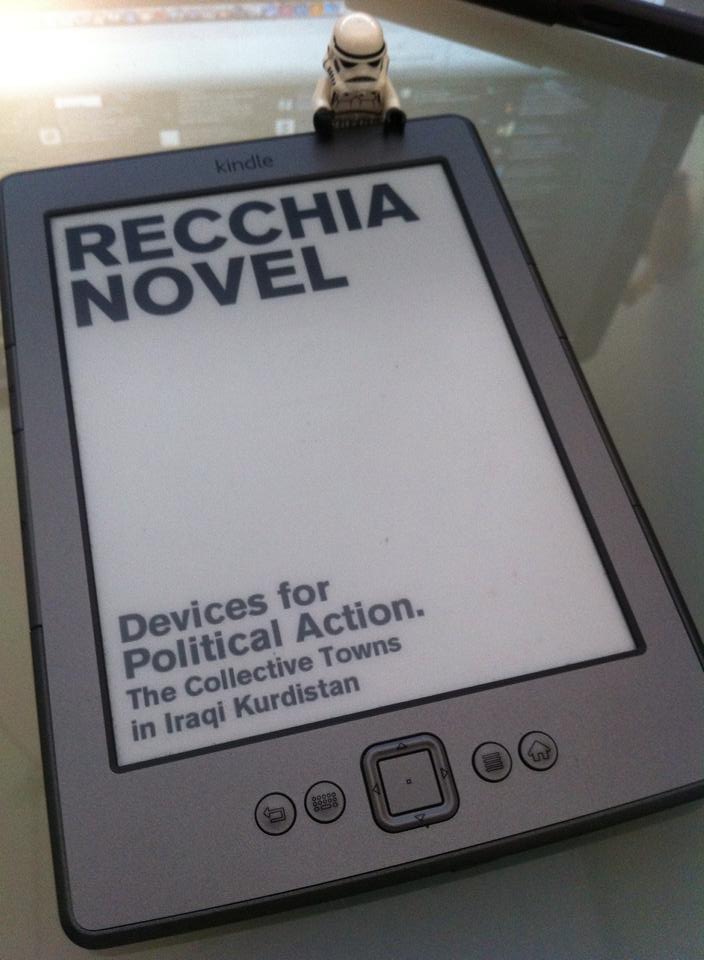
Devices for Political Action

Photo Credit: dpr-barcelona

Photo Credit: dpr-barcelona

My new e-book with a brilliant photo-essay by Leo Novel is finally out!

Devices for Political Action. The Collective Towns in Iraqi Kurdistan looks at the case of Collective Towns in Iraqi Kurdistan as an example of how State interventions on the ground are often instruments utilised to implement broader political plans. Throughout the 1970s and the 1980s the Iraqi government made full use of spatial planning as a constitutive part of the strategy of “dealing with the Kurdish problem”.

The Ba’ath regime adopted urban planning and space design as social engineering devices in its larger scheme of shaping society into a more homogenous and simplified form.

The Iraqi government used the combination of ethnopolitics and a centralised ideology of modernisation to heavily intervene in the management and design of territory, causing a systematic disruption of local knowledge and practices.

The book is part of dpr-barcelona’s Emancipatory Space Series and can be purchased here.


Unknown's avatar

Virtual Kabul – Or, the unexpected joys of collaboration

A couple of weeks ago I was in San Francisco and had the great pleasure of meeting Nick Sowers.

Nick defines himself as someone who “constructs space with sound” and we soon found ourselves talking about space (obviously), cities, walking and everything urban. We talked about how sounds and noises influence the perception of our surroundings and the role they play in terms of memory and orientation.

That’s when I told him that I have written for The Little Book of Kabul  a musical score for a construction site. This piece was originally conceived as a fully fledged sinfonietta (that the amazing composer Giovanni Dettori checked for musical and compositional accuracy). For reasons of space it became a much shorter piece, but it is a fundamental part of the book anyway.

I had visited the construction site of what would become Rahim Walizada‘s Design Cafe in Kabul several times. I took notes and spoke to people, but then after a while I was at loss for stimuli: didn’t know how to interact with the place anymore and was getting pretty bored. I then decided to sit in the corner, listen and write down all the sounds I could hear, their intensity and where they were coming from. I didn’t have anything specific in mind back then, but when I went through my notes months later while writing the book, I realised it was an incredible opportunity to experiment with writing and explore different ways of describing spatial relations.

I told all this to Nick, we understood we spoke the same language and he invited me to join him in his sound studio and asked me if if was OK with him trying to make my musical score play. I was completely thrilled.

His studio is a remarkable little place where he set up a sound device that allows you to experience the three-dimensionality of space through sound. We didn’t have much time, but we played around and we could both feel that there something there that was worth chasing.

As we parted ways, Nick told me that he wanted to spend more time with those sounds and make something out of it. The idea made me really happy: there was the chance for my words to morph, to take body in a different shape and substance. I don’t think I could have asked for anything better.

A few days later, Nick got back to me and sent me his reinterpretation of my music score.

(You can read his take on our encounter here)

When my sister Susanna Recchia, who is a dance artist, listened to Nick’s piece, she immediately said that she would love to try and use it for one of her performances. This is yet to happen, but I am really hoping that it would soon become a further chance of collaboration and one new embodiment of experimenting with words, sounds and space.

Unknown's avatar

Art in Afghanistan: A Time of Transition

This piece was first publish in Muftah’s Special Collection Art of Pakistan and Afghanistan

Photo Credit: Lorenzo Tugnoli

Photo Credit: Lorenzo Tugnoli

2014 is slowly running its course. The International Security Assistance Force (ISAF) is expected to withdraw by the end of the year retaining only a very light foothold in the country. Many international donors are responding to the impending transition by reducing their work in Afghanistan as well. In the first few months of the year, attacks against foreigners increased, pushing many international NGOs to cut their presence on the ground to the bare minimum. Reduced military and humanitarian engagement means significantly less money flowing into the country. This will inevitably impact the sustainability of the nation-building process. Reduced cash inflow will have direct repercussions at various levels, affecting the maintenance of armed forces, the funding of salaries for government employees and NGO workers, the creation of new job opportunities, and the provision of basic security.

As is often the case, culture is among the first sectors to suffer funding cuts in times of crisis. To a certain extent, this is happening today in Afghanistan. On the one hand, culture is low on the agenda of donor priorities. This marks a radical change compared to the past few years, when cultural projects were supported, largely in an instrumental manner, to demonstrate the great achievements that resulted from Afghanistan’s occupation. On the other hand, in a revamping of the ‘winning hearts and minds’ counterinsurgency doctrine, donors are likely to continue using arts and culture to convey social and political messages – a subtle yet sneaky form of propaganda.

As Afghanistan transitions into a new phase, this is a prime opportunity to begin assessing the role international funding has played, and can continue to play in the country’s cultural practices.

International Donors in Afghanistan

In general, the centrality of capacity building and deliverables, combined with the fact that decisions are mostly made away from Afghanistan, have created funding priorities that focus on the start-up phase of projects instead of the less exciting work of institutionalizing initiatives. This has triggered a vicious circle of endless beginnings, and left limited funds for investing in long-term sustainability.

Commenting on this phenomenon, an Afghan friend once told me: “People come to teach us ABC, but we always stop at A because every time someone new comes, he starts again from A as he doesn’t expect that we can go any further.” The consequences of this attitude are potentially paralyzing, generating both dependency and irrelevance for many projects, including but not limited to those in the arts.

As an independent researcher living in Kabul, I have had the opportunity to collaborate with different organizations working in arts and culture in Afghanistan. In the past two years, I have directly witnessed these dynamics at the grass-root level, including the (not always so healthy) interactions between donors and practitioners.

Since culture is considered a relatively ‘harmless’ field, it is often experimental ground for scores of armchair experts and adventurous, self-appointed intellectuals to come and teach Afghans how to express themselves. One reads time and again of people who visit Kabul for a week or so to ‘discover’ Afghan art (or literature, or music, or poetry) and give voice to the ‘locals.’ They work to ‘enlighten’ the youth about how to emancipate themselves from an oppressive society, how to reject tradition, and liberate themselves from the burden of cultural backwardness. All this is often done under the incorrect supposition that Afghanistan is a homogenous, black and white place – demonstrating an appalling lack of knowledge (or worse, interest) in the actual conditions on the ground.

But this is also a two-way street. Beneficiaries sometimes take advantage of patronizing Western perspectives. They are happy to let the money flow, take what they can, and have at least some form of support for their activities.

In a recent interview, Afghan-American contemporary artist Aman Mojadidi commented on these circumstances:

There is the potential for cultural activities to move forward, but a lot of organizations have become dependent on international money and presence. If this deteriorates, will local cultural organisations have the motivation to keep going rather than continue to be psychologically and financially dependent? In practical terms, there would be no real obstacle: you are a group of artists and you do art. There is nothing to it: you don’t have to have funding. […] But when you immediately connect the creation of art with a donor, a project, a budget, then this is the sign of a very damaging mentality that can kill the potential of these cultural initiatives to move forward.[1]

To meet donor requests and attract more funds, events like thematic festivals, and photo, visual arts, or painting exhibitions, have multiplied. Many of these projects focus on topics of interest to Western funders, including women’s rights, children, peace or attempts at countering violence, drugs, and corruption. This has generated a significant amount of conceptual confusion between visual communication and genuine artistic expression, producing an abundance of mediocre, if not plain bad, art.

Locating Independent Arts and Cultural Organizations in Afghanistan

Over the past two years, I have invested a great deal of effort as an academic and practitioner in both understanding and responding to this situation. One of my greatest preoccupations has been to address – in theory as well as in practice – the agency that has been ignored or denied by Western aid practices.

In undertaking this work, my first step was to determine which of the existing cultural organizations would have enough commitment and determination to continue their work regardless of donor funding. I was not necessarily looking for antagonistic groups that were against the donor model, but rather for organizations that had a good balance of self-determination and external support.

In Afghanistan, I found quite a few organizations and artists that fit the bill. Whether in the field of visual arts, music, film, or poetry, there are a number of individuals and groups that have engaged in constructive but critical dialogue with the international funding system and are not fully dependent on these funders. Most of these genuinely independent initiatives lie below the radar, are very localized, operate offline, communicate in Dari or Pashto, and serve relatively small communities of people.

Among these is Berang Arts, a collective of young visual artists, who came together in 2009 after participating in the first edition of the Afghanistan Contemporary Art Prize. Investing their own funds, they managed to rent an apartment in Kabul and turn it into a contemporary art center – the first artist-led space in the country – with studio facilities for young artists and a small gallery for exhibitions. With time, the group has become a legitimate local partner for prestigious international cultural institutions, such as the Van Abbemuseum in Holland, the Prince Claus Fund, and documenta13.

Because of a lack of financial resources, artists and independent institutions tend to be protective of their achievements and ‘territory,’ making it difficult to have conversations with different groups engaged in similar activities. From both personal and formal conversations, I realized that the art’s community would benefit from more professional spaces that go beyond occasional workshops and vocational trainings. Many artists expressed a desire for more structured discussions around art theory, the history of art, as well as marketing and selling art to learn how to make a living through their practice.

In the last year, I have started working more closely with Berang Arts in an attempt to counter the damaging ‘ABC mentality’ and offer an alternative to the insularity of Kabul’s small cultural scene. Berang Art wanted to make the most of its space, and open itself up to artists coming from different backgrounds and working in various genres.

With small financial support from the Goethe Institute, the Agha Khan Trust for Culture, and the Dutch Embassy in Kabul, Berang Arts and I joined our resources and started working together to respond to shared needs and desires in Kabul’s art community. Together, we established an independent Contemporary Art Academy that offers young, but experienced artists advanced education in contemporary art history and theory, while also providing a personalized mentorship program to support them in their work.

Independent Cultural Organizations Are the Future

Berang Arts is a beautiful example of the great potential embodied by independent and self-sufficient arts and cultural organizations in Afghanistan. Groups like Berang foster advanced thinking about contemporary art, while operating strictly within a framework of local, cultural values and norms. They are proactive and independent, yet know how to relate to and benefit from the Western donor community.

Given their ability to navigate this world, these are the organizations that will likely come out the strongest once the country’s current financial and political transition has passed. This slippery terrain will work as a filter, helping good art and strengthening those groups and individuals whose commitment to arts and cultural practices in Afghanistan is rooted and genuine.


[1]Francesca Recchia, “Nationality, identity and art” Himal Southasian Special Issue Reclaiming Afghanisttan, Vol 27 No 1, 2014, p. 75.