Unknown's avatar

On the table – Thoughts about Kashmir

gynaikes-diamartyrontai-03-600x401

Two weeks ago I was making dinner: pasta with lamb as in the tradition of the part of Italy I come from and doon chettin, a walnut chutney typical of Kashmir. I wanted on our table the rough but heartwarming flavours of both his mountains and mine.

That evening, after dinner, we got to know that Khurram Parvez, a Kashmiri human right advocate who has been working for decades to denounce the brutality that his people has been subjected to, had been arrested (with accusations devoid of any legal justification). The day before his arrest, he was disallowed to board on a plane to Geneva where he was meant to speak at a meeting of the UN Human Rights Commission.

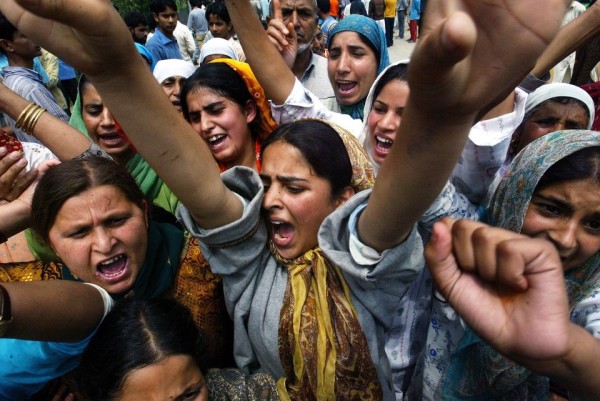
I can’t stop thinking about the flavour of that dinner, about the comfort that comes from the food from home. I also can’t stop thinking about Khurram Parvez’s wife, who does not know when she’ll share a meal with him again, and about all those women in Kashmir who are crying while preparing the favourite dish for their sons who have been killed in the past three months.

After 84 days of crackdown in Kashmir, winds of war blow between India and Pakistan. On both sides, armchair strategists invoke the power of a nuclear attack. Inebriated by nationalistic fascism, they do not consider that the border that separates them is only a fictional line traced on paper and that the possible consequences won’t stop at the frontier to ask for permission to cross.

Newspaper headlines and the occasional international attention, have used this chance to concentrate on the abstract dimension of the conflict sweeping aside what this actually means for the people. Yet again Kashmir is discussed as an expanse of land on either side of a line drawn on a map rather than as a land that belongs to a people who has been fighting for decades for the right to decide for themselves and their future. The abstract geopolitical discussion becomes the excuse to ignore that the armed forces destroyed the yearly apple harvest and burnt the cultivated fields; to look away from the seized ambulances, the night raids and the undiscriminated arrests.

How many more empty places at the dinner table, how many more meals full of absence are going to be needed before we recognise that the right to self-determination is inviolable and sacrosanct? How many more mothers will have to cry for the loss of their sons before we understand that violence and brutality will not eradicate the quest for freedom?

Unknown's avatar

A tavola – Pensando al Kashmir

gynaikes-diamartyrontai-03-600x401

Due settimane fa preparavo la cena: pasta col sugo d’agnello come da tradizione abruzzese e doon chettin, una salsa di noci tipica del Kashmir. Volevo che a tavola ci fosse tanto il sapore delle sue montagne che delle mie: sapori ruvidi che scaldano il cuore.

Quella sera, dopo cena, siamo venuti a sapere che avevano arrestato (con accuse prive di giustificazione legale) Khurram Parvez, un attivista per la difesa dei diritti umani che da anni lavora per denunciare la brutalità di cui è vittima inascoltata la gente del Kashmir. Il giorno prima di essere arrestato, gli era stato impedito di imbarcarsi sull’aereo per Ginevra dove avrebbe dovuto partecipare alla riunione della Commissione per i Diritti Umani delle Nazioni Unite.

E’ da quella sera che continuo a pensare al sapore di quella cena, al conforto del cibo di casa, ma anche alla moglie di Khurram Parvez che non sa quando potrà condividere di nuovo un pasto con lui e a tutte quelle donne che in Kashmir in questi giorni piangono mentre preparano il piatto preferito dei propri figli che sono stati uccisi in questi tre mesi.

Dopo 84 giorni di scontri ininterrotti in Kashmir, tra India e Pakistan tirano venti di guerra. Da entrambe le parti, gli strateghi da salotto cantano le lodi di un attacco nucleare. Inebriati di nazionalismo fascista sembrano non considerare che il confine che li divide è una linea immaginaria tracciata sulla carta e che le possibili conseguenze non si fermano a chiedere il permesso di varcare la frontiera.

I titoli dei giornali e la poca attenzione internazionale hanno raccolto al volo l’occasione per concentrarsi sulla dimensione astratta del conflitto lasciando passare in secondo piano quello che questo scontro significa per la gente. Ancora una volta il Kashmir ritorna ad essere discusso come uno spazio conteso al di qua e al di là di una linea sulla mappa invece che come il luogo di appartenenza di un popolo che da decenni lotta per il diritto a decidere per sé e per il proprio futuro. La discussione geopolitica diventa la scusa per distogliere lo sguardo dai raccolti di mele distrutti e dai campi coltivati bruciati dall’esercito, dalle ambulanze sequestrate, dai raid notturni e dagli arresti indiscriminati.

Quanti altri posti vuoti a tavola, quante cene piene di assenza ci vorranno prima che ci si renda conto che il diritto all’autodeterminazione è inviolabile e sacrosanto? Quante altre madri dovranno piangere i propri figli prima che ci si accorga che la violenza e la brutalità non riusciranno a sradicare il desiderio di libertà?

Unknown's avatar

The photo that wasn’t there

NMA motto copy

Afghanistan National Museum Motto

Yesterday I went for lunch at the Afghanistan Center at Kabul University to see Nancy Dupree. I count the pleasure of her company among the most precious gifts I received from this city. We spent a couple of hours together and we ate an enormous plate of garlic beans and a bowl of sour yogurt.

Nancy is an amazing raconteur and an inexhaustible source of enchanting stories: her intimate knowledge of the country offers, to those who have the privilege to listen, a vertiginous journey across space and time.

Over the years, it never happened to me to spend some time with her and leave without a memorable story to cherish and remember.

Yesterday, when I arrived to her office, she was working on a photo-gallery about the pre-historic tools that are part of the collection of the National Museum. As a cover image for the gallery she wanted to use a photo of the façade of the museum before it was destroyed during the Civil War. She told me she went looking in her extensive photo archive and to her great surprise she could not find any image of that kind. She then went to see the director of the museum to ask him for a copy from their own archives, but he said they did not have any even there. Ever more surprised, she reached out to those who were in town in those years or could have had access to documents of that time. Nothing. It seems that before the Civil War no one considered taking a photo of the façade.

Her story ended there and our conversation moved on, but the thought of the photo that wasn’t there stayed with me.

There are so many moments and details that, there and then, appear entirely unremarkable. There are so many things that we take for granted and let slip away without thinking twice. It is strange to think that these details can then come back unannounced and reveal themselves through their absence in an unexpected future. It is strange to think that they end up becoming witnesses of a past that has left no visual trace.

Unknown's avatar

La foto che non c’era

NMA motto copy

Afghanistan National Museum Motto

Ieri sono stata a pranzo all’Afghanistan Center at Kabul University da Nancy Dupree. Conto il piacere della sua compagnia fra i doni più preziosi di questa città. Abbiamo passato due ore insieme e abbiamo mangiato un piatto smisurato di fagioli all’aglio e una ciotola di yogurt.

Nancy è una grande narratrice e una fonte inesauribile di storie appassionanti, la sua conoscenza intima del paese offre a chi ha il privilegio di ascoltare un viaggio vertiginoso nel tempo e nello spazio.

Nel corso degli anni, non mi è mai capitato di lasciarla dopo un po’ di tempo passato insieme senza una storia memorabile da conservare.

Ieri, quando sono arrivata nel suo studio, stava lavorando ad una galleria fotografica sugli strumenti preistorici conservati al Museo Nazionale. Come immagine di copertina voleva usare una foto della facciata del museo prima che fosse distrutto durante la guerra civile. Nei giorni scorsi ha cercato nel suo archivio fotografico e con sua grande sorpresa si è accorta di non avere nessuna immagine di questo genere. Mi ha raccontato di essere andata a trovare il direttore del museo per chiedere a lui una copia dai loro archivi, ma niente neanche lì. Sempre più sorpresa e incuriosita, ha mandato messaggi e chiamato tutti quelli che in quegli anni erano in città o potevano aver avuto accesso a documenti di quel periodo. Niente. Pare che prima della guerra civile nessuno si sia preoccupato di fare una fotografia alla facciata.

Il racconto è finito lì e la a conversazione ha poi preso un’altra direzione, ma il pensiero di questa foto che non c’è è rimasto con me. Strano pensare a quanti momenti e quanti dettagli là per là non sembrano affatto degni di nota, quante cose diamo per scontate e tralasciamo senza considerazione. Strano pensare come questi dettagli poi possano ritornare e rivelarsi nella loro assenza, in un futuro inaspettato, come testimoni di un passato di cui non restano tracce visive.

Unknown's avatar

No looking away: From Kabul to Kashmir

This article was first published on Kashmir Reader on the 25th of August 2016.
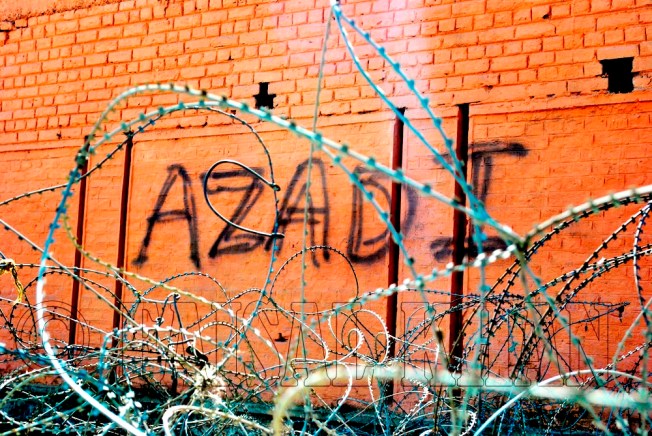
 

AZADII don’t understand those who don’t understand that politics comes also from the belly. Beyond the viscerality of a political existence, there are always contingent factors that, by chance or by necessity, force me to confront the reasons of what I chose, and the values for which I live. There is no looking away.
This time the occasion has come from a cup of salty tea, typical of Kashmir and of the Himalayan valleys on either side of the contested border between India and Pakistan.

A couple of days ago I was talking with one of my colleagues, he comes from Hunza, a picturesque and isolated valley 2500 meters above sea level in the extreme north of Pakistan. We were discussing about regional variations in recipes, habits and tradition of the salty tea. As he knows that I like it a lot, after our conversation he made it for me for breakfast. What he calls sheer or shur chai is a version (with butter and without baking soda) of what I know as nun chai and what for me represents the flavour of Kashmir.

Sitting across from each other, we had our tea in silence: our thoughts lost somewhere further East, in two different beautiful valleys of the Himalaya. As I was sipping from my cup, with my body in Kabul and my heart in Srinagar, he filled a bowl with bites of old bread, poured tea over them and ate the whole as a soup, nostalgically thinking of the breakfasts of his childhood.
p2
My cup of sheer chai made me face what I had been avoiding for days.
As I write this I am sitting in Kabul, in a beautiful late summer day that started with an unreported explosion while I was making breakfast. By nature I am not particularly fearful, squeamish or impressionable, and years of work in countries in conflict made my skin pretty thick. Yet, what is happening in Kashmir feels incomprehensible, utterly incommensurable.
It has been for more than forty-six days that I have felt the need to write about the mayhem that has taken over Kashmir, but every passing day made finding the words more difficult. I kept procrastinating, used the fact that I am busy as an excuse and looked away. My guilt, however, kept growing: my silence was becoming a form of complicity. This is the time to speak up, to take sides: the end result of a concerned silence is not different from a lax or irresponsible indifference.
For the past forty-six days the Valley has been under siege. After the killing of Burhan Wani, the young, indigenous, non-Pakistan sponsored, rebel commander fighting against Indian rule in the name of self-determination, Kashmir erupted and took it to the streets. This was by no means unannounced, the rage was simmering and slowly mounting under the surface. Those who cared looking, knew far too well that it was only a matter of time. Nobody, however, could predict that things would escalate to this level.
India responded to protests and stone pelting with an iron fist: with an unprecedented and unimaginable violence. In forty-six days almost seventy people have been killed, at least 6,000 were injured and more than 500 have been hit, mostly in the eye, by pellet guns. Curfew has been extended to both day and night, making it almost impossible even to buy milk. The Border Security Force has once again been deployed in Srinagar, a frightening reminder of the 1990s, certainly not a measure encouraging dialogue. A few days ago the Army prevented the distribution of petrol and an ambulance driver was shot at as he was taking several wounded people to the hospital.
India Kashmir Protests
After the 8th of July, when it became clear that the use of so called non-lethal weapons such as pellet guns would be part of the daily updates, it occurred to me that I had never seen one (why should I after all?) and I could not really grasp how the idea of non-lethal could possibly sit in the same sentence with a firearm. Not knowing how else I could educate myself on the subject, I thought I would check on YouTube. After a bit of browsing, and studiously trying to avoid gory images, I stumbled upon a video shot somewhere in suburban America. The protagonist was a white young man who was defending the efficiency of the pellet gun with spherical projectiles against those detractors who were trying to discredit its firepower. To demonstrate the accuracy of his thesis, he shot at a watermelon at a close range. The fruit cracked open, and the young man showed to the camera with great satisfaction that the watermelon’s inside was smashed beyond recognition.
My heart stopped and I wondered why it was that I did that to myself. I just could not bring myself to think that this was what was happening in Kashmir, to the faces of children as young as five. And not with spherical projectiles, but with modified, irregular pellets that would tear to pieces whatever they would encounter.
Pellet-scars-Mir-Suhail-Aug-12-2016

Pellet Scars, Mir Suhail

Quite literally, by hitting in the eye, the Indian government forces are not killing people directly, is attempting to kill the idea of the future. It is systematically trying to remove the possibility of looking at the future in a manner that differs from what is envisaged by those in power. This makes me wonder who is it that is really blind: those whom violence have deprived of the sun light or those who think that violence and brutality can kill ideas.
How far can this go? Would an entire population deprived of eyesight stop seeing the way towards freedom, the path to azadi?
I think of my friends, of those who hold a very special place in my heart, of the mothers whose teenage sons are protesting in the streets. I think about the anger, the fear and the right to decide for themselves.
How can one write about all this? Where are the words to be found? The other night a friend told me that there’s no point in writing in times such as these because there is really nothing left to add. Maybe it is true, there are no words to give measure to such a horror and what I am writing is irrelevant, but never like now does silence feel culpable.
At times I wish we’d live in a simpler world where a cup of salty tea could be the trigger to start changing things.
Freedom’s terrible thirst, flooding Kashmir,
is bringing love to its tormented glass,
Stranger, who will inherit the last night of the past?
Of what shall I not sing, and sing?
Agha Shahid Ali
Unknown's avatar

A cup of salty tea

I don’t understand those who don’t understand that politics comes also from the belly. Beyond the viscerality of a political existence, for me there are always contingent factors that, by chance or by necessity, bring me back to the reasons of what I chose and the values for which I live.

Today the occasion has been a cup of salty tea, typical of Kashmir and of the Himalayan valleys on either side of the contested border between India and Pakistan.

A couple of days ago I was talking about it with one of my colleagues, he comes from Hunza a valley 2500 meters above sea level in the extreme north of Pakistan. We were discussing about regional variations in recipes, habits and tradition of the salty tea. As he knows that I like it a lot, he made it for me for breakfast. What he calls shur chai is a version (with butter and without baking soda) of what I know as noon chai and what for me represents the flavour of Kashmir.

As I was sipping from my cup, with my head in Kabul and my heart in Srinagar, he filled a bowl with bites of old bread, poured tea over it and ate it as a soup, nostalgically thinking of the breakfasts of his childhood.

My cup of shur chai made me face what I have been avoiding for days.

It has been for the past forty-three days that I have felt the need to write about what is happening in Kashmir, but every passing day made finding the words more difficult. I kept procrastinating and my guilt kept growing as I felt that my silence was becoming a form of complicity.  

For the past forty-three days the Valley has been under siege. After the killing of a young rebel commander fighting against Indian rule in the name of self-determination, Kashmir took it to the streets and India responded with an iron fist and unprecedented and unimaginable violence. In forty-three days almost seventy people have been killed and hundreds have been hit, mostly in the eye, by pellet guns. Quite literally, the Indian Army is systematically removing the possibility of looking at the future in a manner that differs from what is envisaged by those in power. Over the past few days, curfew has been extended to both day and night, making it almost impossible even to buy milk. The day before yesterday they prevented the distribution of petrol and an ambulance driver was shot at as he was taking several wounded people to the hospital.

I think of my friends, of those who hold a very special place in my heart, of the mothers whose teenage sons are protesting in the streets. I think about the anger, the fear and the right to decide for themselves.

How can one write about all this? Where are the words to be found? Last night a friend told me that there’s no point in writing in times such as these because there is really nothing left to add. Maybe it is true, there are no words to give measure to such horror and what I am writing is irrelevant, but never like now does silence feel culpable.

At times I wish we’d live in a simpler world where a cup of salty tea could be the trigger to start changing things.

Unknown's avatar

Una tazza di te salato

Non capisco chi non capisce che la politica passa anche dalla pancia. Oltre alla visceralità dell’esistenza politica, per me ci sono anche sempre fattori contingenti che, per caso o per necessità, mi riconducono al perché di quello che ho scelto e di quello che per cui vivo.

Oggi l’occasione è stata una tazza di te salato, tipico del Kashmir e delle valli himalayane al di qua e al di là del confine contestato tra India e Pakistan.

Un paio di giorni fa ne parlavo con uno dei miei colleghi; lui viene da Hunza, una valle a 2500 metri d’altitudine nell’estremo nord del Pakistan. Discutevamo di variazioni regionali nelle ricette, di abitudini e tradizioni del te salato. Sapendo che mi piace molto, me lo ha preparato stamattina per colazione. Quello che lui chiama shur chai è una versione (con il burro e senza il bicarbonato) di quello che io conosco come noon chai e che per me rappresenta il sapore che associo col Kashmir. Mentre io bevevo la mia tazza, con la testa a Kabul e il cuore a Srinagar, lui ha riempito una ciotola con pezzi di pane vecchio, poi ha versato il te e lo ha mangiato come una zuppa, pensando con nostalgia alle colazioni di quando era bambino.

La mia tazza di shur chai mi ha messo di fronte a quello che da giorni cercavo di evitare.

Sono quarantatré giorni che sento il bisogno di scrivere di quanto sta succedendo in Kashmir, ma ogni giorno che passa rende più difficile trovare le parole. Ho continuato a procrastinare, incapace di affrontare l’impensabilità di tanto orrore. E con ogni giorno che passa cresce il senso di colpa perché sento che il mio silenzio diventa complice.

Sono quarantatré giorni che la Valle è sotto assedio. Dopo l’uccisione del giovane comandante di uno dei gruppi ribelli che combattono il controllo indiano in nome dell’autodeterminazione, il Kashmir è insorto e l’India ha risposto col pugno di ferro. Con una violenza inaudita e difficile da comprendere. In quarantatré giorni sono state uccise quasi settanta persone e centinaia sono state colpite, per lo più agli occhi, da fucili ad aria compressa. Fuor di metafora, l’esercito indiano sta sistematicamente rimuovendo la possibilità di guardare al futuro in maniera diversa da quella immaginata da chi sta al potere. Nei giorni scorsi il coprifuoco è stato esteso tanto al giorno che alla notte, rendendo praticamente impossibile anche solo comperare il latte. L’altro ieri è stata impedita la distribuzione di carburante e hanno sparato all’autista di un’ambulanza che trasportava dei feriti all’ospedale. Penso ai miei amici lì, a chi ha un posto molto speciale nel mio cuore, alle madri degli adolescenti che protestano per le strade. Alla rabbia, alla paura, al diritto di scegliere e di decidere per se stessi.

Come si scrive di tutto questo? Dove si trovano le parole? Oggi un amico mi ha detto che scrivere è inutile perché in tempi come questi non ci resta niente da aggiungere. Forse è vero, non ci sono parole che possano dare la misura dell’orrore e quello che scrivo è irrilevante, ma mai come adesso il silenzio mi sembra colpevole.

A volte vorrei tanto vivere in un mondo semplice in cui una tazza di te salato potesse essere sufficiente per cominciare a cambiare le cose.

Unknown's avatar

Gulkhana

20160728_162008

It is hot. I sweat slowly.

Deciding to come back to Kabul has been difficult: from afar, the idea of gathering enough strength to face the journey is overwhelming, something that seems beyond actual capability.

But then, it only takes a second: the doors of the plane open and Kabul welcomes you with her typical heatwave, with that sultry air that smells of dust and that, for some obscure reason, makes you feel at home. It only takes a second and the city, with her inexplicable charm, absorbs you and makes you part of her again – seamlessly.

Kabul is always the same, yet this time everything seems different. There is a sense of tiredness that, for the first time in many years, is dramatically tangible. I spent the whole of last week adding names to the long list of those who have left the country. Those who can, leave: exhausted by war and the lack of a horizon. In a country without a present like Afghanistan, this brain-drain is a death sentence for the future.

Yesterday a good friend, one of the most talented young artists in town, wrote me to say that he hopes to come and show me his new drawings soon. He went on updating me about the fact that he was not entirely happy with the progress of his work: for several months he could not draw as he ran out of paper. Luckily, he added, he had gone on a trip to Pakistan with his family and hence could buy more paper and resume drawing. The matter of fact tone with which he wrote stayed with me: there was no resentment. This is how things are here, it is normal not to have paper and not to be able to draw: there’s not much else to add.

It is from this lack of paper that I should probably re-start as well.

My new office is in the greenhouse of one of the most beautiful old buildings in Kabul: it stayed surprisingly intact despite decades of bombs. In Dari, the greenhouse is called gulkhana, the flowers’ house. At this time of the year, its heat is unbearable, but I specifically asked to sit there: I thought it would be a beautiful starting point. My desk is surrounded by windows and flooded with light: it is torrid in this season, but it carries the promise of a gentle warmth during the long winter. I look around and I am happy about the choice I made. It makes sense to be here: it makes sense to be here now. It makes sense, but I wonder how to feed the determination to keep going with what may somehow seem an ungrateful task: to work towards the future with no guarantee of immediate results in the present. The promise and the vision of a broader perspective that goes beyond contingencies is certainly a source of motivation, but finding the root of that motivation in the little everyday steps is another matter. I hope I’ll stay lucid enough to be able to keep reminding it to myself.

The windows of he gulkhana face the garden, which is never barren as it has been designed around the cycle of seasons, around the tireless, round pace of time: simple, unpretentious wisdom that has a lot to teach.

This post was published on The News on the 26th of July 2016.

Unknown's avatar

La guerra dei linguaggi


«Once Upon A Time» di Shamsia Hassani

L’immagine dell’Afghanistan propagandata dai media è costellata di luoghi comuni, anche quando l’argomento riguarda la produzione culturale. I finanziamenti stranieri rinforzano la visione Kabul-centrica, considerano solo le élite che parlano inglese e non lasciano margine alla creatività spontanea

Un mio articolo sull’impatto dell’economia di guerra sulla produzione culturale in Afghanistan su Il Manifesto.

Qui la versione integrale.

Unknown's avatar

A culture of writing in absence of freedoms

Il 12 febbraio saremo alla Fondazione Feltrinelli con Parvaiz Bukhari e Mirza Waheed a parlare di libri e Kashmir.

Gli ultimi anni hanno visto una crescita esponenziale dell’uso dei social media da parte dei giovani Kashmiri a testimonianza del bisogno di comunicare un’immagine differente e più radicata della storia politica della regione.

Riflettendo su questa situazione, la conversazione prende in esame il ruolo della scrittura, la cultura della lettura e la scelta delle possibilità di pubblicazione in un contesto in cui il conflitto si articola in termini religiosi, linguistici e coloniali.

Qui orari e indirizzo.

invito